SELF, PUBLISHING & SELF-PUBLISHING

There was a not-too-distant time when adding the prefix "i" to a word somehow made it more personal, more imaginative, and coincidentally, more marketable.  iPhone, iWALK, iRun, iSing, iTeddy (yes, these all exist!).  Clearly, the trend has gotten a bit out of hand, but at the heart of the concept is the notion that the individual is in charge.  This idea pervades all aspects of modern life, and lucky me – it even extends into the realms of writing and publishing.

To understand "new" publishing (and yes, even iPublish exists), we should first understand the traditional model:  

What does a publisher do?

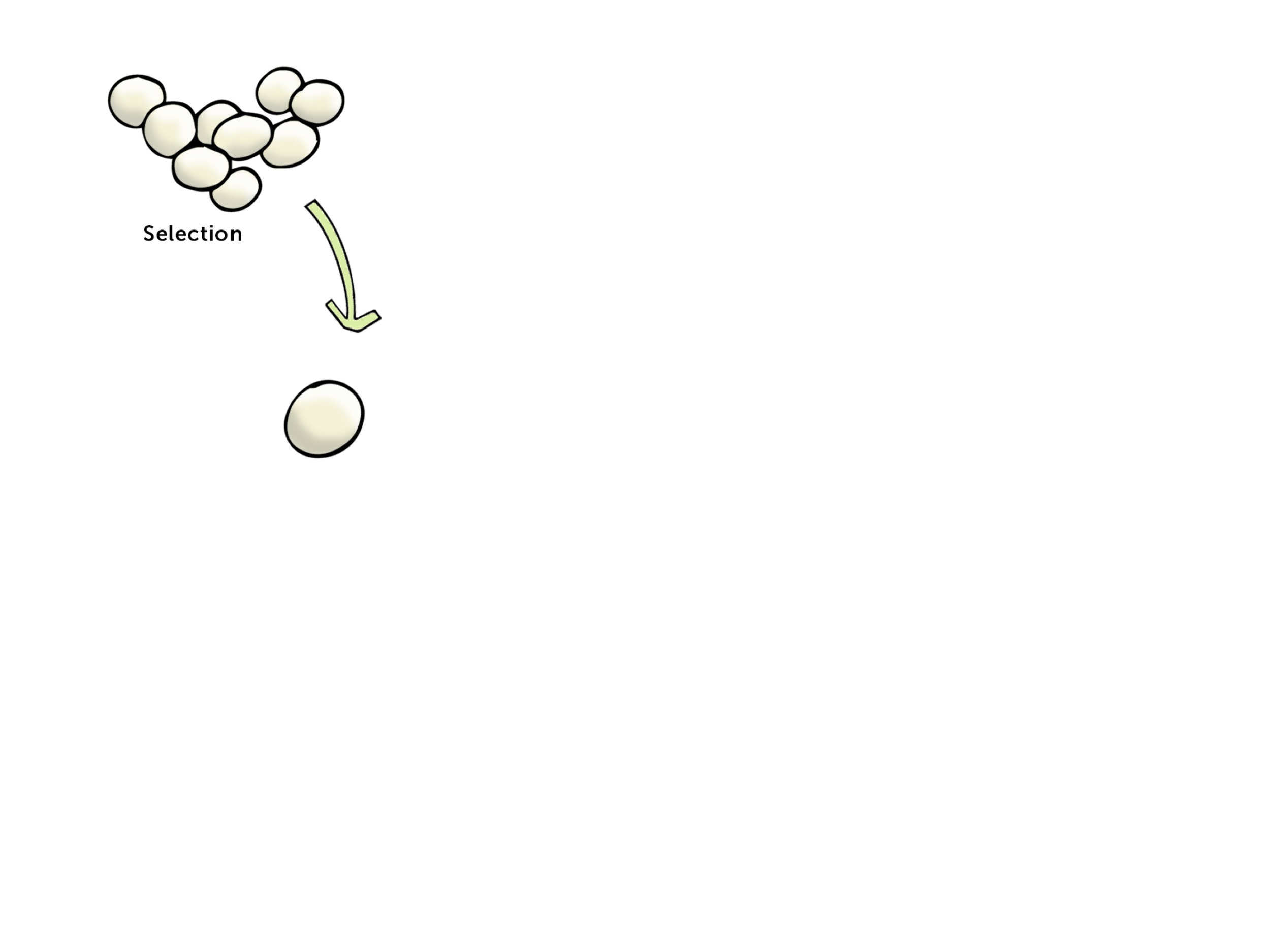
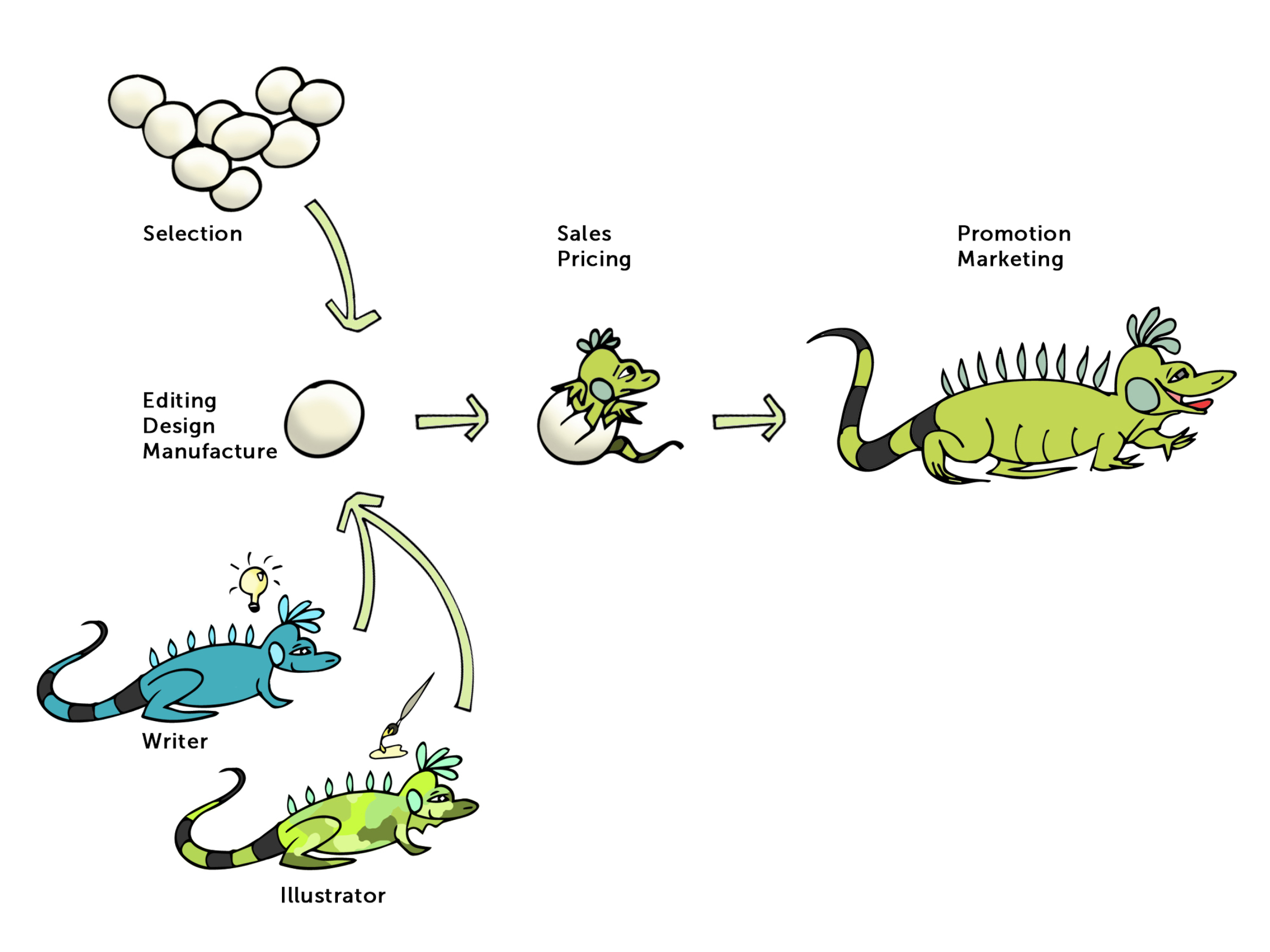
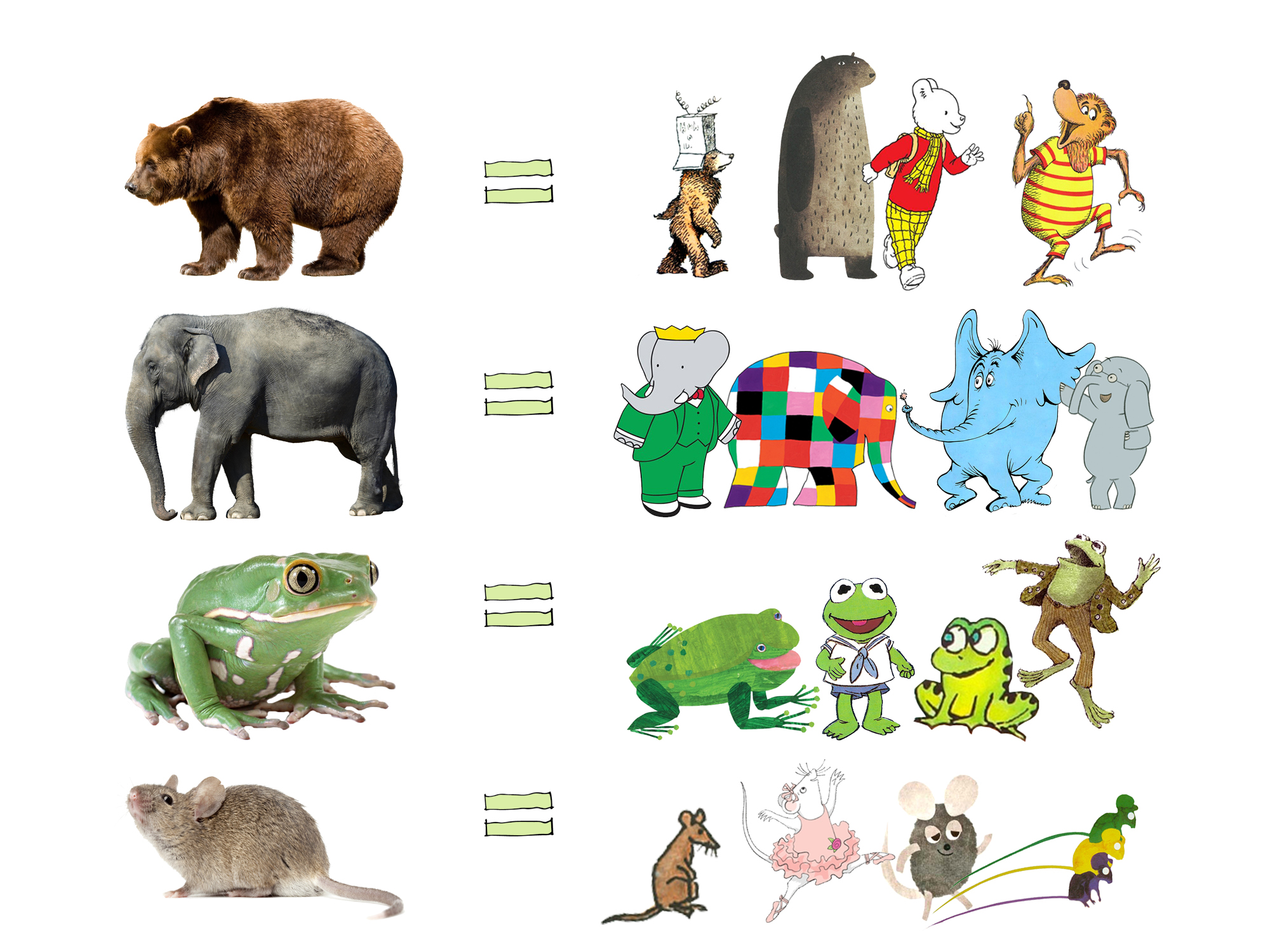
In my brain, which is wired a little funny, it helps to reference the natural world to answer this question.  We can think of every book as having a LIFE CYCLE, just like the one you learned about in the third grade:

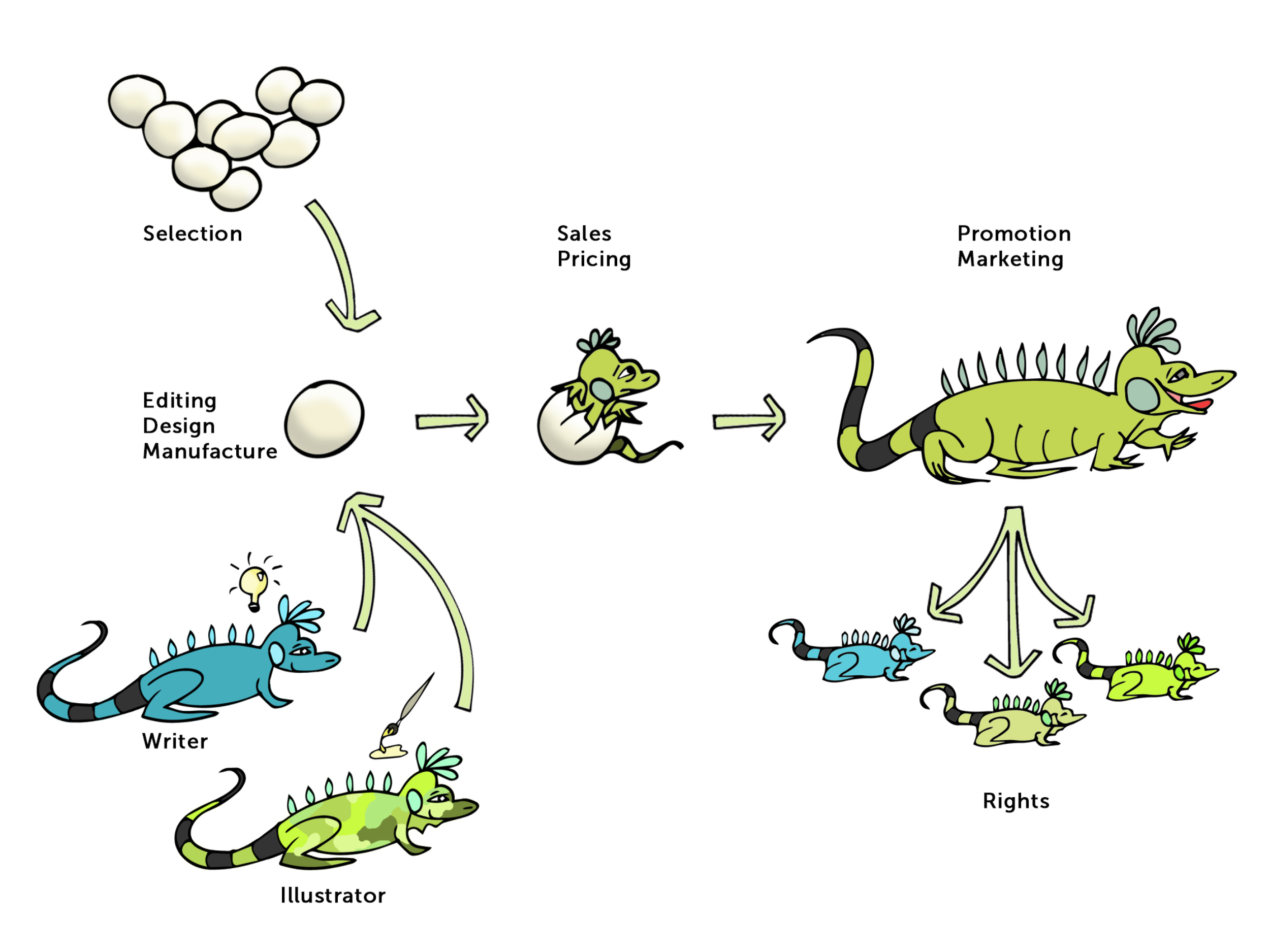
A publisher manages the life cycle of each book they publish, from its birth to its 'death' (ie. going out-of-print).  While the author usually controls the conception of a story, her publisher may have strong input as to which literary recipe they are looking for at the time.  Okay, I've gone overboard with the metaphors.

...well, not totally overboard just yet.  Let's look at another life cycle that I am particularly fond of:

Imagine that this bald little egg is a story idea.  

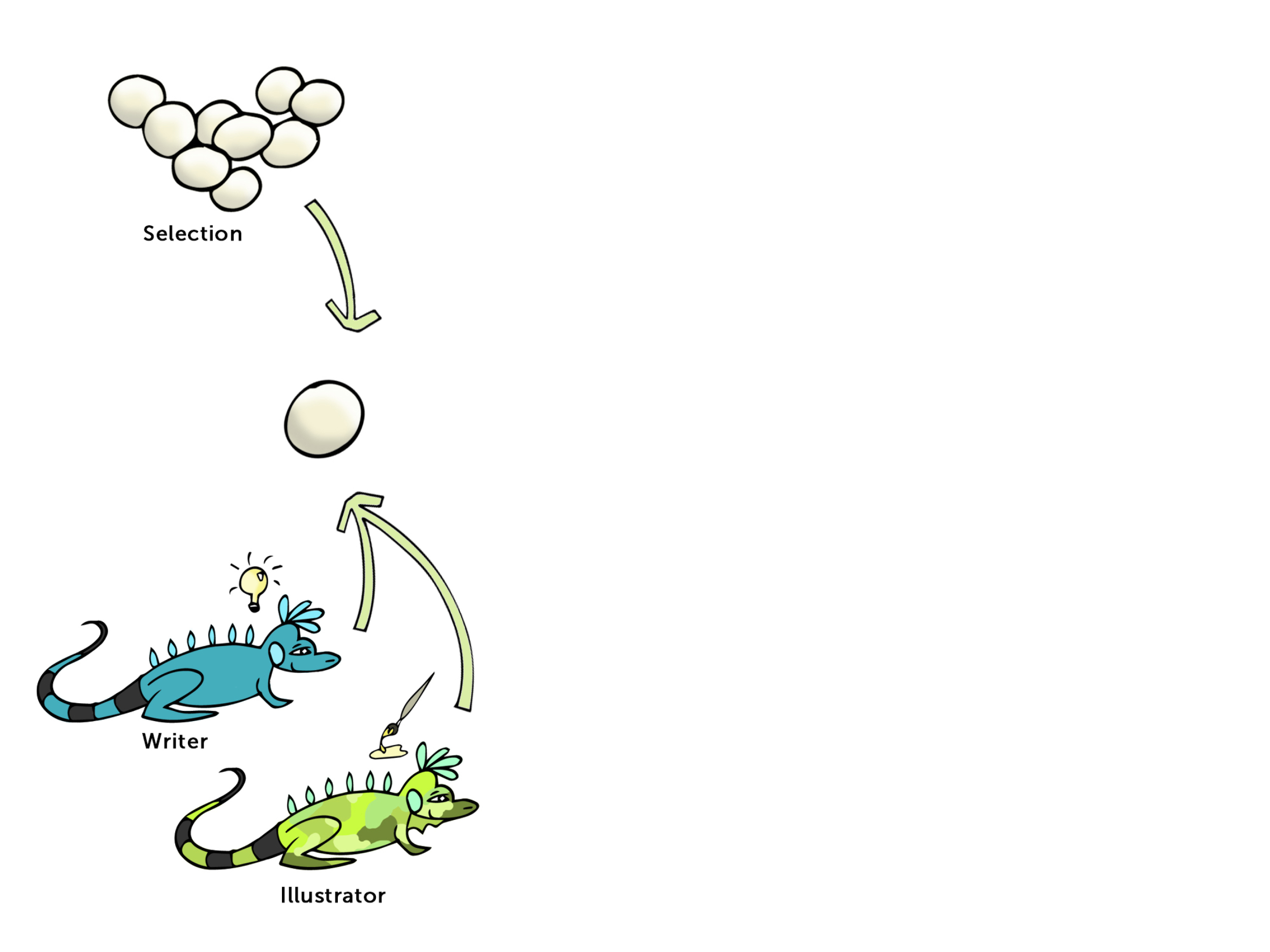
A publisher will either pick a story idea from their arsenal of manuscripts (submitted by hopeful authors**), or as is often the case with children's picture books, will pick a manuscript and pair it with a SEPARATE illustrator to create the artwork for the story.  Most often, the author and illustrator do not even meet face-to-face.  For authors who also fancy themselves as artists, this can be problematic, yet there is a big risk in submitting both text and illustrations to a publishing house.  It is well-established in the children's book industry that manuscripts submitted with images must ace it in BOTH realms to be considered.

** Important to note the 'why' here – most industry folks see a traditionally published book as having passed a certain threshold of quality that warrants publishing.  When a publisher agrees to publish an author's manuscript, it is a huge investment for the company, so to be selected by a large publishing house adds intrinsic value to a book.  Or so it is believed.

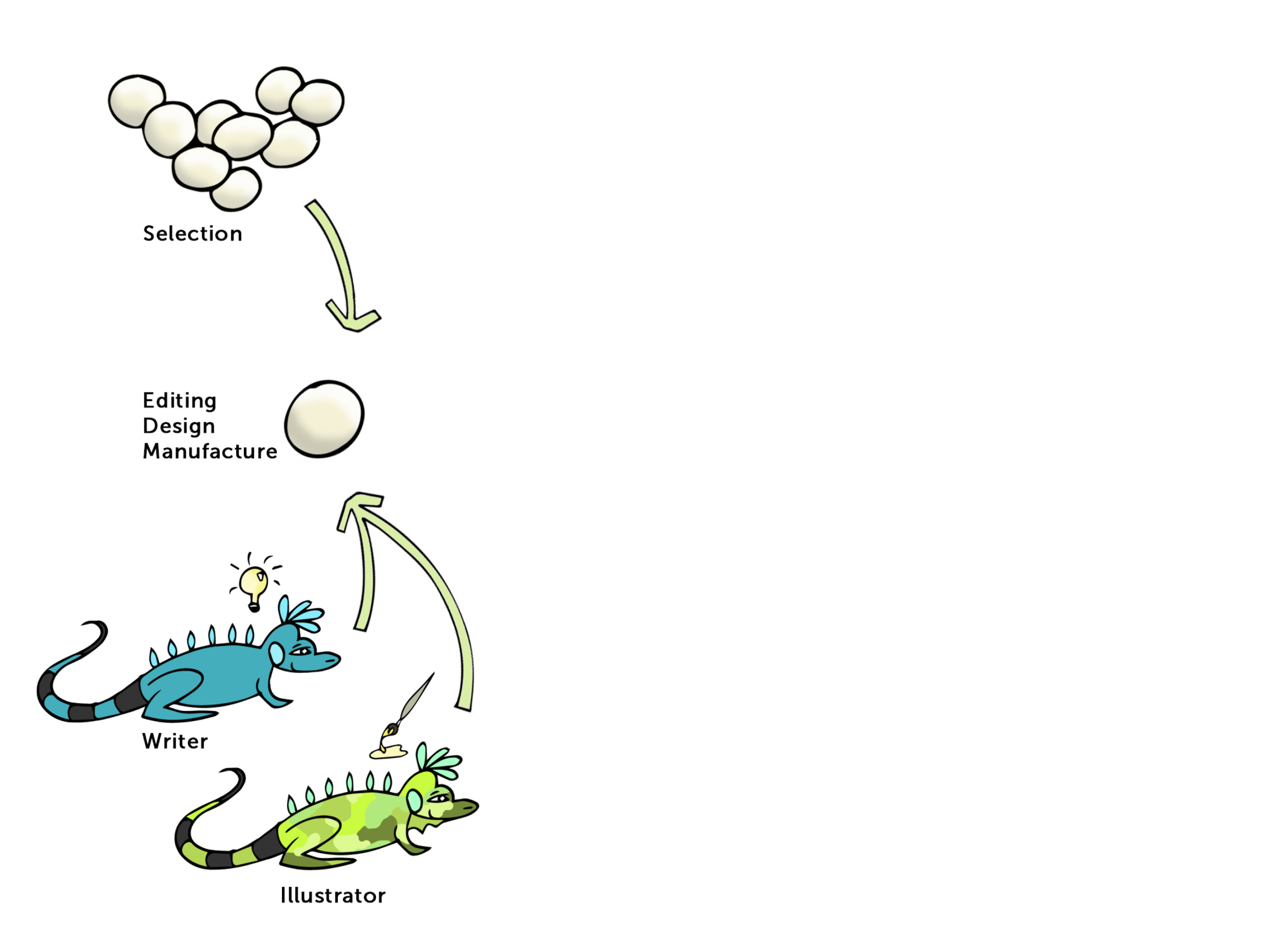
While the story is still an "egg", the publisher's team of editors develops the manuscript alongside the author.  At this stage, portions are rethought, chunks are cut out, and other chunks are added in.  The editors pull the puppet strings of a full team that designs the book inside and out; they also oversee the manufacture of the physical book.  In traditional publishing, this is where the author can step back and watch as the practical steps of creating a book are completed by others.  Sweet relief!

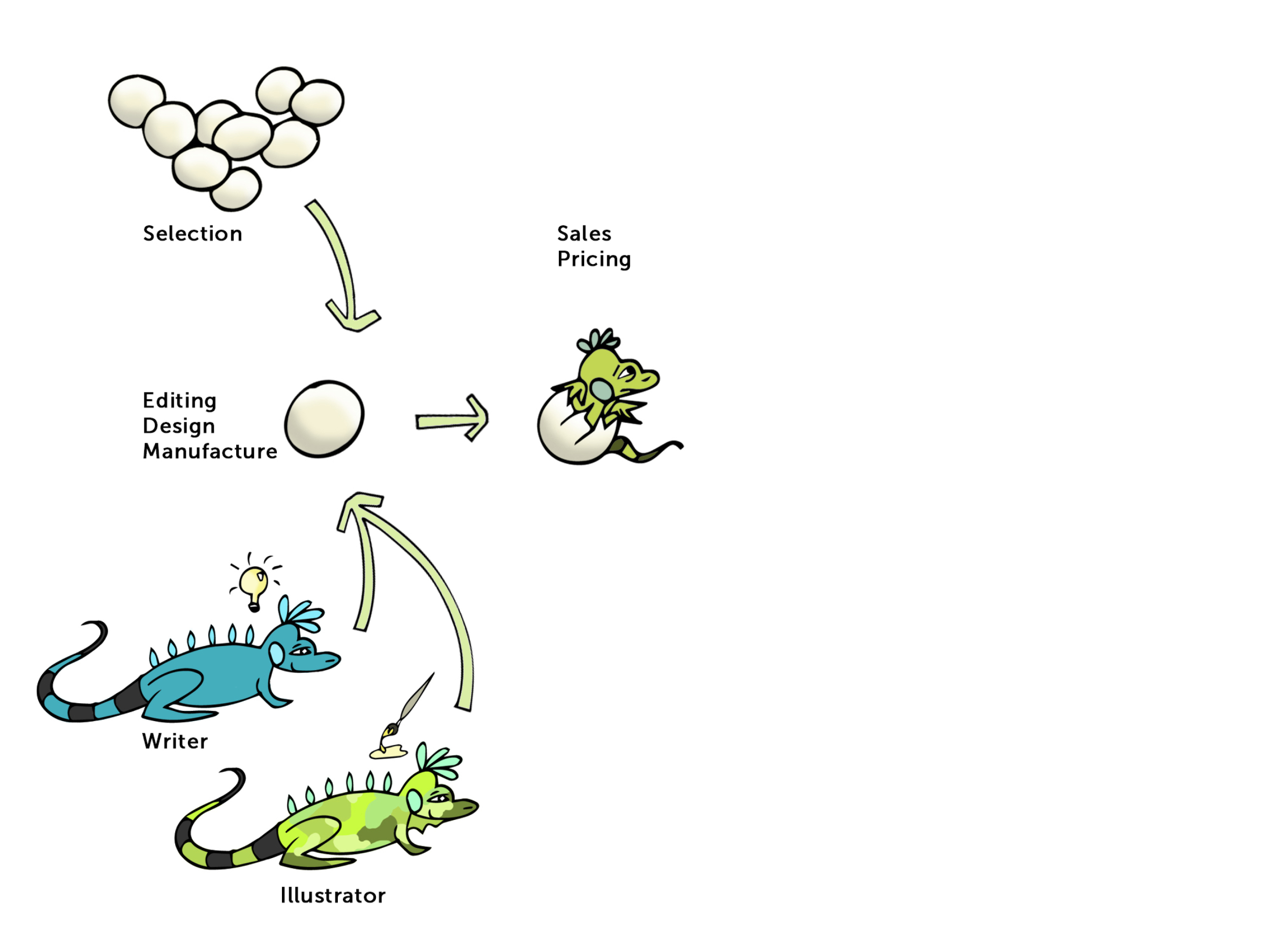
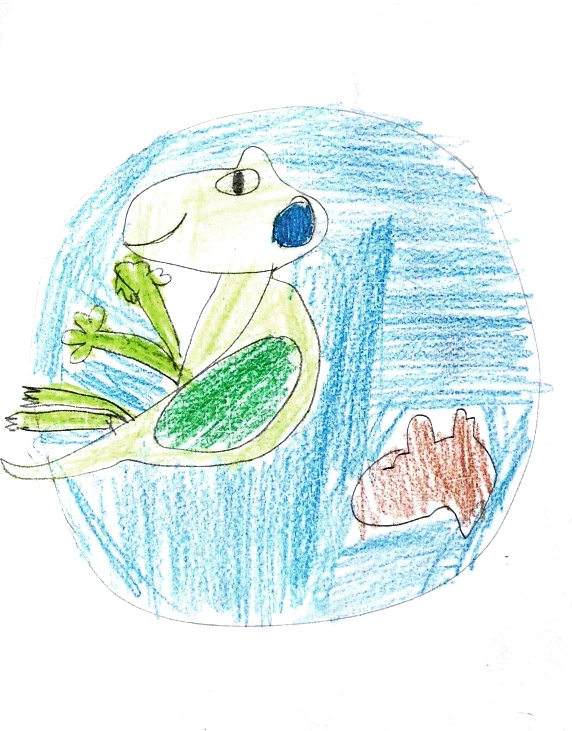
Onward in the life cycle, the crinkled, eggy shell cracks open, and a baby iguana is born!

The publisher determines a fair, Goldilocks price for the book, and works with a massive network of book distributors to place the book in stores, libraries and schools.

One of the more critical roles of the publisher is to leverage their established relationships and sizable staff to MARKET the book.  After all, even the most eloquent and profoundly-appealing story won't go far if no one has heard of it.  In my limited experience, this really is where the value of a publisher is felt most.  The publisher not only pays for professional reviews (several hundred dollars, if purchased by an individual author), they also arrange promotional tours (ahem, several thousand dollars...), and place blurbs in magazines and blogs (where most readers will first learn about them).  The Twittersphere is a magical place, but when it comes to selling books, serious buyers are looking to places like the NY Times Best Sellers List, or a host of great children's book blogs (School Library Journal, Great Kid Books and Pen&Oink come to mind).

While promotion of the book is ABSOLUTELY KEY to its success, and the well-connected publishing house allows for this at a broad scale, it is important to remember that each publisher covers a full catalog of books, not just yours.  While each book is particularly special to its author, the publisher may not necessarily push her book as much as another title under its wing.  Large-scale publishing is revenue-driven (after all, it is their investment), and if your book does not have as much mass appeal as the latest 'burp and poop' story, it may not get as much promo.  

In the end, the author's own promotion could play a big role regardless.

And finally, RIGHTS...so, about those baby iguanas?

This facet of traditional publishing is the most nebulous to me without any real world experience, yet.  Rather than play attorney, I can direct you to this helpful website about copyrights, royalties and assorted legalese.  In general, the publisher with their great financial resources will control the production of any book-related toys, games, movies, sequels, etc.  All this, because they will seek to Obtain All Rights to your book.  The author expects royalties from this, of course, and she can negotiate to withhold specific rights (eg. electronic or foreign).

We can clearly understand that the publisher takes on an IMMENSE burden of manufacturing, financing, selling and promoting a new title.  Not only is this necessary, it is also a noble pursuit in that it clears away the distractions to the author that would usurp valuable mental real estate.  Most of the authors you love can produce great work because a full team of people takes on the task of selling it for them.  It's a two-way street.


So...what does a self-publisher do?

This one is easy enough, illustrated by this diagram:

That whole life-cycle-of-a-book thing?  As a self-published author, I manage it all.  Uniquely in my case, I also create the illustrations, though this is by no means required to publish your own children's book.  Over the past year, many fellow writers have asked me WHY I chose to self-publish over the more traditional method of seeking an agent or publisher.  At long last (and because I love them), I have compiled a list:

WHY DID I SELF-PUBLISH???

1  |  I could fully control the story, theme and tone.  After many years working in architecture, I had mastered teamwork and production, but almost always for someone else's design vision.  I felt that the time was right to take on a project of my own.  With a traditional publishing house, there'd be story and stylistic input from a large team of editors.  

2  |  The story I hoped to write had a more delicate message that was perhaps too heavy for big publishers.  Big Mo's notions of consumption versus contentment are certainly universal, but I was a bit nervous that a large publisher wouldn't be convinced to promote it.  Nearly a year in, I realize that I was wrong about that!

3  |  Illustrating is the real draw for me (no pun intended).  I had no interest in passing Big Mo to another artist to complete the book.  For me, the story is nothing without the illustrations, and vice versa.  They inform each other and in my creative process, they are interlinked.  Self-publishing allowed me to do both.

4  |  Architectural education and professional work gave me a strong foundation in 2D computer programs, layout experience, and the ability to coordinate among several players (US Copyright Office, Book Manufacturer, Amazon Distribution, Dept. of Taxation, etc).  There's a certain level of comfort that one needs in assembling things (eg. buildings!) in order to create a quality, physical book through traditional offset printing.  Note that with digital print-on-demand companies, this is all somewhat lessened.

5  |  I had quit my day job ( ! ! ! ), so I could focus fully on founding a small business (PadaleckiStudio) and managing it daily.  It's a bit wobbly at first but with time, the day-to-day business demands level out a bit.  That is, until Book #2 rolls around...

6  |  I was able to eek out the funds for the First Printing of Big Mo.  This is admittedly the scary part, as the cost for several thousand books could easily put a brand new compact car in the driveway.  Lucky me, I don't require a car or a driveway!

7  |  There are gazillions of companies that exist to distribute self-published books these days.  For the widest distribution (worldwide), I chose Amazon Seller Central, which collects a portion of every sale, charges a monthly service fee and an inventory storage fee.  It's not a perfect service, but it does the trick.

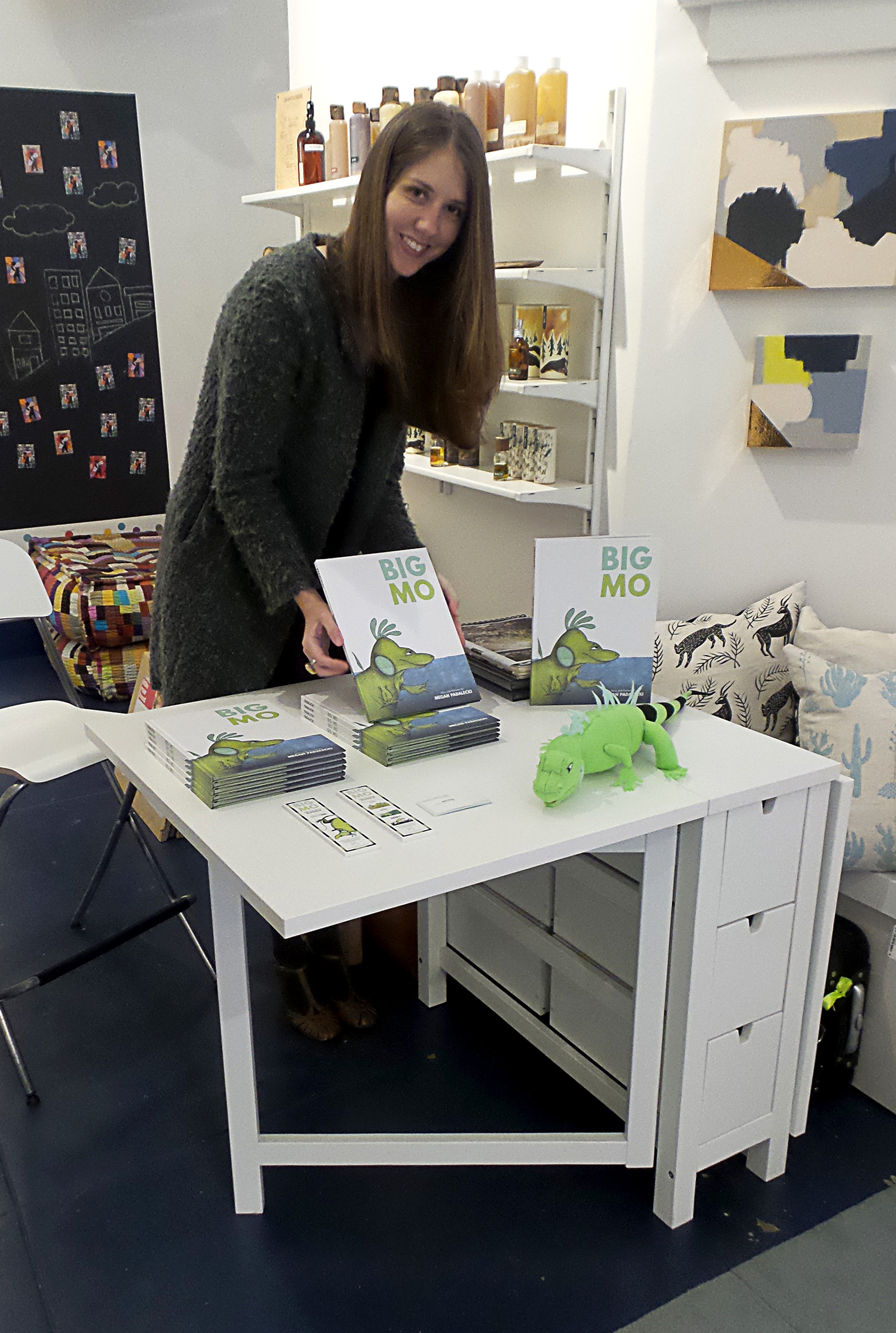
8  |  The San Francisco Bay Area where I live, has an endless array of wonderful independent book sellers.  This is certainly not the only city where this is true, but Bay Area shop owners really show that they support local authors.  By participating in local story times and book signings, I am able to support them, too :)  If you are an author, make sure to meet your local indie book sellers, and read to your cute local kids!

9  |  It has been said before, but social media has changed the game.  Never before has an independent author had the power to reach so many so quickly at no monetary cost.  Time spent can be a doozy, but it is also very rewarding sharing news of your work with others!

10  |  Lastly, and this one is important if you plan to self-publish full-time, the return on each book is much higher than with traditional publishing, when a small royalty is paid out per copy sold.  Of course, the pay must be balanced with the initial investment of printing the books (remember that compact car?).  Sometimes a publisher will pay the author an advance, but the author may be expected to pay the advance back to the publisher in copies sold.  Tricksy!

(continued below...)
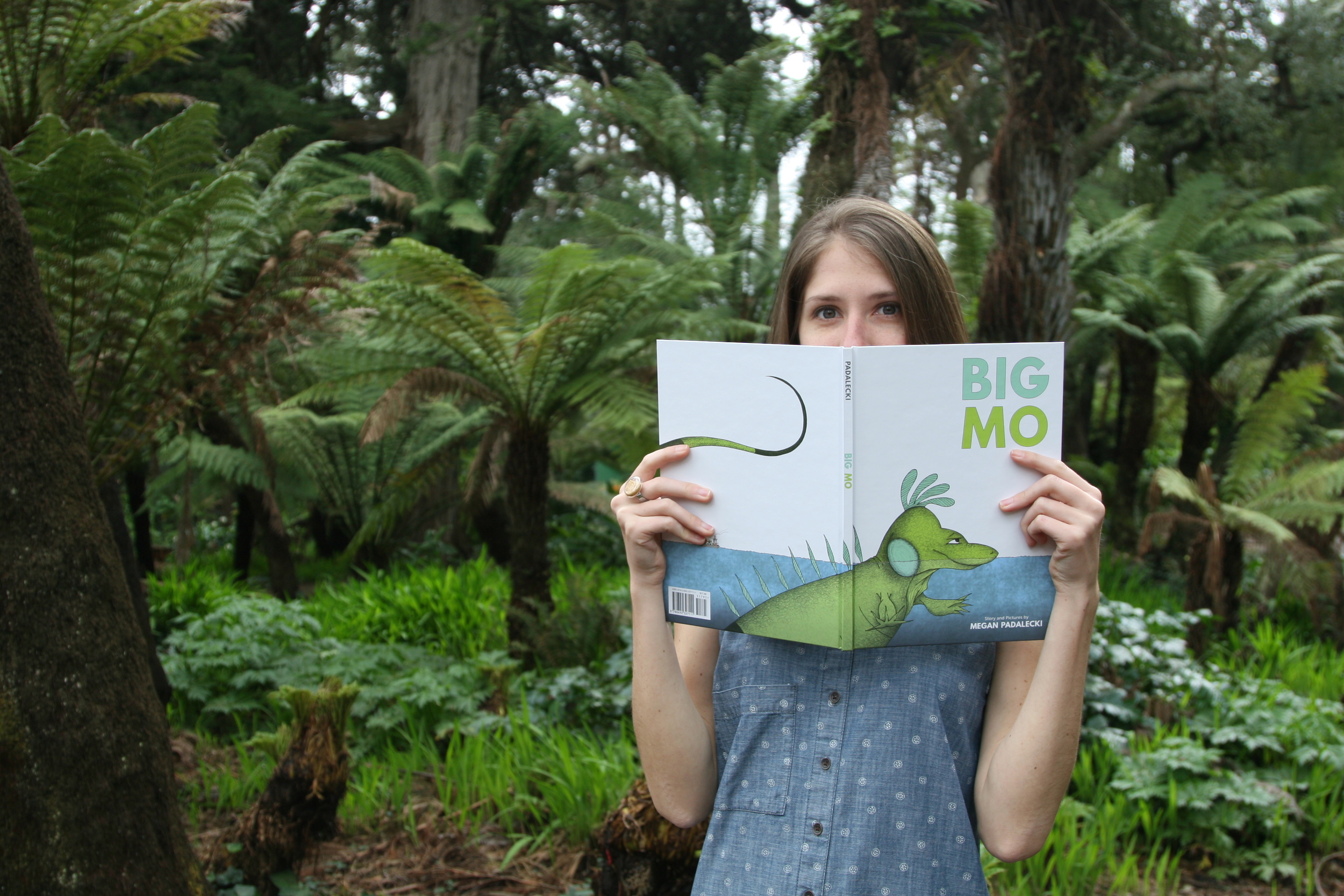
Yes!  This is one way to promote!

Yes!  This is one way to promote!

HOW TO PROMOTE YOUR BOOK

This list is not exhaustive of ALL the ways in which a self-published author can promote his/her book, but this is what I have tried to varying degrees of success.  Once you have a completed book that is fully yours, you will do whatever it takes to get the story into the hands of little readers!

1  |  Social media is your friend, and also a way to make connections near and far.  As an independent author with no marketing team, accounts with Facebook, Twitter, Instagram, Goodreads, etc will prove invaluable in establishing your work online.  No bit of news is too small to mention, so be sure to share it all!

2  |  On that note, to be taken seriously, you'll need a website.  When I submit Big Mo to bookstores and blogs, I always include a footer linking to my website.  This is pretty much expected, so find a website builder that works for you.  I use Squarespace, which is intuitive with a great support team.  Look for online coupons for your annual subscription.

3  |  Blog!  Proven by you in this moment, a blog is a great way to maintain interest and traffic to your website and work.  It is also an excellent way to give back, as I hope to do by sharing my lessons learned in self-publishing :)

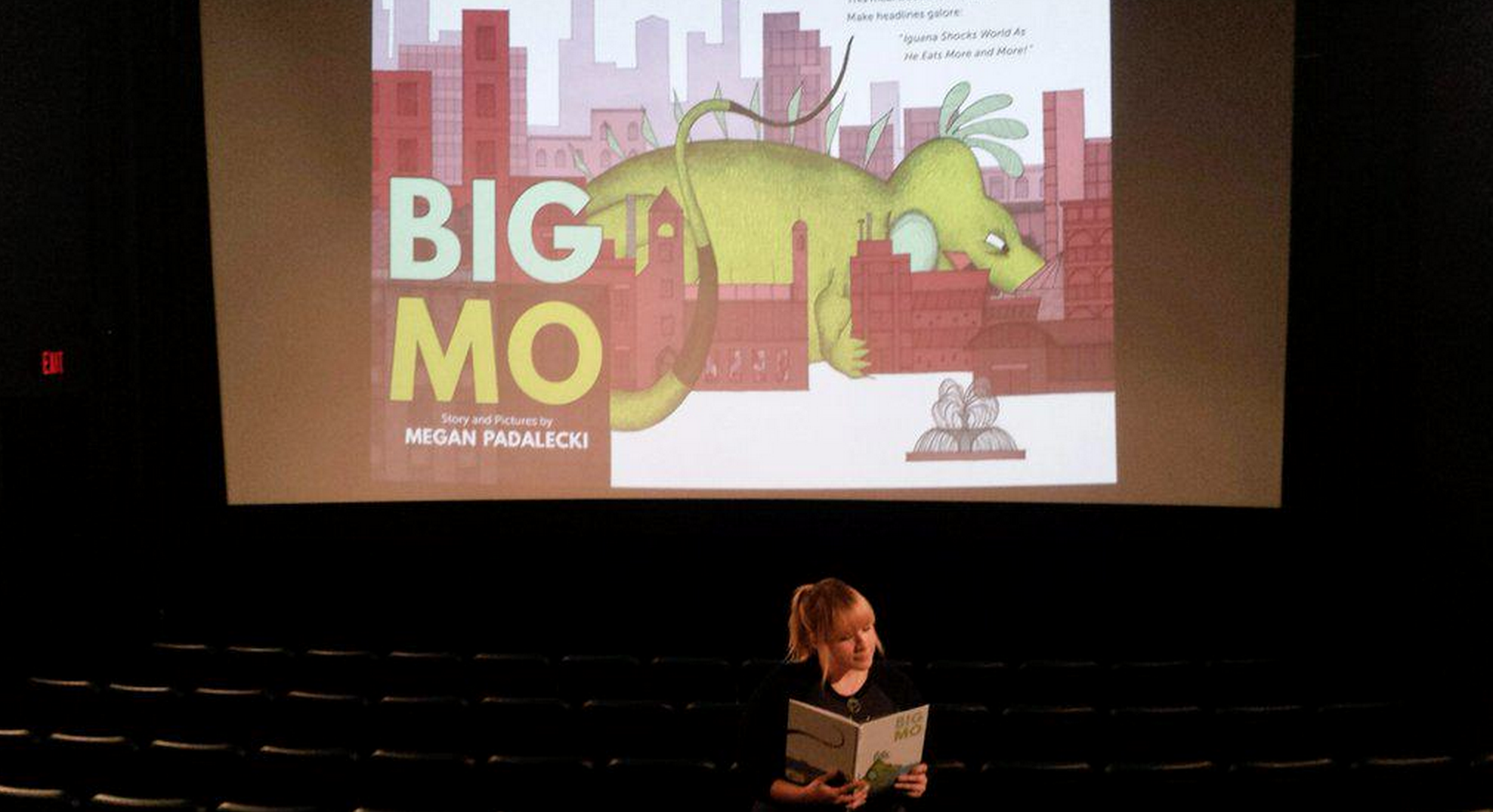
4  |  Elementary School Author visits are a time-honored tradition** and you don't need to be represented by a major publisher to participate in them.  Once you have a book (children's or YA), you have an "entry ticket" to discuss the creative process with students.  I have visited Preschool to 3rd grade levels, and each event is a learning process!  It is a fun challenge to take your completed work (the book) and find ways to engage young readers in creativity.  I have designed slideshow presentations that I project in the classroom or library, as well as quick activities involving Big Mo.  Kids also love drawing demonstrations!  

** Even traditionally-published authors make a major portion of their income from appearances and school visits.  It helps to offer a book pre-sale to students in lieu of an author's fee in some cases.

5  |  Be creative when considering public speaking events.  For example, I have spoken at a college-level writing workshop and at an architecture firm about Big Mo and my process.  These were both extremely engaging, and they introduced the story to a unique group of listeners.  Try speaking at the high school level, at libraries, daycares or book clubs.  Even local farmers markets are good opportunities to introduce your story to gatherings of people.

6  |  Bookstores are generally thrilled to welcome local authors, either for a reading or a book signing.  Even if you don't draw a crowd initially, these are invaluable experiences for a professional author.  Mingling with the public and fielding questions about your work are factors that ANY author should be comfortable with.

7  |  It is a sad truth that most books are purchased online at this point – in fact, this is why book designers recommend cover designs that are eye-catching at a 'thumbnail' size.  With this in mind, it is important to share about your book in any way you can online.  Book interviews and reviews should be a goal.  If your work is good, it will speak for itself and interested writers and bloggers may reach out to you.  Otherwise, if you are still relatively unknown, it is your responsibility to inquire with media outlets (again, this is where a link to your website is handy).  No matter how little or well-read a blog is, it is great to be interviewed or reviewed.  Think baby steps!  And from my own experience, for every 20 blogs you request a feature in, you may hear back from one.

8  |  Professional Book Reviews (such as from Kirkus) are always a possibility, but they do cost money.

9  |  A more tactical way to get your book some exposure with relevant industry folk is to submit for book awards.  There are dozens of awards that are acclaimed (many specifically for independent publishers), and dozens more that are less so, but still worth considering.  Each has its own particular submission criteria, accepts copyrights from specific timeframes, and includes an entry fee.  In any case, a submission for an award means that at least one person will be reading your work with a critical eye, and they just may share it with others.

10  |  Festivals and Conventions of all types occur throughout the year in the US.  Whether an event is explicitly related to your genre of book (or to books at all), each is a fantastic opportunity to meet readers, discuss your work, and receive feedback (and hopefully make some sales!).  To name a few: Book Expo AmericaShaboygan Children's Book Fest, NAEYC Expo, Texas Book Festival.  If your book covers a specific topic or theme, there are conventions and expos for that, too :)

Above all else, be persistent, yet PATIENT.  As I mentioned, not everyone is going to respond to you.  If they don't, just send gentle reminders until you are convinced that the path is a dead end.  Most people are busy with their own lives and work (I am also guilty), and simply can't find the time to meet you or respond to your work.  But there are some who will, and it will be a huge boost when they do!  


There's only one person who knows if self-publishing is right for you, and you're looking at them (I mean, if a mirror happens to be nearby...).  There are pros and cons in both traditional and self-publishing, and to start down either path demands serious research and planning.  In my own life, I determined that I'd jump into writing and illustrating on my own terms, because the timing was right.  My goal was a quality story, both physically and thematically.  Every piece of Big Mo reflects my own unique and individual touch – my SELF.  It's pretty exhilarating, and I am eager to jump in again :)


Footnote:  My self-published book, Big Mo, was created from scratch using traditional four-color offset printing methods, by Lake Book Manufacturing in the USA.  I chose this process because it is the same that Big Publishers use to manufacture sewn, hardcover children's books of high quality.  Though promo tactics are the same regardless, note that there are other means to publish a book, including digital print-on-demand and ebooks.  Any chosen method will require obtaining a Retail Seller's Permit in your state.

[NEW] ENDANGERED SPECIES POSTER

In response to a particularly careless politician, Ingrid Newkirk, president of PETA, issued a statement that "...in the 21st century, most people have come to learn from and be awe-inspired by the lives, intelligence, and social make-up of other living beings." [1]

Although PETA is well known for their extreme advocacy of animal rights, there is something about this message that resonates with me.  I am endlessly inspired and intrigued by the forms of the animal kingdom.  In the same way that staring into the night sky transforms my understanding of my place in the universe, witnessing a walking stick mechanically munching on a leaf (click) encourages me to ponder the wonders of terrestrial life.  My art and writing are absolutely fueled by these curiosities.

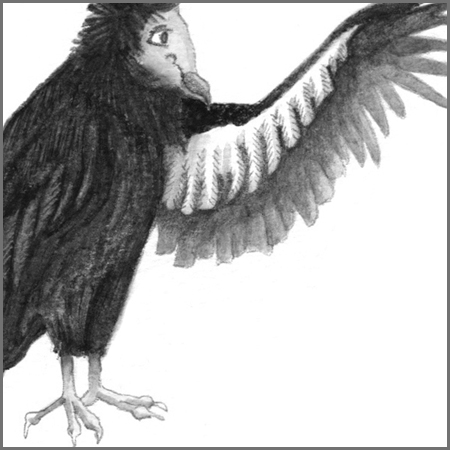
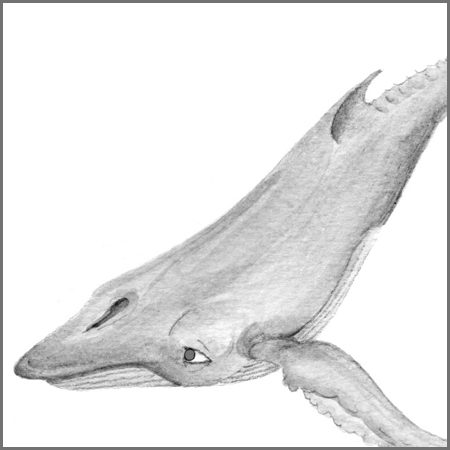
And just as the stars at night silently speak volumes of our own geological history, there is something equally ancient in witnessing the dive of a falcon or the breach of a whale.  It is alarming and heartbreaking to think that so many species that took millennia to form could disappear in a blink.  The loss of that connection to the past is what strikes me about each animal that finds its name on the IUCN Red List of Threatened Species (click the icon to visit the site):


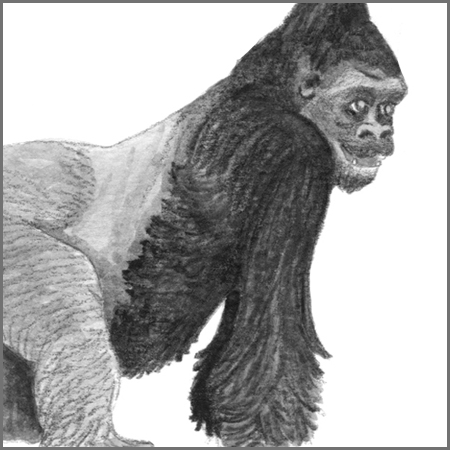
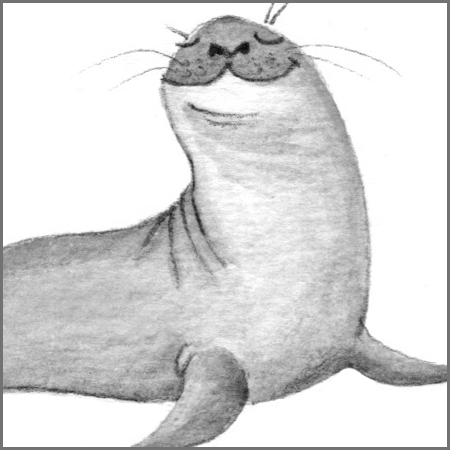
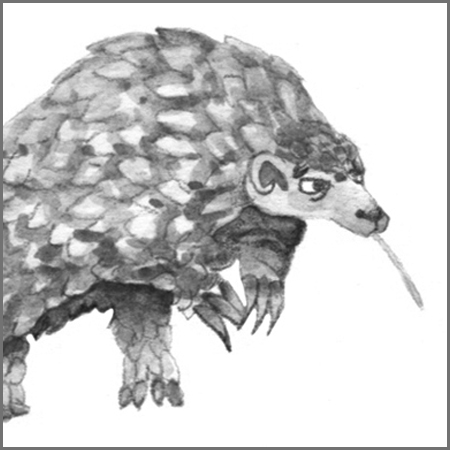
To raise awareness for a select group, species on the very brink of vanishing, I have designed a poster PERFECT FOR THE CLASSROOM!  This poster highlights the geography, population and threats to survival of 12 Critically Endangered species, ranging from the lowly Pangolin to our cousin, the Western Lowland Gorilla.  Most people reading this post have enjoyed these animals since their childhood, and it is important to note that to be classified as "critically endangered", each species is just one step away from "extinction in the wild".

How bizarre to think that a rhinoceros may soon be just as fantastical to a young child as a triceratops or wooly mammoth?

ABOUT THE POSTER:

  • FREE DOWNLOAD button at the 'TEACH' tab (click poster below)

  • PDF is printable at your nearest FedEx Office (or similar) at 24" x 36" size

  • File can be saved to your computer or opened in iBooks on your phone  

  • AND, if your eyes can read the microscopic, you can print at home :)

For more information on these species and efforts to protect them, click the icons below:

[Source 1] Newkirk, Ingrid. "PETA Statement: Texas Senator Ted Cruz's Picture with a Tiger Skin Rug." PETA. People for the Ethical Treatment of Animals, 24 Apr. 2014. Web. 04 Oct. 2015.

CREATIVITY SPREADS!!

The Big Contest (click) is over, and I am FLOORED by the outpouring of truly inspired participation from an amazing bunch!  It has been a joy to see Big Mo spread in a really fun way, and to inspire acts of artistic creation from these readers.  

Continue on for the Wall of Creativity! :) 

FLAT MO

One of the best parts of writing for kids is getting reactions and feedback from readers.  I was so excited to receive a message from a very ambitious second grader, asking to send his summer project to the author of his favorite book, Big Mo - hey, that's me!  A few weeks later I received a package carrying a very special stowaway, Flat Joe.

Flat Joe is a friend of Flat Stanley, a popular children's book character created by Jeff Brown (and drawn by Tomi Ungerer**) who has become a global tool for children's literacy (click for more).  Stanley's story begins when he is flattened by a bulletin board and can suddenly slide under doors, or be mailed in an envelope.  

 
 |  Click book cover for original 1964 edition  |


|  Click book cover for original 1964 edition  |


**By the way, Tomi Ungerer is a wildly significant 20th century illustrator, and a personal favorite for his style, quirky creativity, and rebellious nature.  I highly recommend the film, Far Out Isn't Far Enough for a deeper look at his life and work.  Note: the film is DEFINITELY not safe for children! 

Stanley has traveled to countless destinations around the world - to engineers, farmers, zookeepers, world leaders and yes, even authors :)  I was HONORED to show Flat Joe around my home of San Francisco, and to share a few educational tidbits along the way.  Here are some highlights from Flat Joe's visit:

Big Mo's distant relative???

Joe's Travel Stops

Financial District, California Academy of Science, Fort Mason, Haight/Ashbury, Ocean Beach

I was so inspired by Joe's summer project, that I decided Mo should join me on my recent travels in Eastern Europe.  Introducing Flat Mo!

|  Note: Enlarge images and hover for factoids  |

Mo's Travel Stops

Row 1  |  Warsaw

Row 2  |  Krakow, Prague

Row 3  |  Brac, Makarska, Dubrovnik

Row 4  |  Zadar, Rome

Thank you, Joe and Pilar for including me in your world explorations!  

And as always, happy reading.

BIG CONTEST


Help us spread the story and message of Big Mo, and enter a chance to win an original Padalecki art collaboration!  The art piece is in the works this month, and is currently being hand-drawn (by Jared) and painted (by Megan).  

Let's see if those demon-smashing skills hold up on paper :)

HOW  TO  ENTER:

AND  FURTHERMORE:

1.  Big Mo can be purchased at this LINK.  Order early to allow time for shipping/delivery before the August 28 photo submission deadline.


2.  Big Mo was a limited edition printing***, so available copies are also limited - order soon to snatch a copy before they're all gone! 

*** This also means your chances of winning are pretty good!


3.  Post your photo to either the PadaleckiStudio Facebook Page  -or-  Twitter @BigMoBook  

Please note that any photos posted to the Jared Padalecki Facebook Page or @jarpad Twitter feed will not be reviewed for the contest.  This is our way of streamlining the review process of your photos, but we guarantee that they will be seen on PadaleckiStudio or @BigMoBook!


4.  Your photo entry MUST show off your copy of Big Mo to be eligible.


5.  Get CREATIVE with your photo - perhaps take inspiration from Mo or the story!  Jared and I will choose the most unique photo as the winner :) 


6.  The winner will be asked to provide a mailing address to ship the art.


7.  Key Dates:

August 25  |  Last chance for Amazon 2-day shipping

August 28  | Submit your photo by this date

August 29-31  |  Jared and Megan will review the entries

September 1  |  The WINNER will be announced! 


BIG MO: BACK TO SCHOOL

Just as the final weeks of school were winding down for elementary kids, I brought Big Mo on a slew of in-school Author Visits for the first time!  This was a fantastic opportunity to read the book and discuss not only the heart of the story (and its important message of consumption-run-amok), but also the creative design process with hundreds of Pre-K through Second Graders.

Over two weeks, I stopped into several schools, including my own alma mater, Woodstone Elementary in San Antonio, TX.  It's strange how the school library smells the same (*like well-worn books), but the ceilings seem so much lower than I remember!

Not only was this experience rewarding for me, but I also found that the kids were incredibly receptive to the complex topic of design.  We began by discussing ideas and inspiration, then learning how to draw Mo, and finally practiced narrative structure with an interactive, short story activity (excerpt below).  Many students seemed inspired to go home that day and start writing their own story!

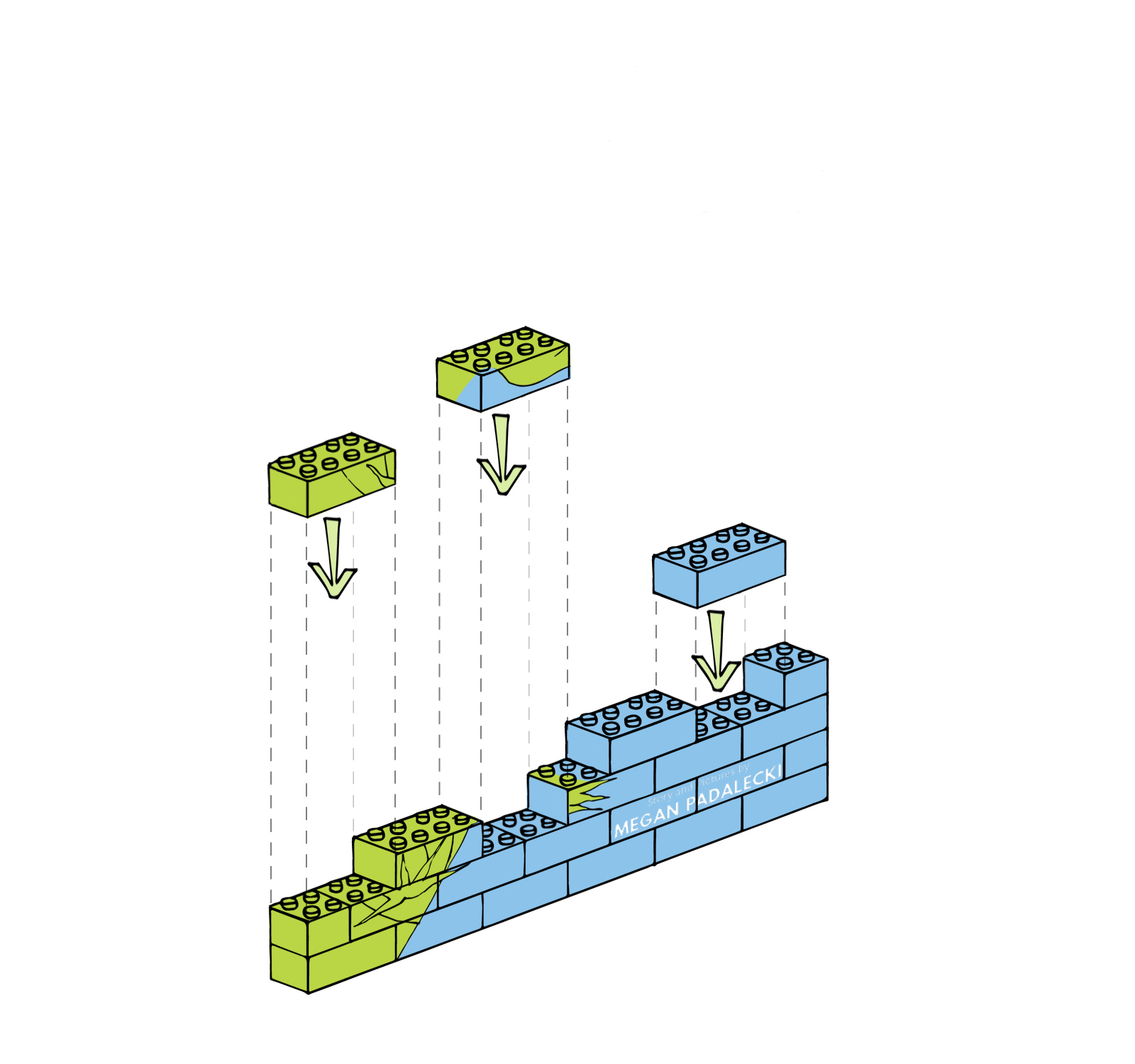
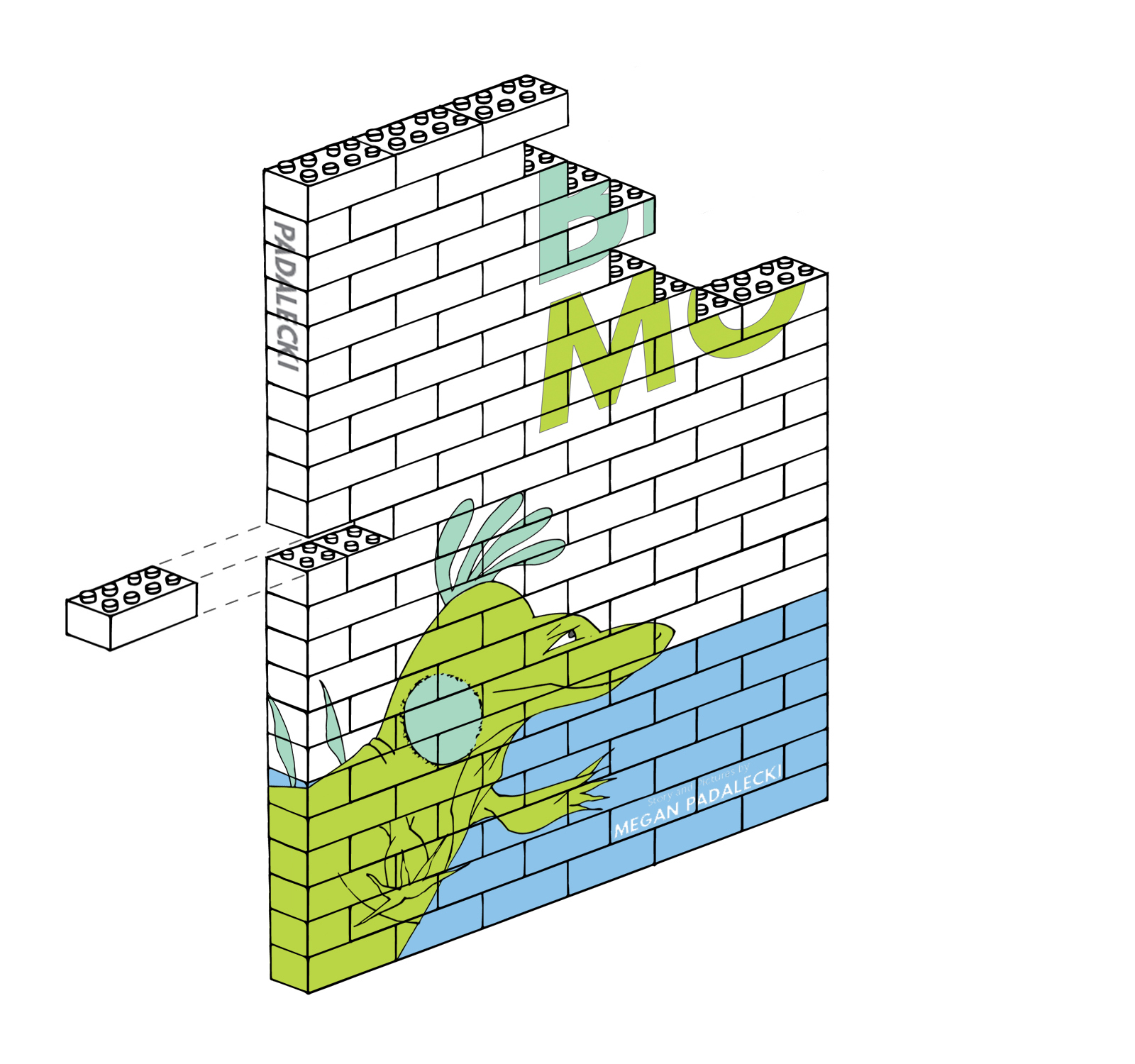
I explained to the groups that with my architectural background, I can't help but think of writing and illustration like an architect would.  Just like buildings are synthesized from many parts and players, a book is "built" through a similar process (only with many more elements of PLAY and IMAGINATION!).  I think of Big Mo as a stack of blocks, where each piece had to fall into place before the story could feel complete, and you could hold a book in your hand.

I spoke on my unique role of creating both the story AND the pictures for Big Mo, and I encouraged each child to practice writing and drawing from observation.  

"If you learn to draw the things around you, you can never be bored!"  - Me :) 

(admittedly, nearly EVERY page of notes from my school lecture notebooks reveals just how far I took this tendency to doodle)

My Book Tour was great fun, and I gained some inspiration and tips for thinking like a kid again!  

** Special thanks to Dianna White (Oak Creek Elementary), Sara Romine (Woodstone Elementary), Ashley Miles (St. David's School) and Martha and Joy Winters (Casa Montessori)

** If you would like to arrange an Author Visit at your school, please reach out on the Contact Page - it would be an honor!


RARE DEVICE

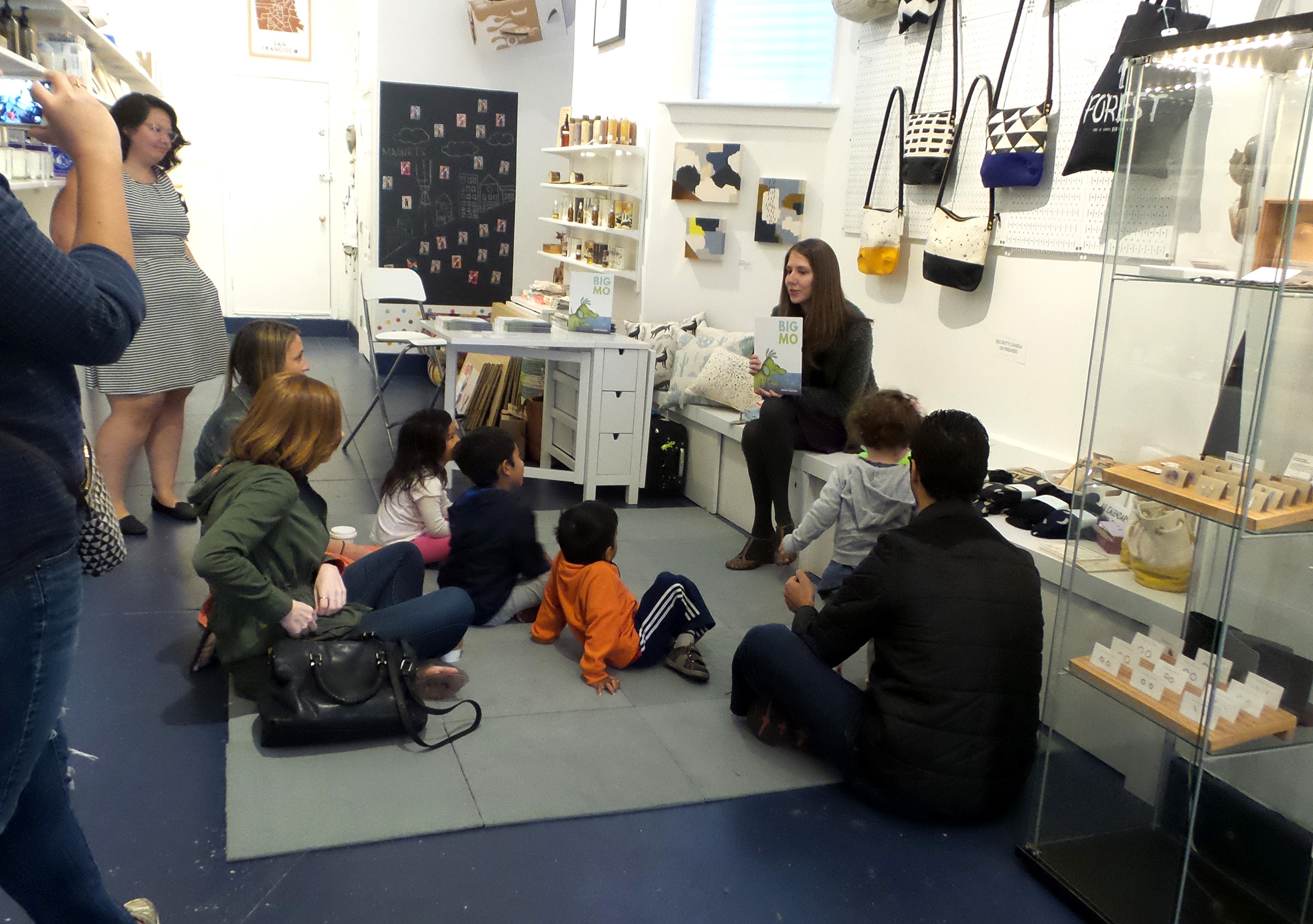
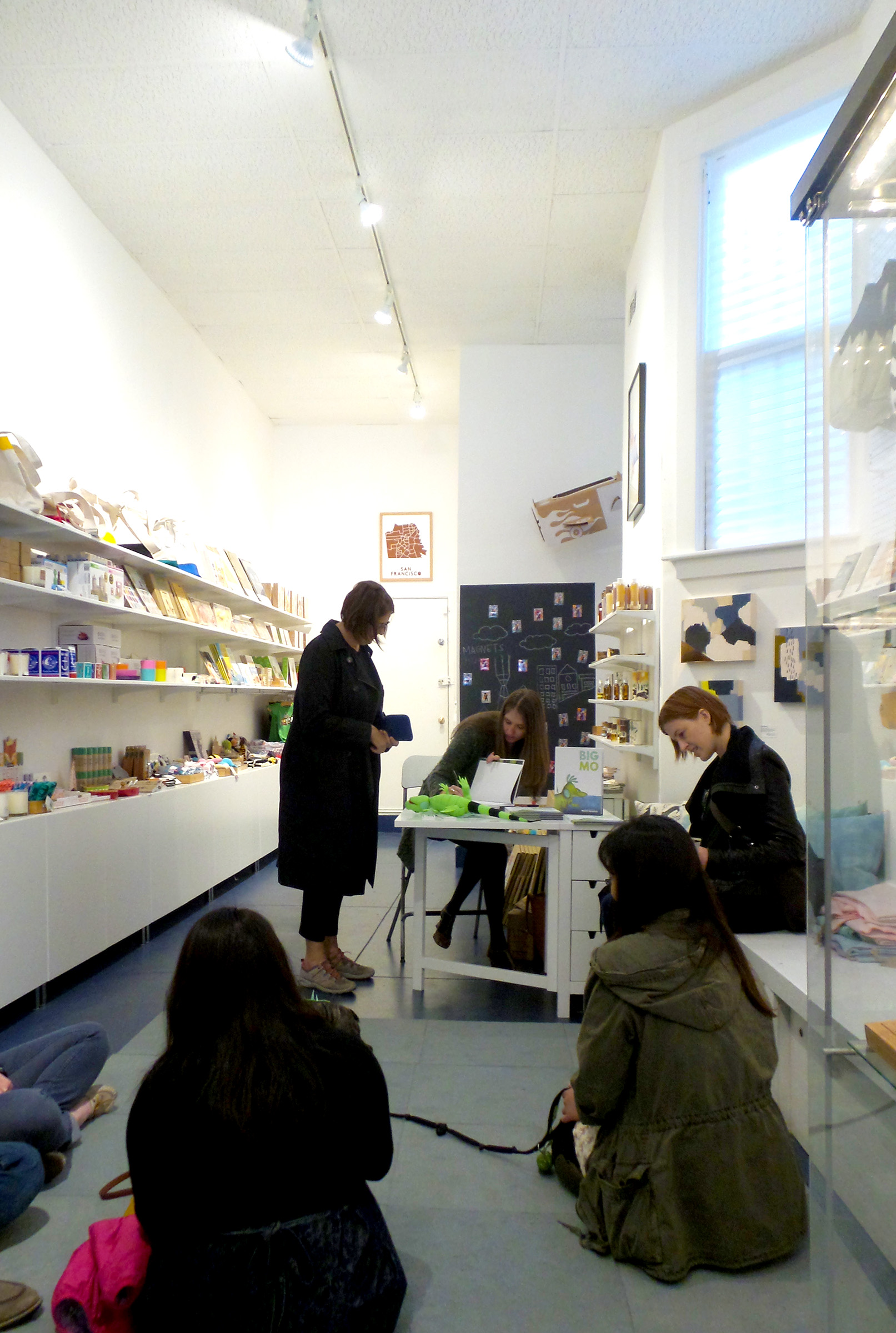
I am sharing photos from my Saturday Big Mo reading at Rare Device in San Francisco, because it was too much fun (and too cute) not to!  Enjoy, and if you find yourself in the City by the Bay, definitely check out this fantastic, beautifully-curated gift shop, where there is always a great selection of locally-crafted design objects (and always doggie treats at the front counter!).

PEN PALS

Thank you to Ms. Fillman's wonderful SECOND GRADERS at Countryside Elementary School in Virginia!  I appreciate all the hard work and kind thoughts from my newest pen pals : )  Keep up the creativity!

EARTH DAY

When I was eight, the local news sent a reporter to my elementary school on Earth Day to "interview" us.  I was excited to be picked as the ambassador for the third grade, so I prepared by fluffing up my bangs for the occasion.  I had read the morning announcements a few times, so was unjustifiably confident in my public speaking ability.

Yet, when the time came for the reporter to ask me (giant foam microphone in hand) what Earth Day meant to me, all I could muster was the phrase, "Reduce, Reuse and Recycle!", then the little red light on the recorder clicked off.  

It must have been pretty cute, even though I clearly missed some of the main bullet points.

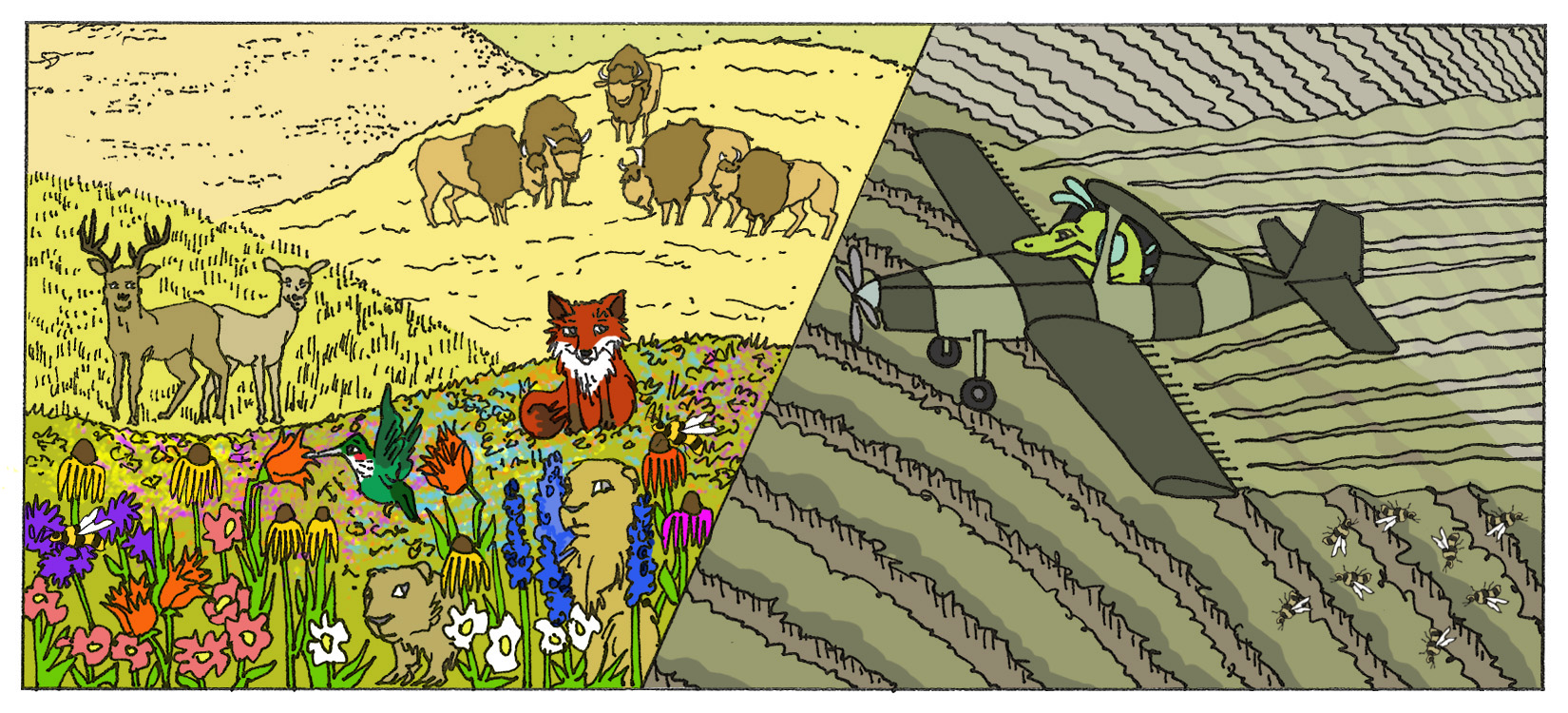
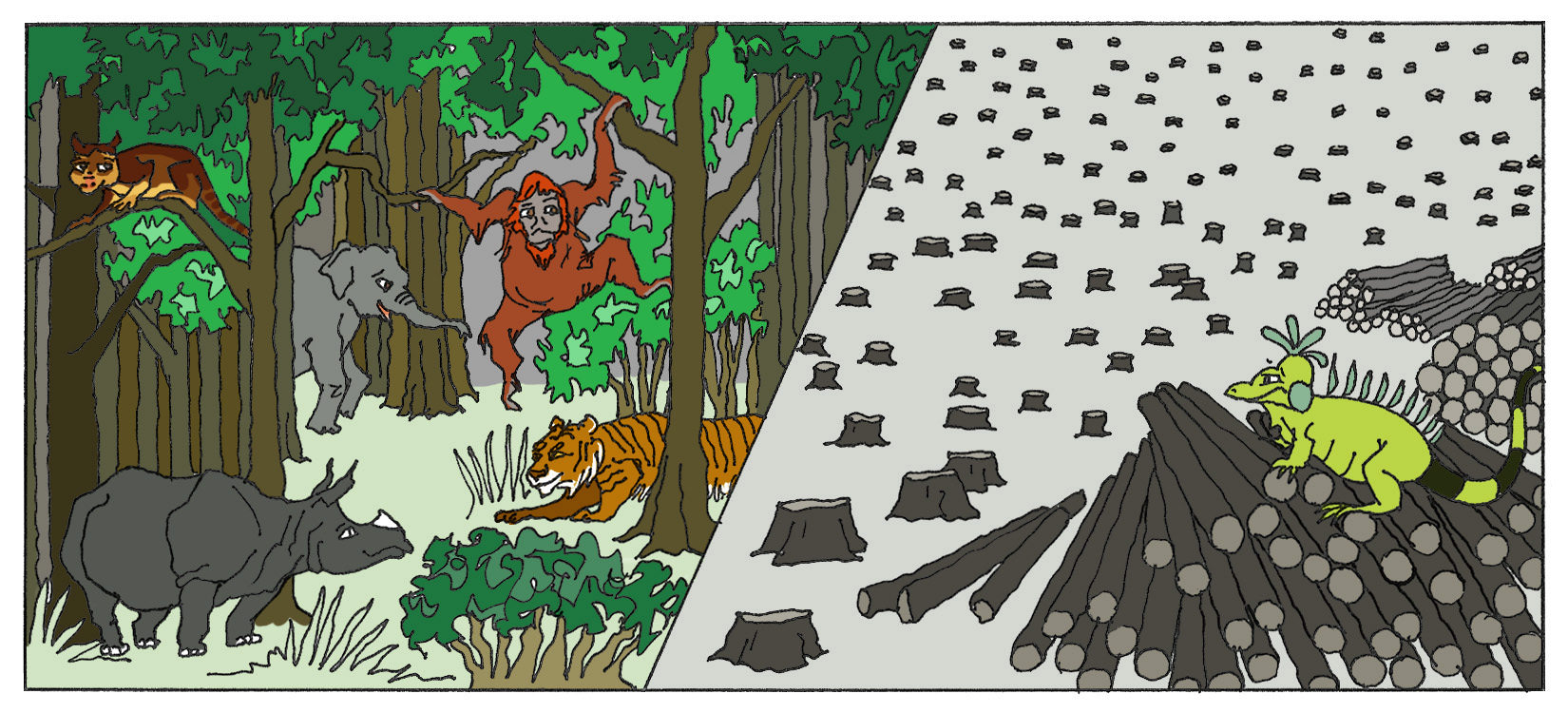
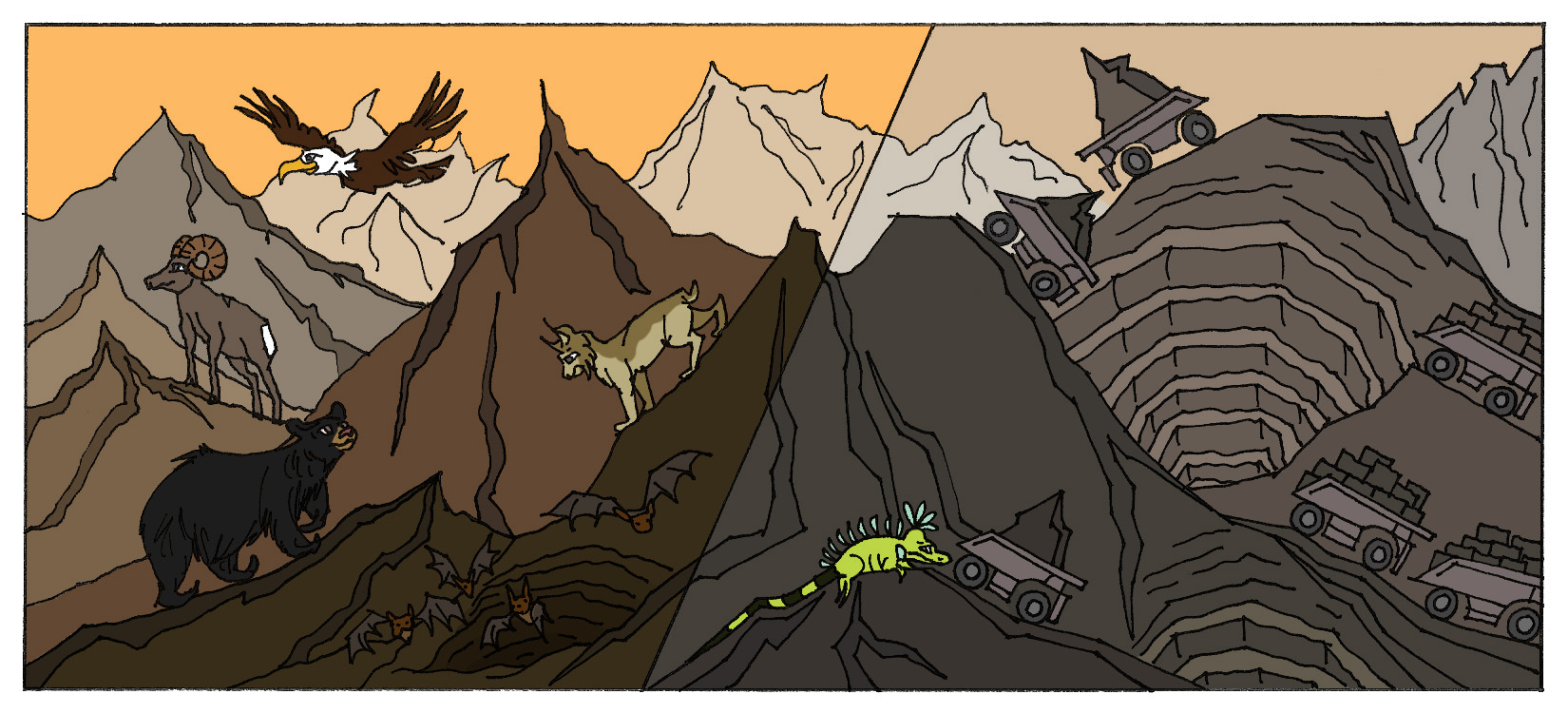
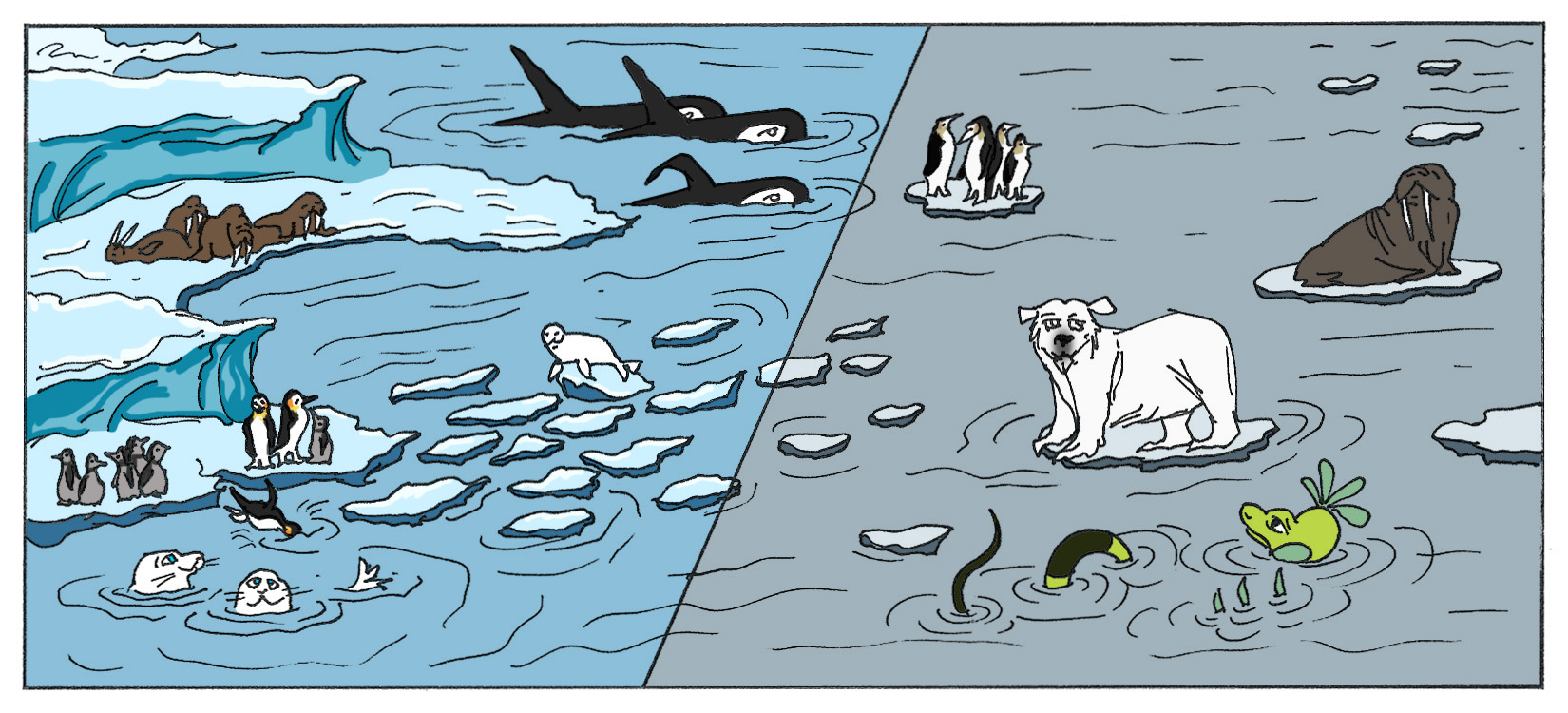
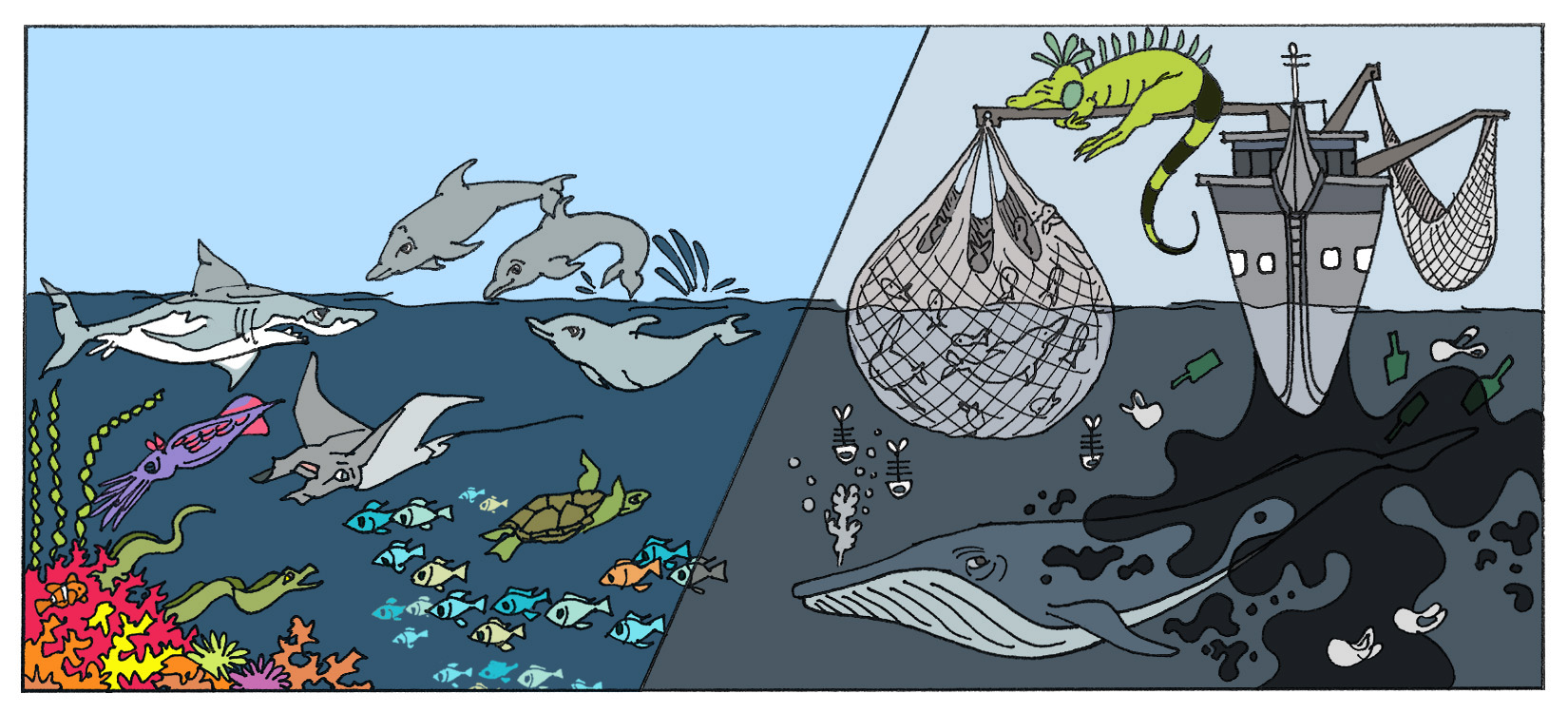
I hope that if the story of Big Mo does nothing else, that it encourages children to think about responsibility and consumption and greed and our environment that is shared among all the ecosystems of the earth.  I hope the story highlights the connection between individuals and the planet, even if that individual happens to be an iguana.

In honor of this day which is technically every day, I have created an educational companion to Big Mo.  Check it out on my new TEACH tab!


This supplement to the story introduces some of the broad ecologies set in the book, so that kids can start to think beyond the pages and explore more on their own.  Then, when the next reporter rolls into school, they'll be better-equipped for the interview : )


VERSIONS

The rules of the game: revise, revise and REVISE.

There are rare moments in life where a fully-formed and perfected thing is created.  More often in the creative arts, a final product is the result of countless iterations.  Refinement thus becomes an art form in and of itself.

Let's take a look at a few images from Big Mo.

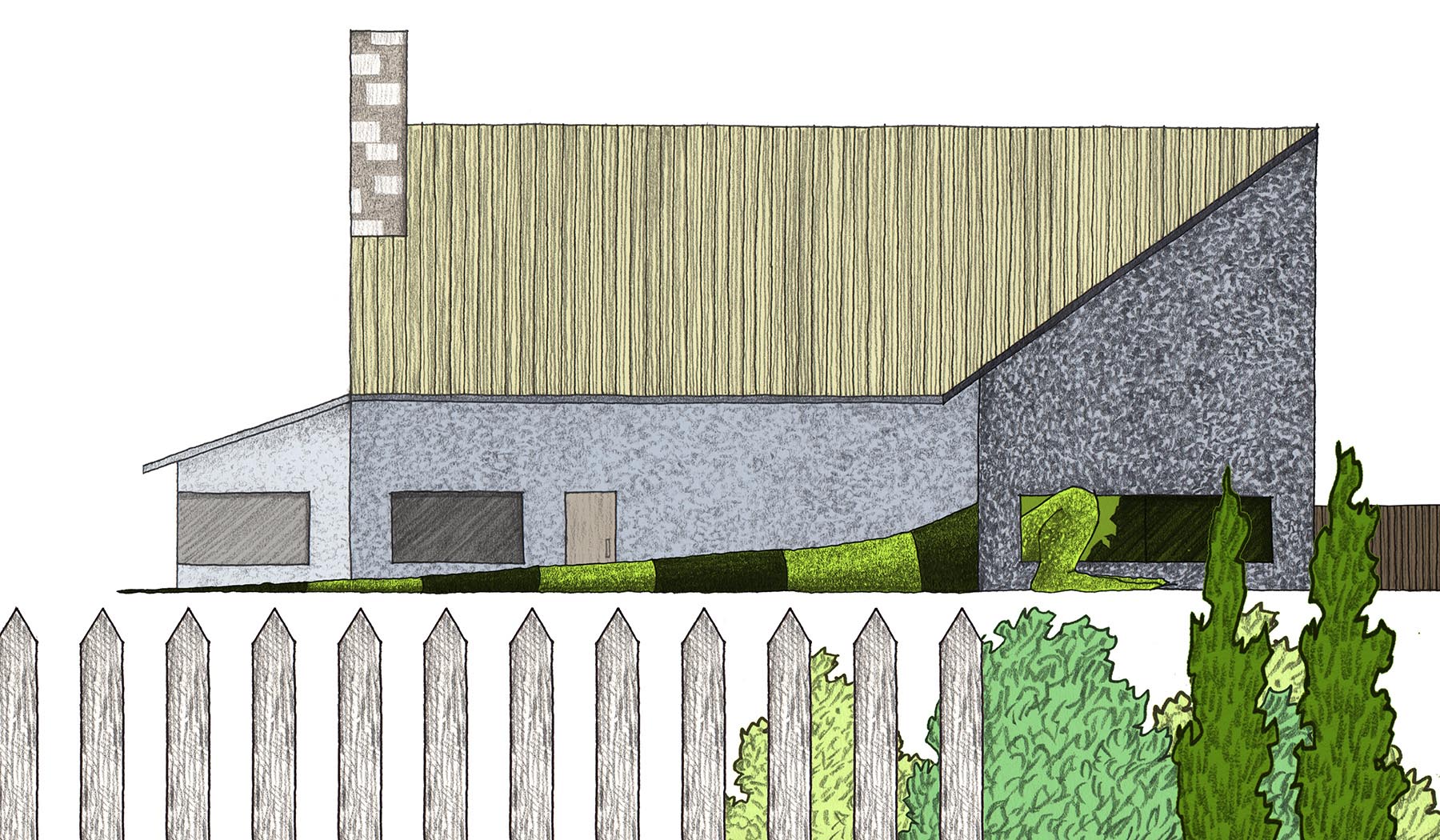
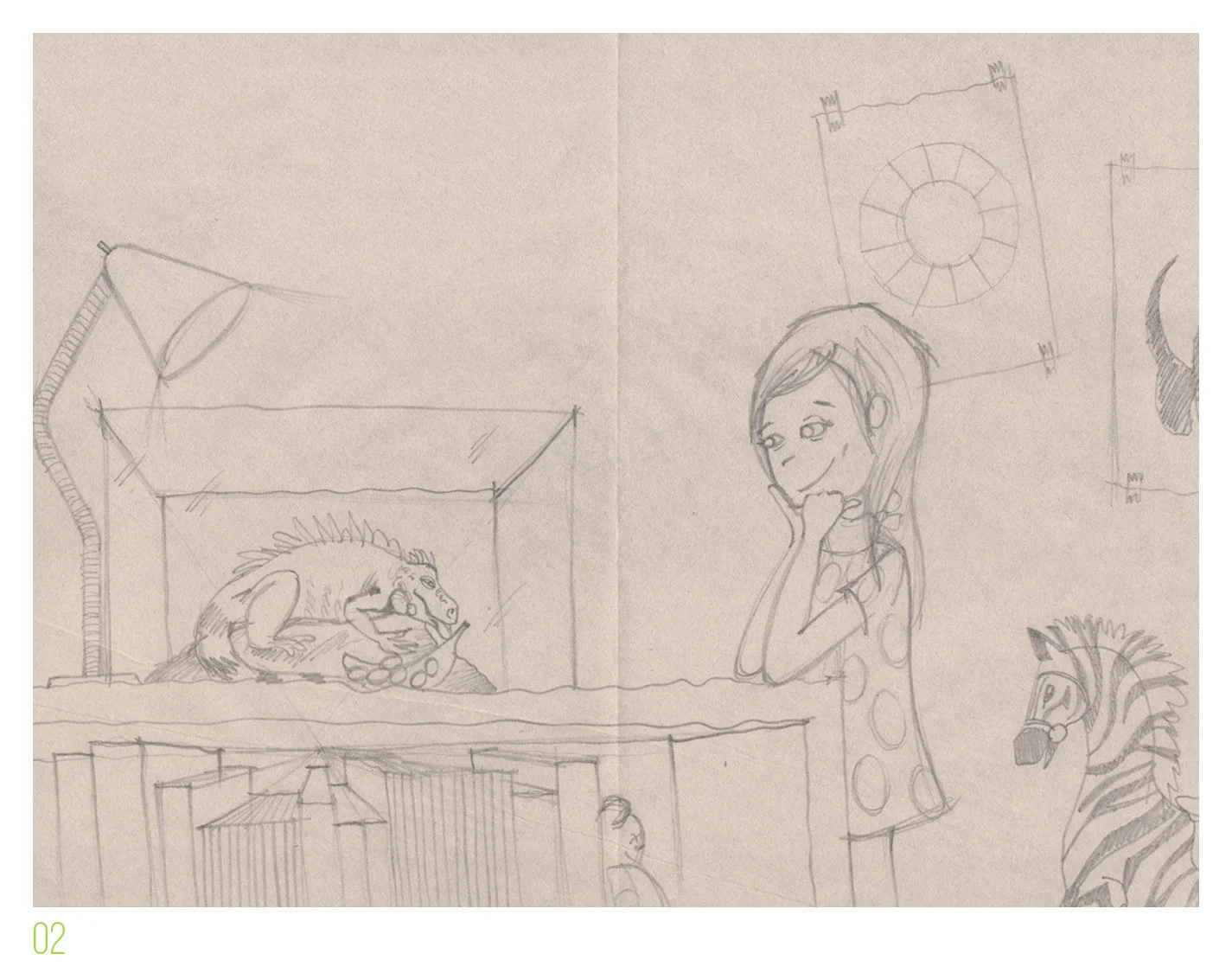
At this point in the story, the reader realizes for the first time that Mo is not simply going to grow larger than his tank - he's going to keep going!  In my initial concept sketch, Mo is the size of the family van, enjoying a windshield wiper toothpick.

While this image does give an indication of his journey to come, it had two problems for me:

          1.  The car is too specific and realistic, and the setting in the garage was difficult to convey without using one-point perspective, which I hoped to avoid altogether for simplicity of visual style. **Note: more on perspective in a future post!

          2.  This scene is an important cue for the reader for the "speed" of Mo's exponential growth, and by this point, he should be much larger than a car.  So, to keep the anticipation alive, I drew Mo as partially hidden inside the garage, presumably waiting to burst out!

The illustration was "blocked out" on the page, and only very minor elements, like foreground and color selection, were changed.


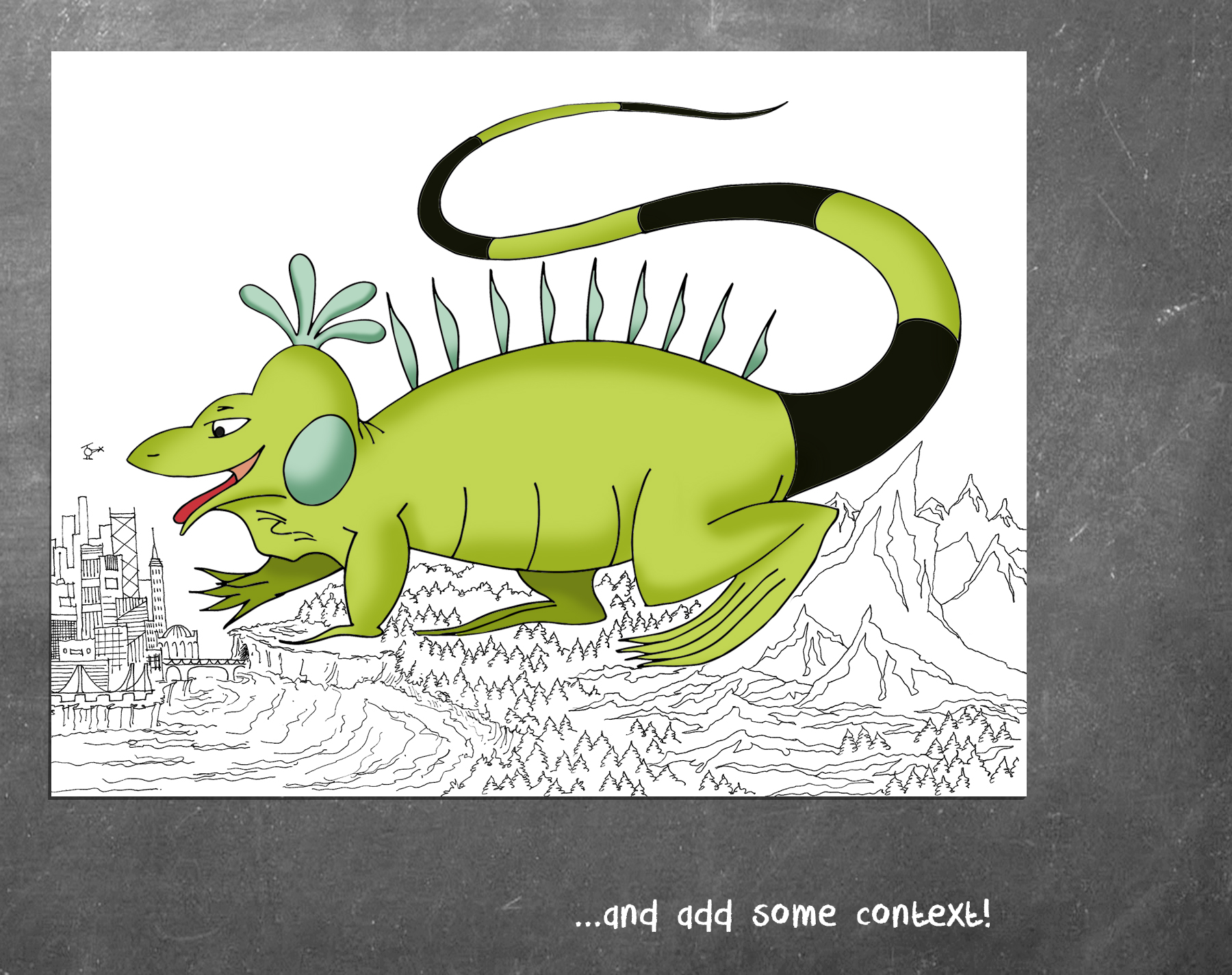
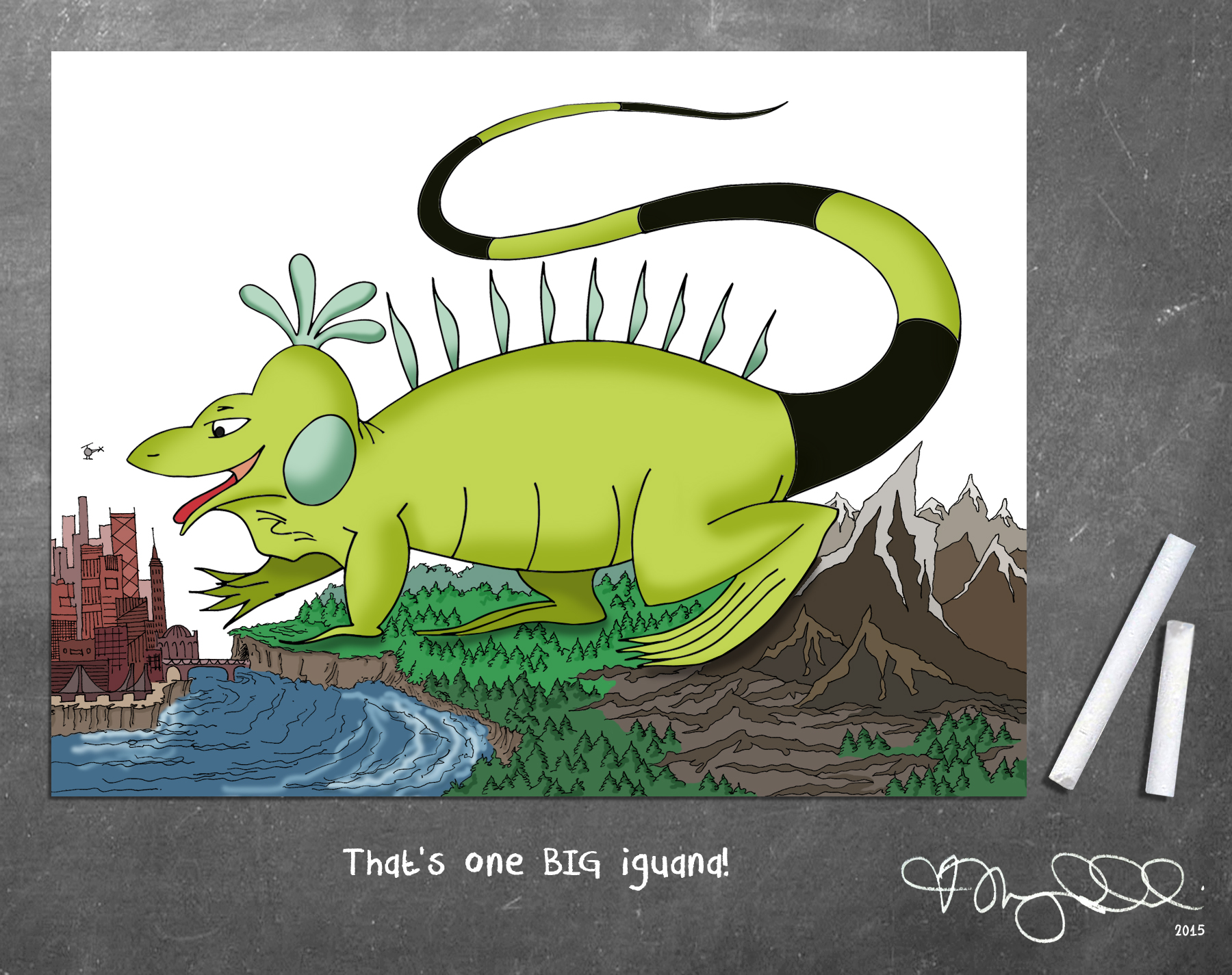
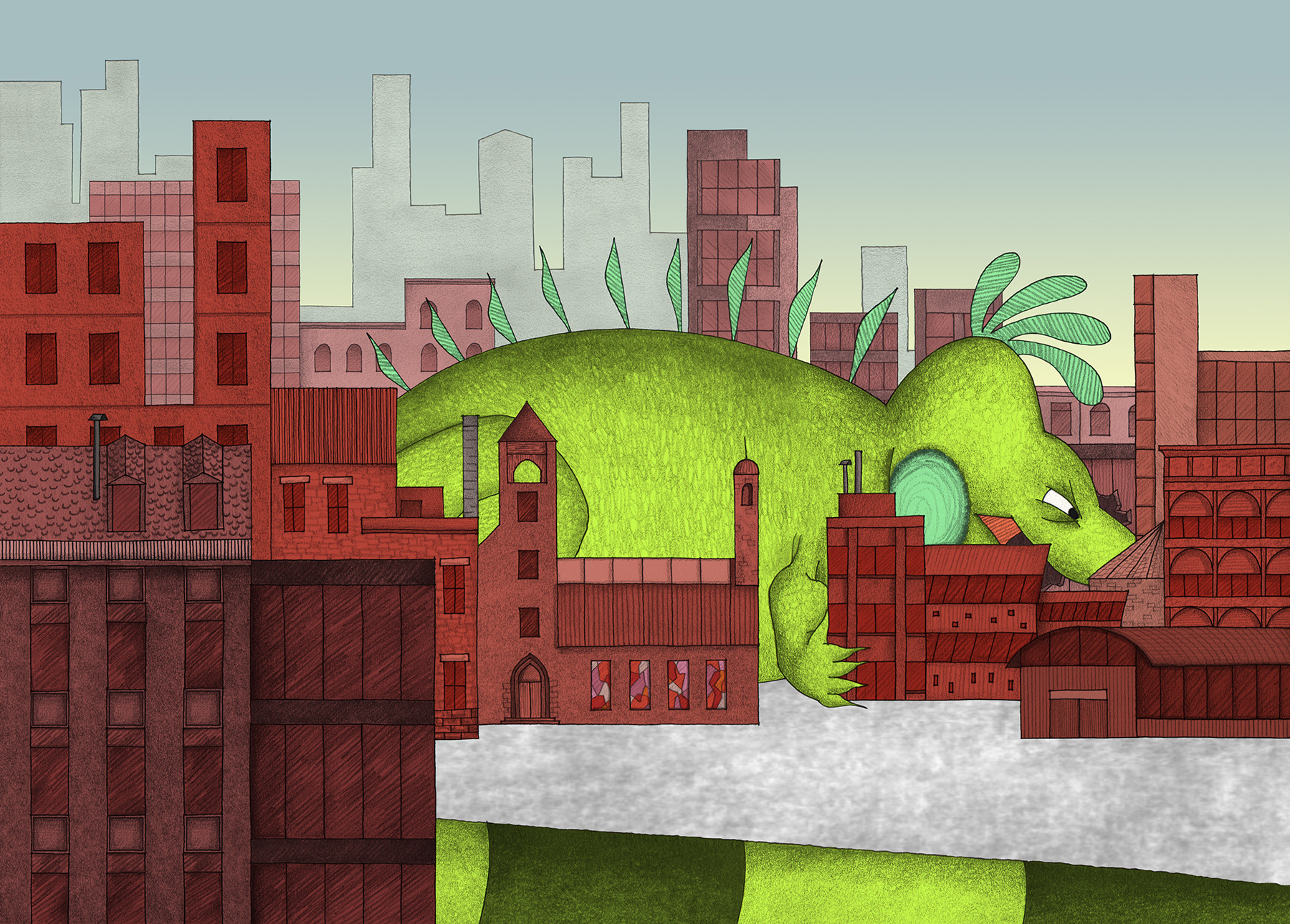
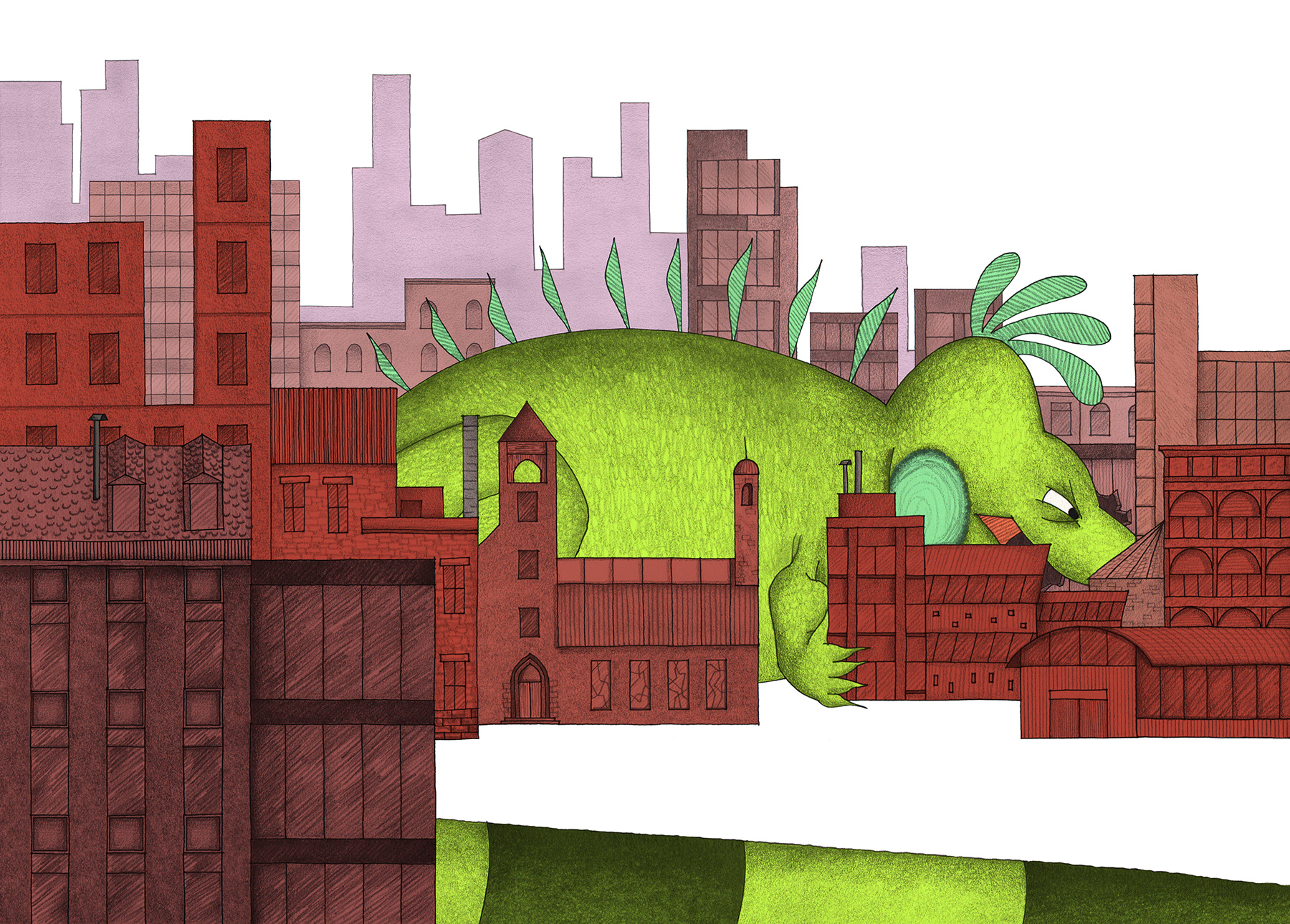
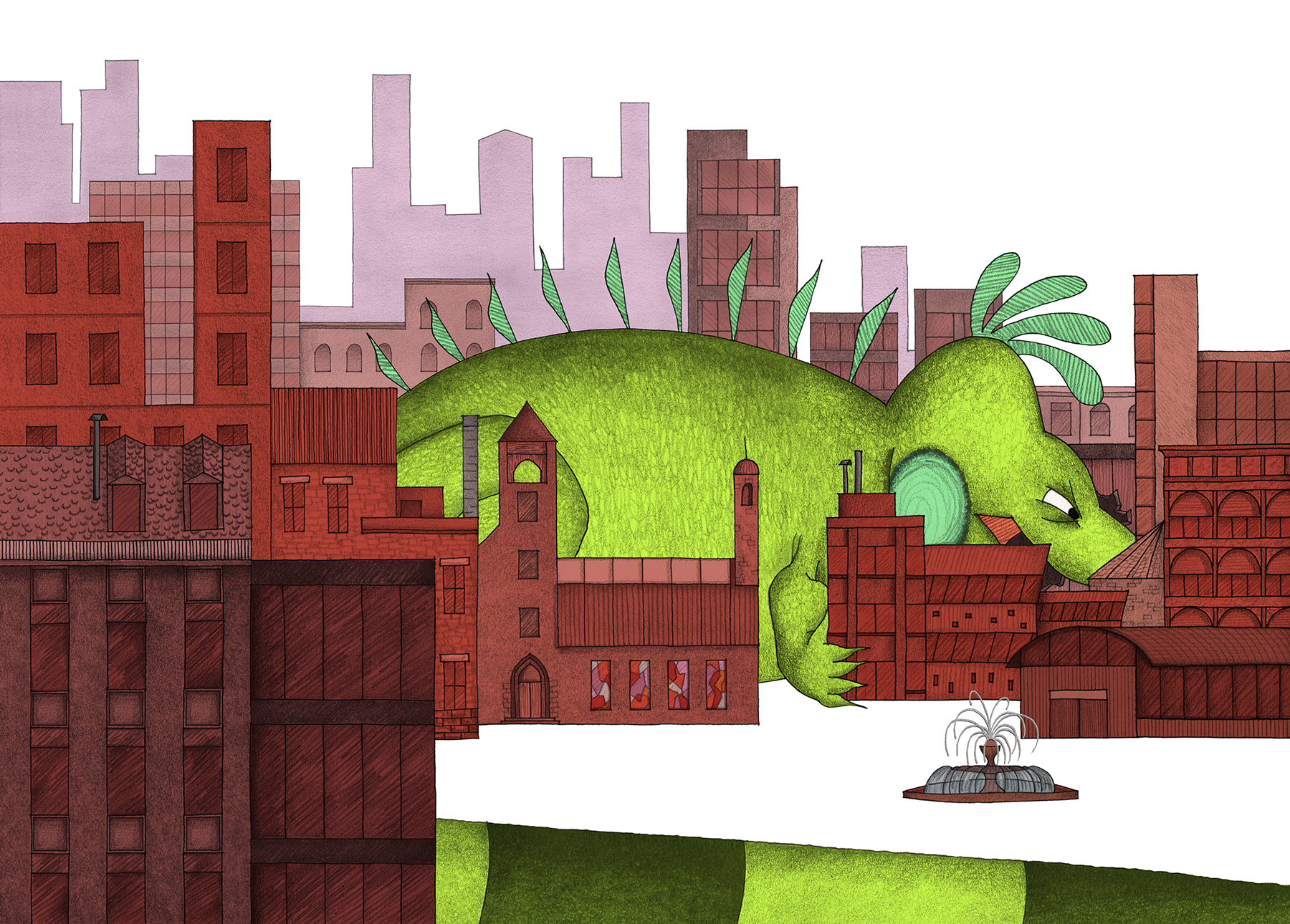
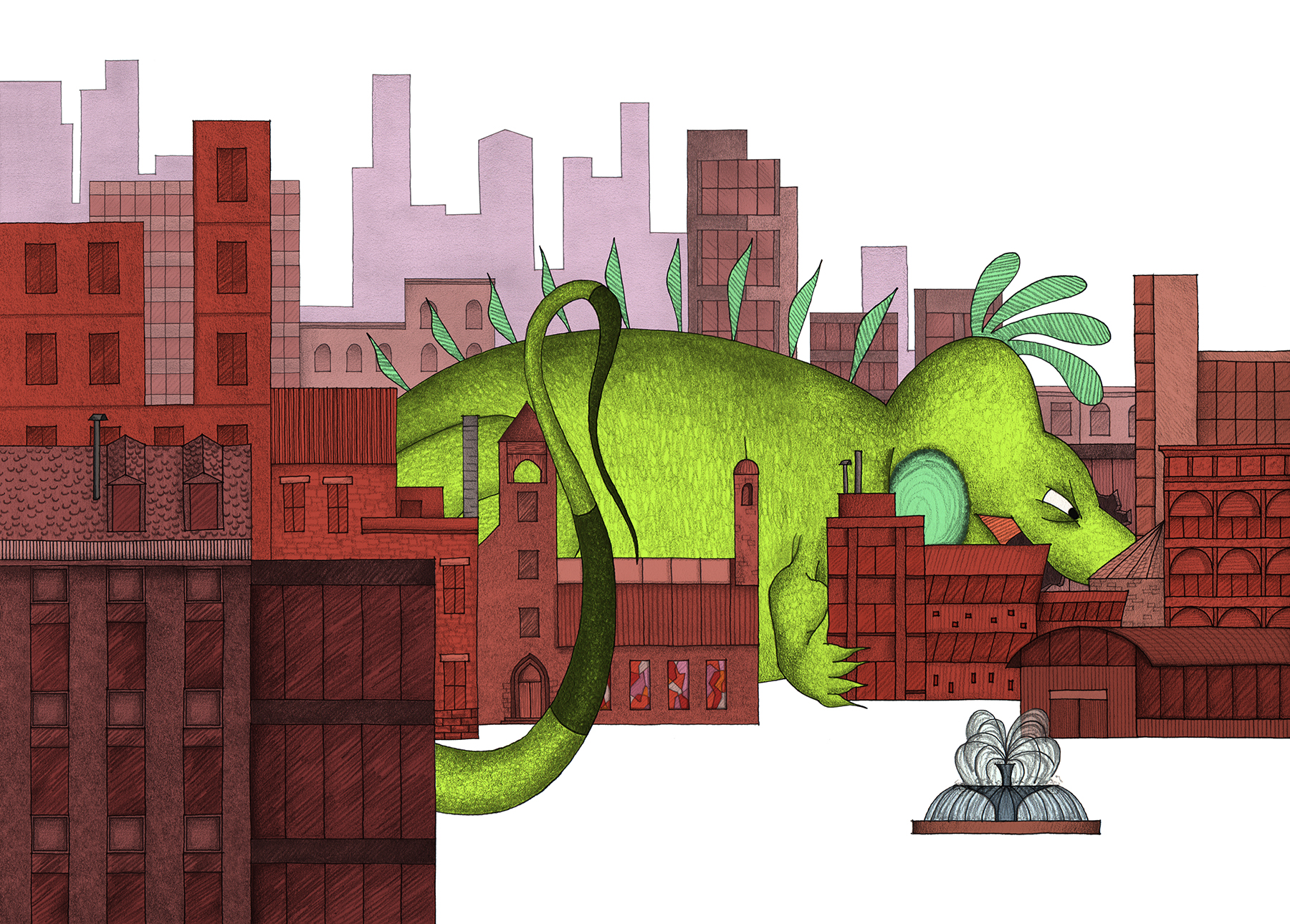
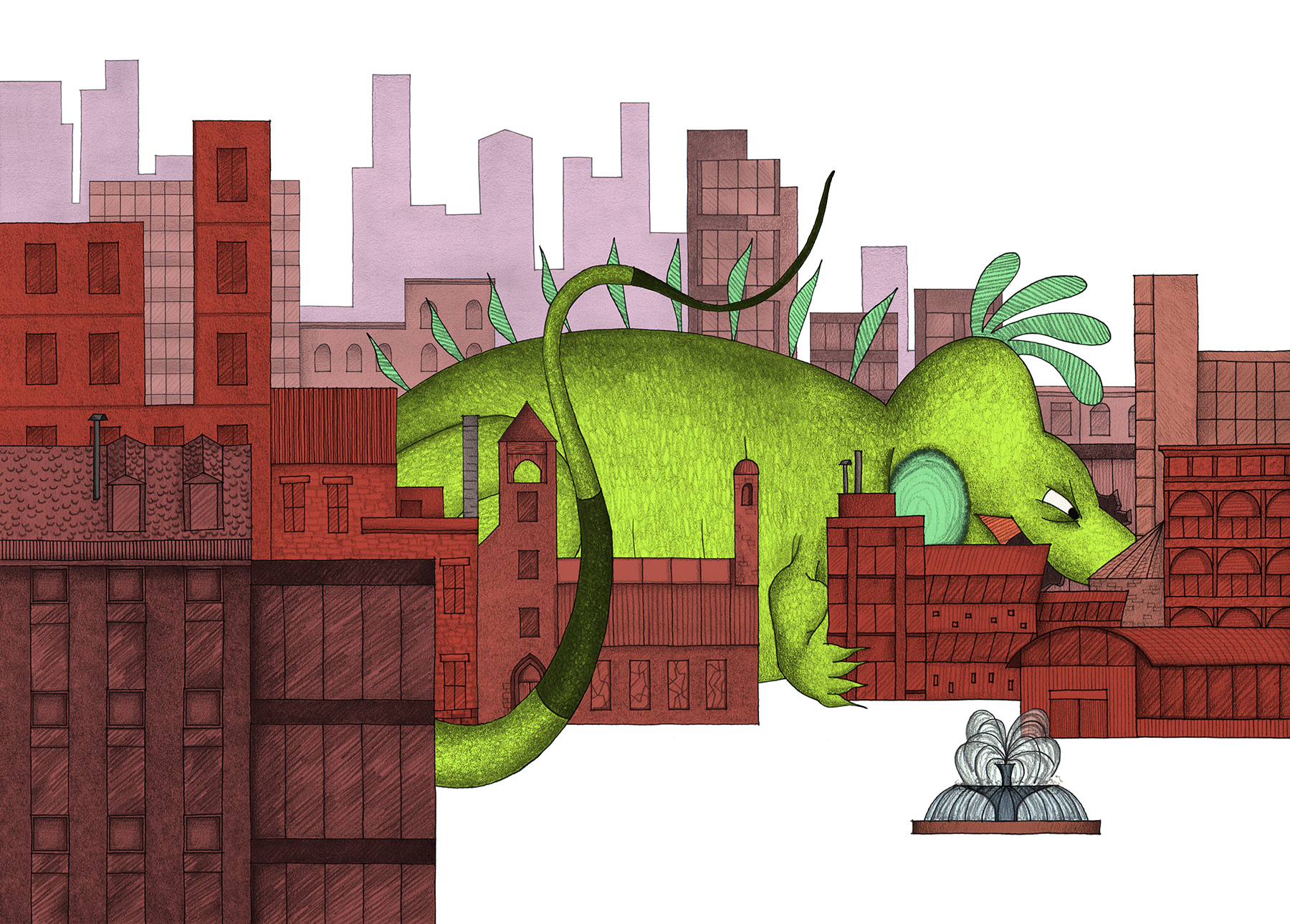
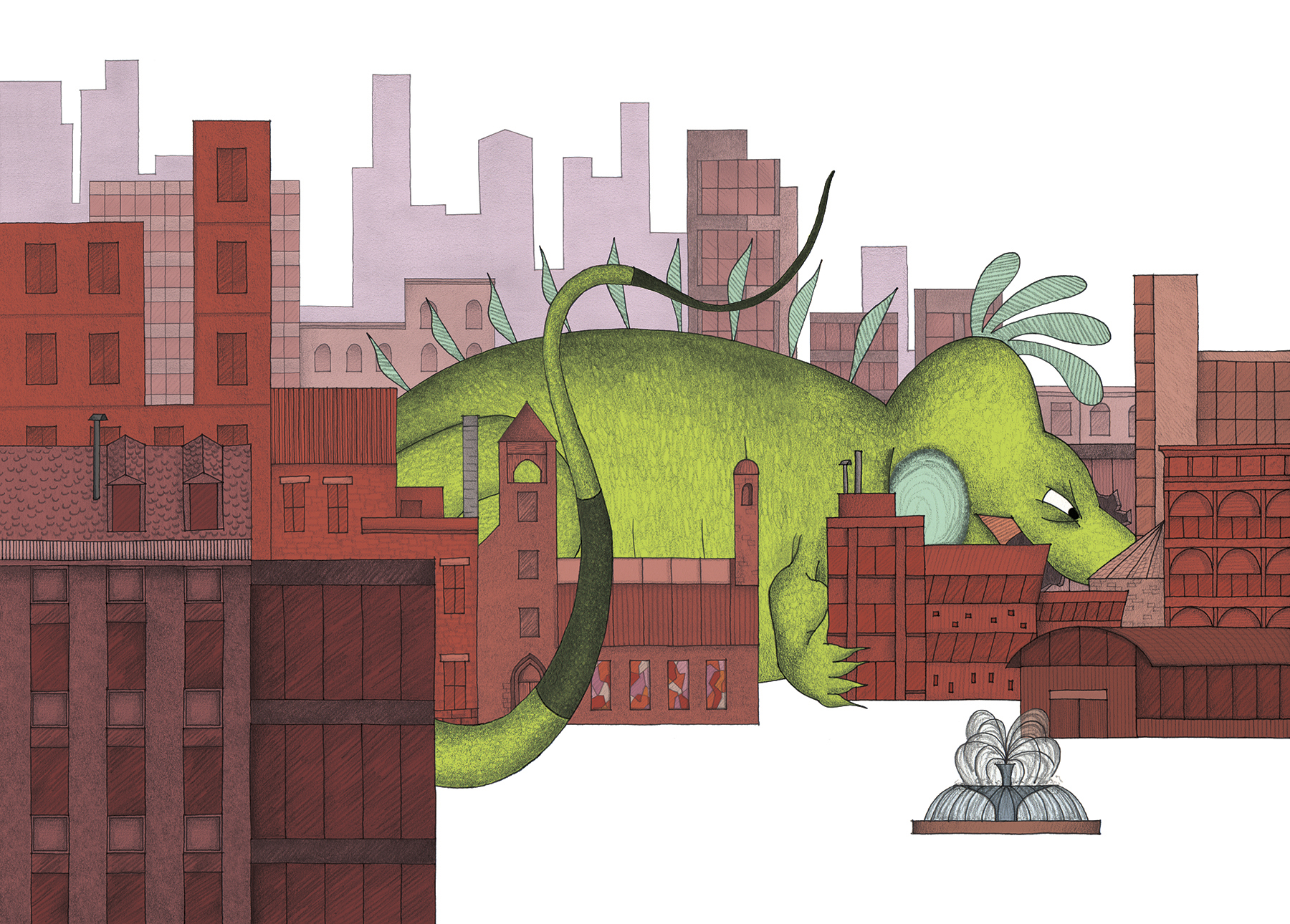
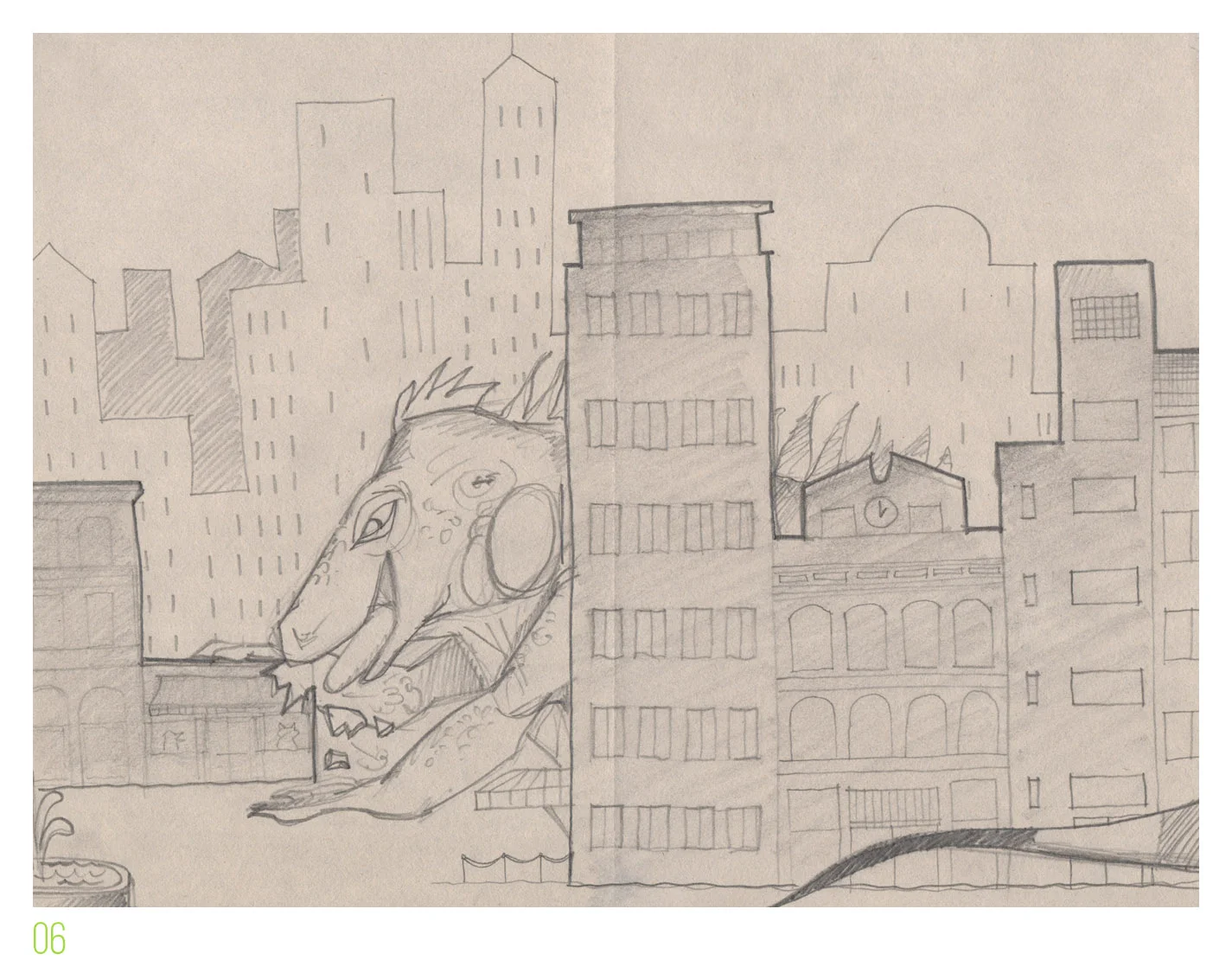
By the time Mo is as large as a city, his destruction is far-reaching.  With his larger size, Mo's body began to encroach on the boundaries of the drawing page.  This was a fun side effect, and meant that I could really play with the relationship between Mo and his surroundings.  When flipping through the book, you may notice how his body tends to mimic the contours of the land around him, whether he is lounging on vineyards or weaving through a downtown maze, as with this scene.  

The anatomy of an iguana is particularly suited to active and dynamic positions in "landscape format", with a bit of humor to boot!

This particular illustration forced me to make an important decision on the status of human figures (ie. to include, or NOT to include?).  I decided to represent the presence of humans without actually drawing them.  The concept of an iguana growing out-of-control is potentially scary to a child, so I took precautions to leave the people OUT.  There was a visual implication to this, too, because humans would be no larger than dots as Mo's scale grew through the story!

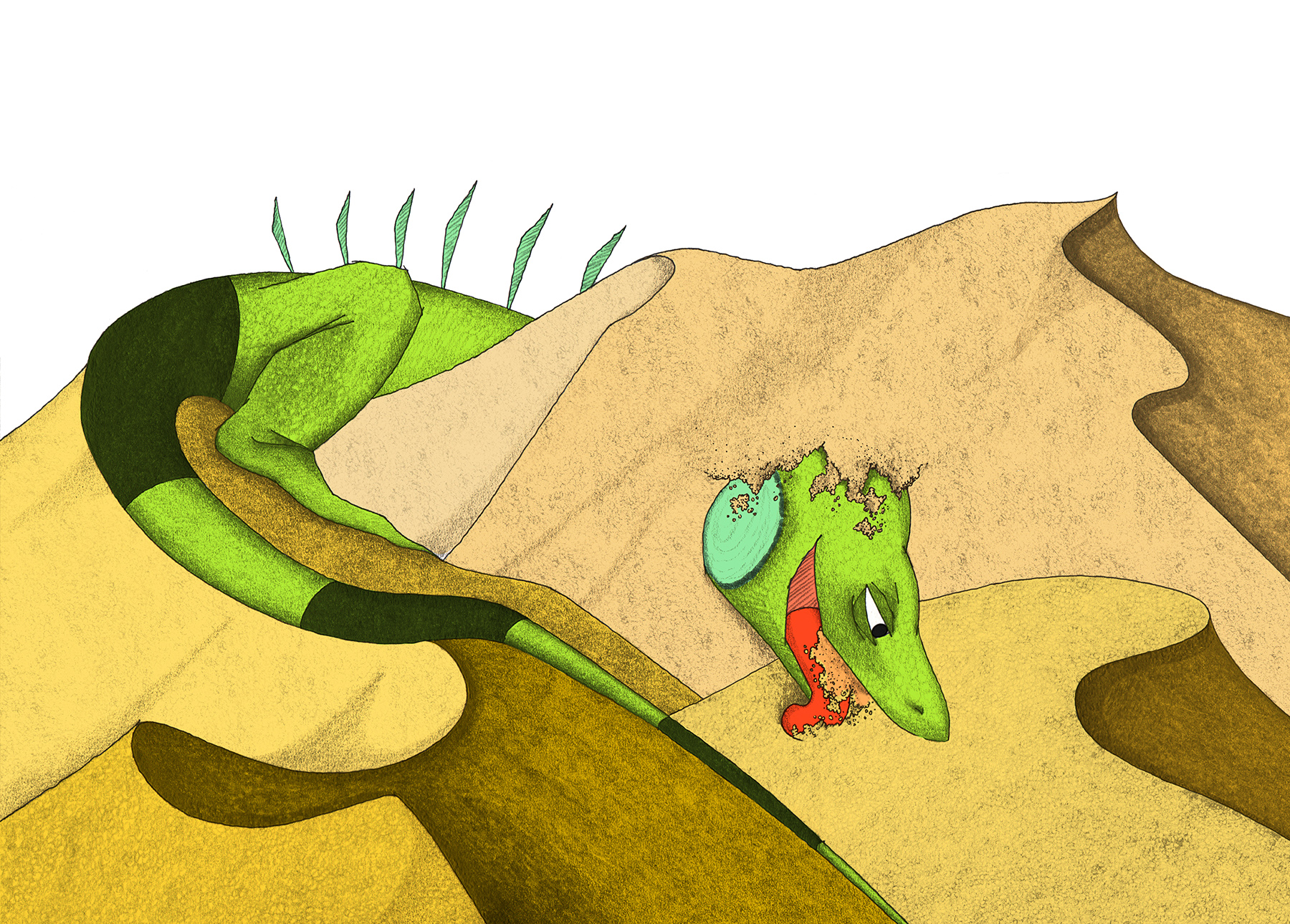
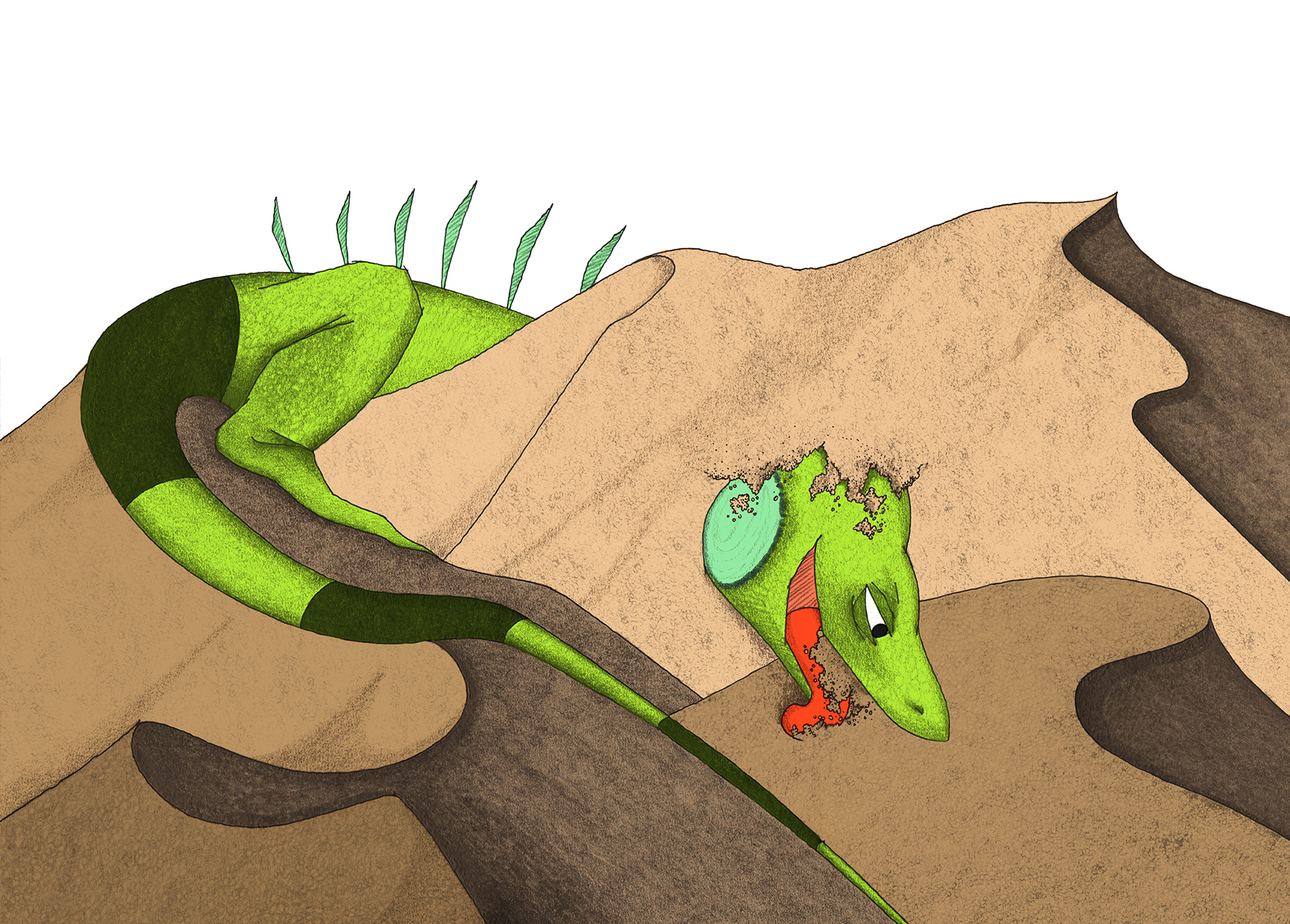
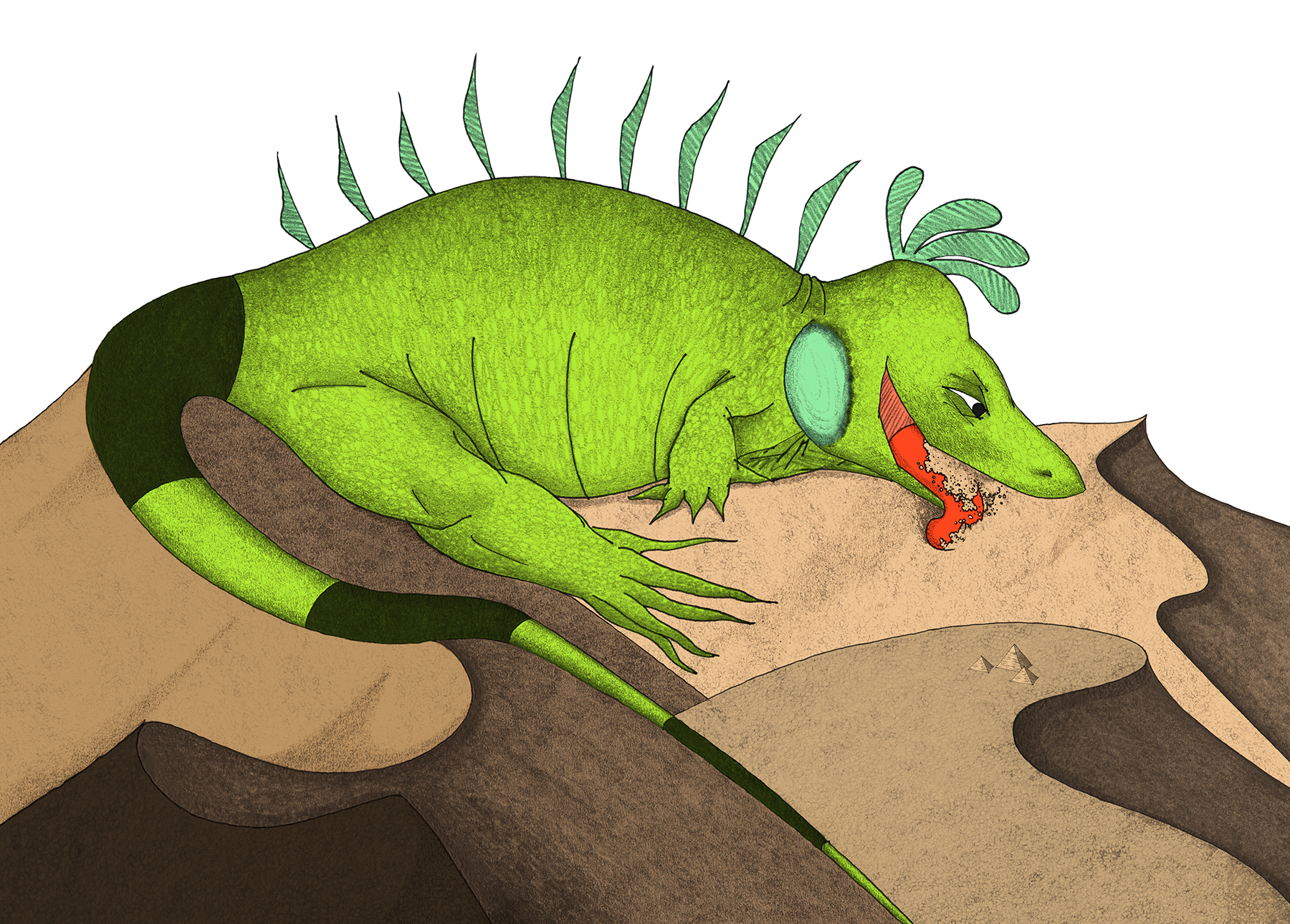
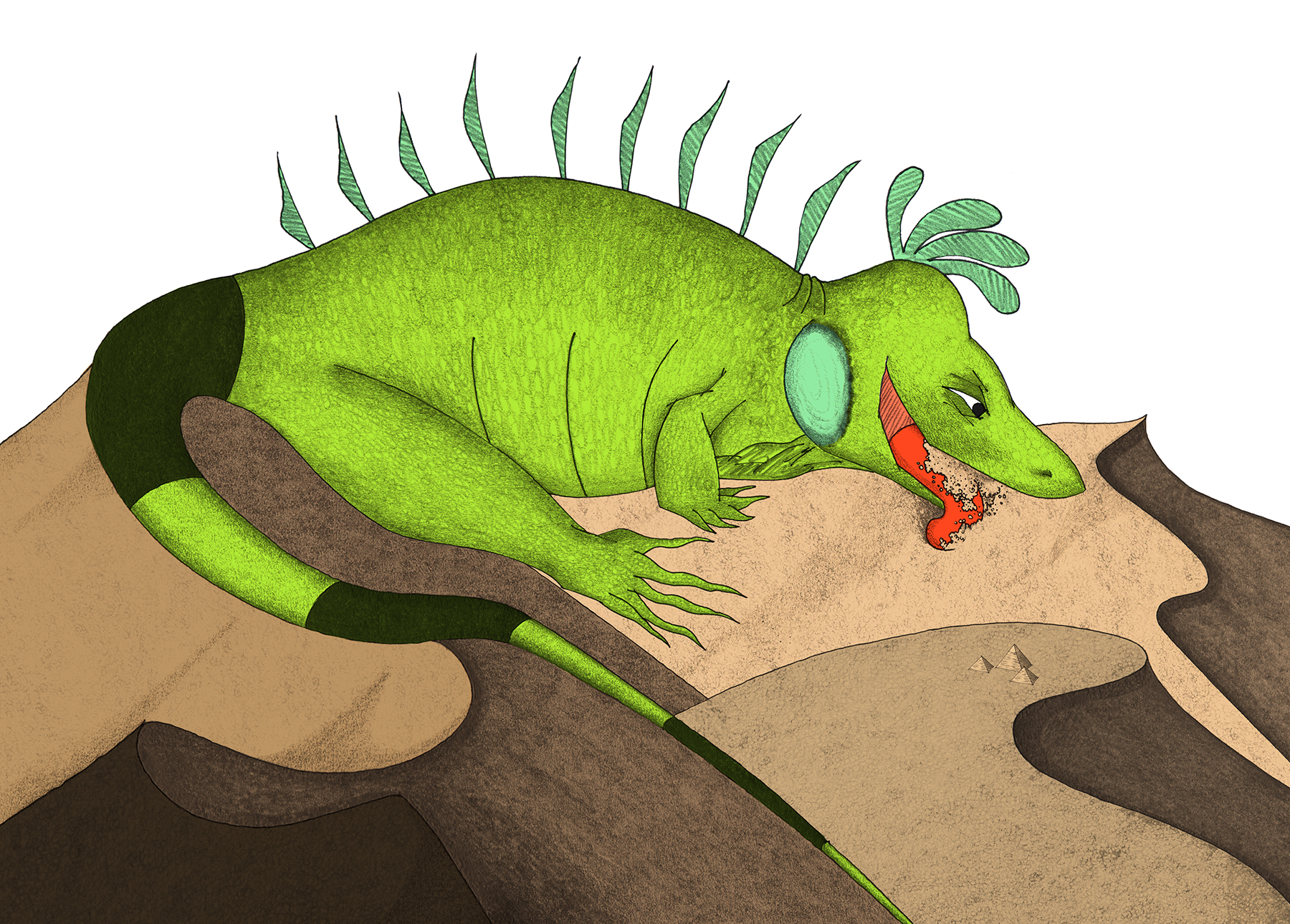
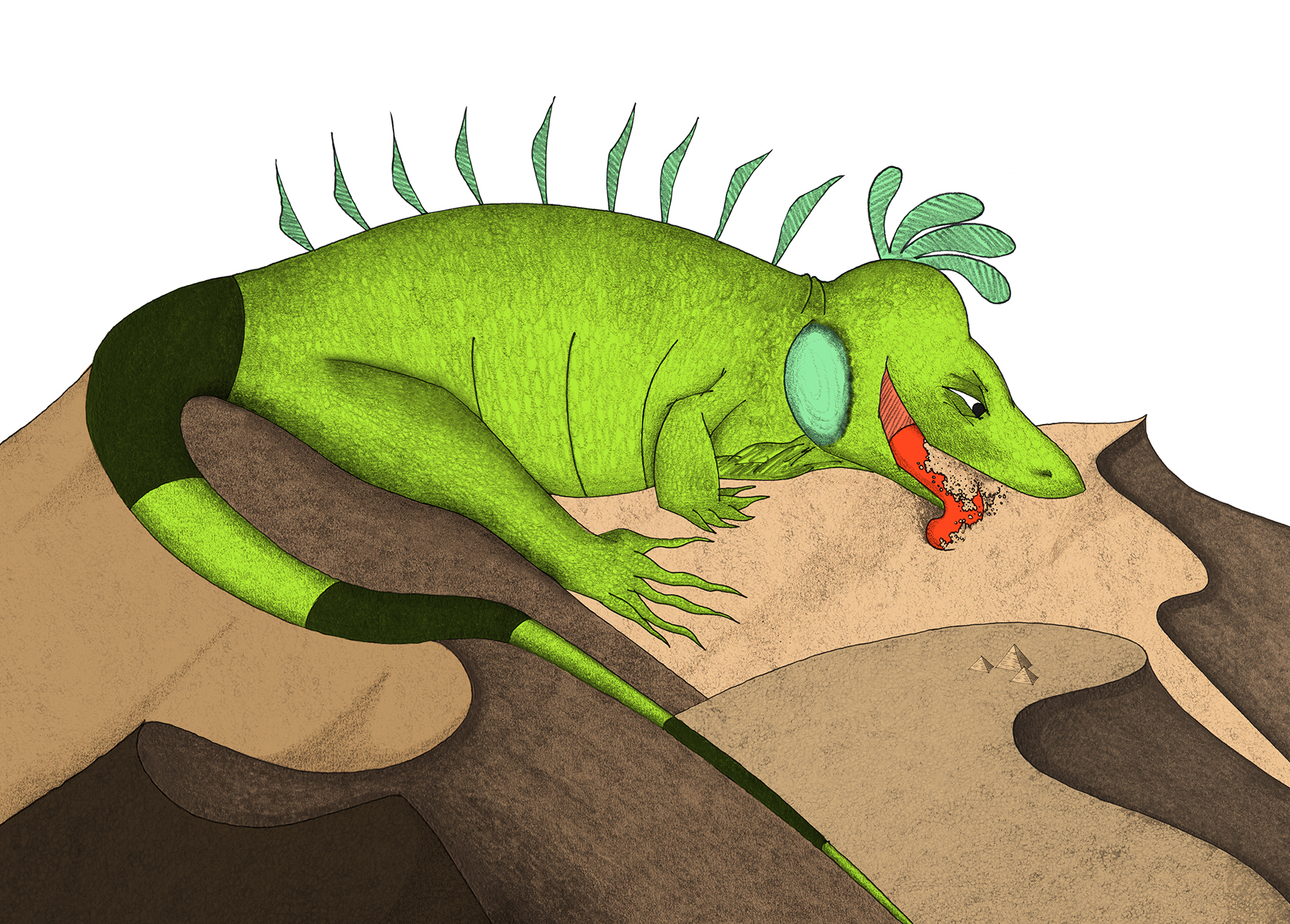
Revisions to this spread were mostly cosmetic as I altered the tail, tones and details. Unintentionally, I had created a "Spot the Differences" puzzle for myself.


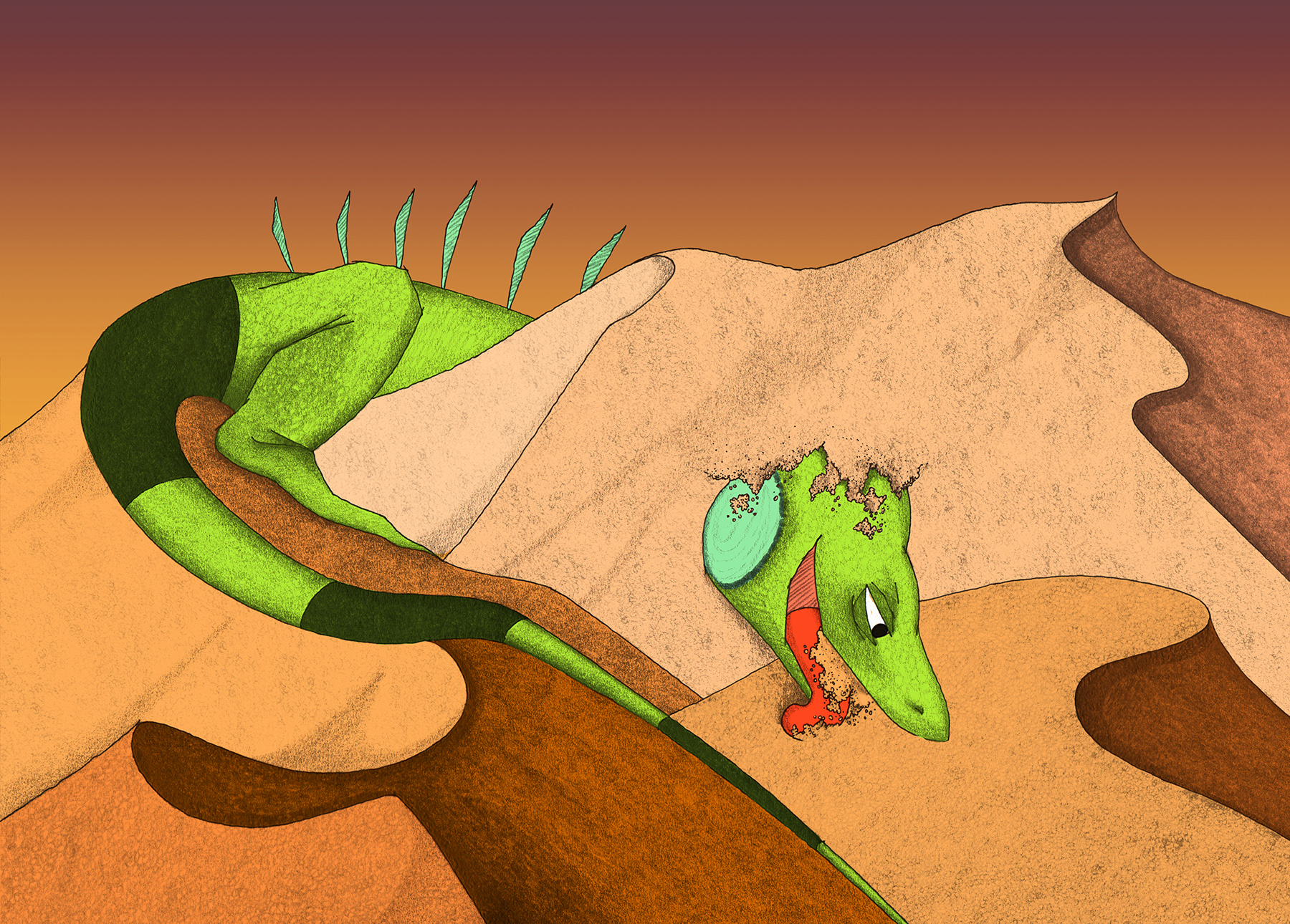
To say that this illustration was the bane of my existence for a few months would be an understatement!  There were even times when the spread was removed altogether in favor of a smaller page count, because I just couldn't seem to get Mo's positioning right.

The spread seemed destined for the cutting room floor.  

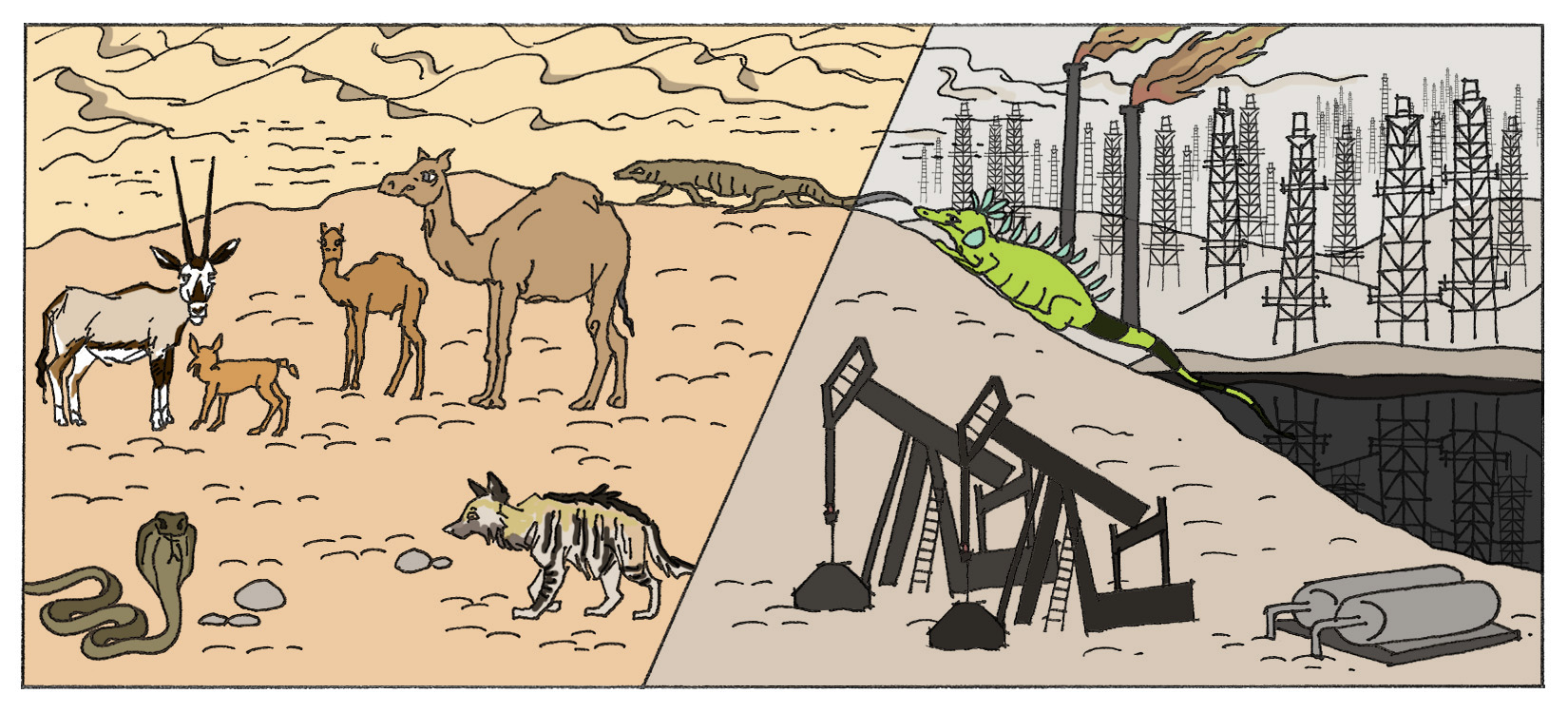
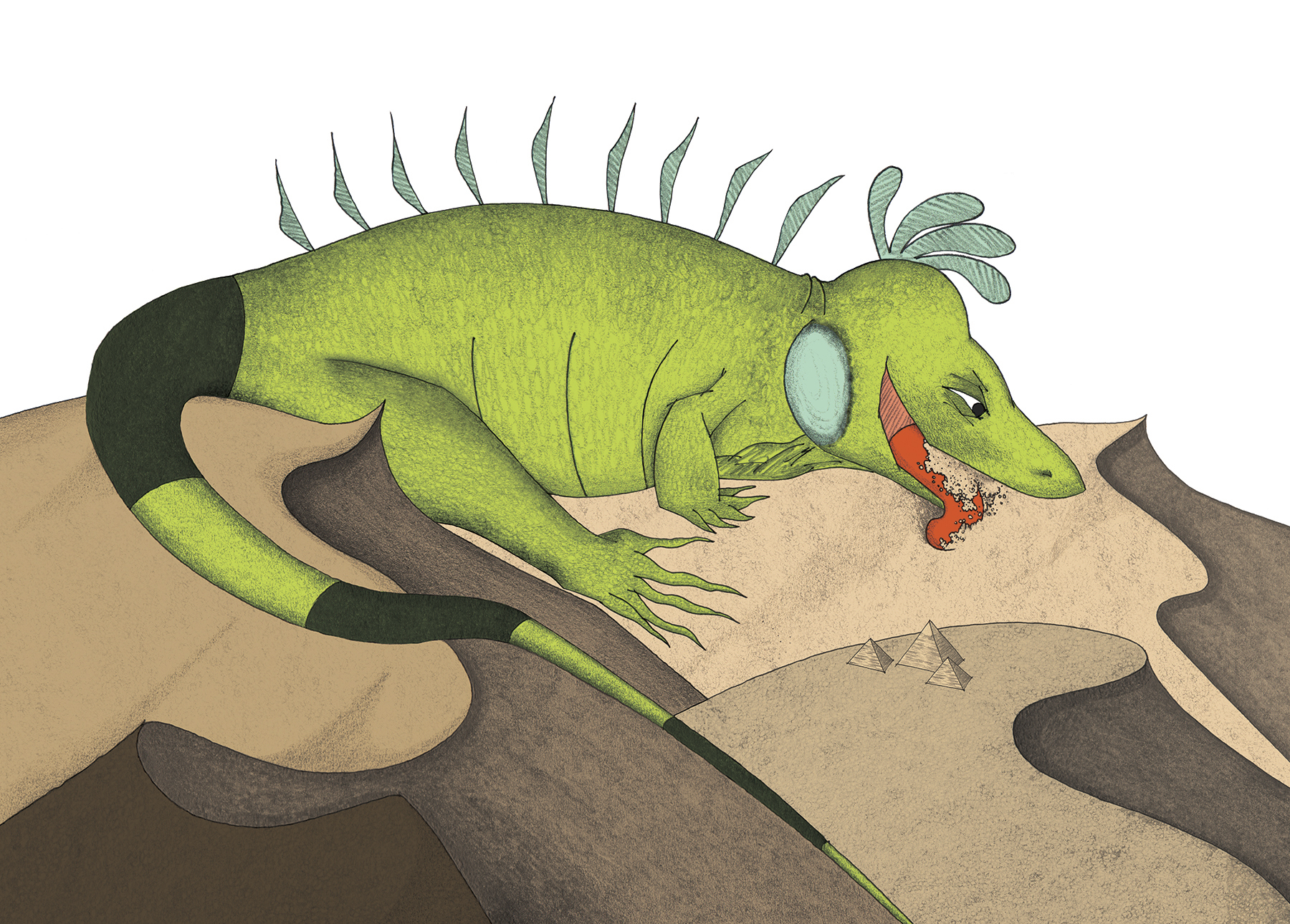
All the raw material was there: Mo is comically larger than a mountain - the size of an entire desert, in fact.  His expression shows that he has a renewed focus on consuming everything, and he is guzzling sand like so many crystalline jelly beans.  Yet, this drawing eluded me for quite some time.

The evolution of this scene was the most drastic as I pushed, pulled, and generally manhandled the drawing to reach its final form, complete with tiny Giza Necropolis.

**Note: guest appearance in the fourth frame of an iguana thigh fit for an NFL player

FELT & FLUFF

It's a fact - kids love soft things.  

In anticipation of a slew of elementary school Author Visits, I decided that Mo should accompany me to each school.  Children form intimate attachments to characters in books, so bringing a physical Mo along could really emphasize that bond (and help to tell his story)!

The only challenge?  There's no Big Mo Store, so I had to build him myself:

Build-A-Mo Diagram 1.0

Build-A-Mo Diagram 1.0

01  SKETCHES & TEMPLATES  |  This is how every project begins for me - with brainstorming and documentation of each component.  In this case, Big Mo is technically a sculpture made of a limited material palette of felt, thread and FLUFF.

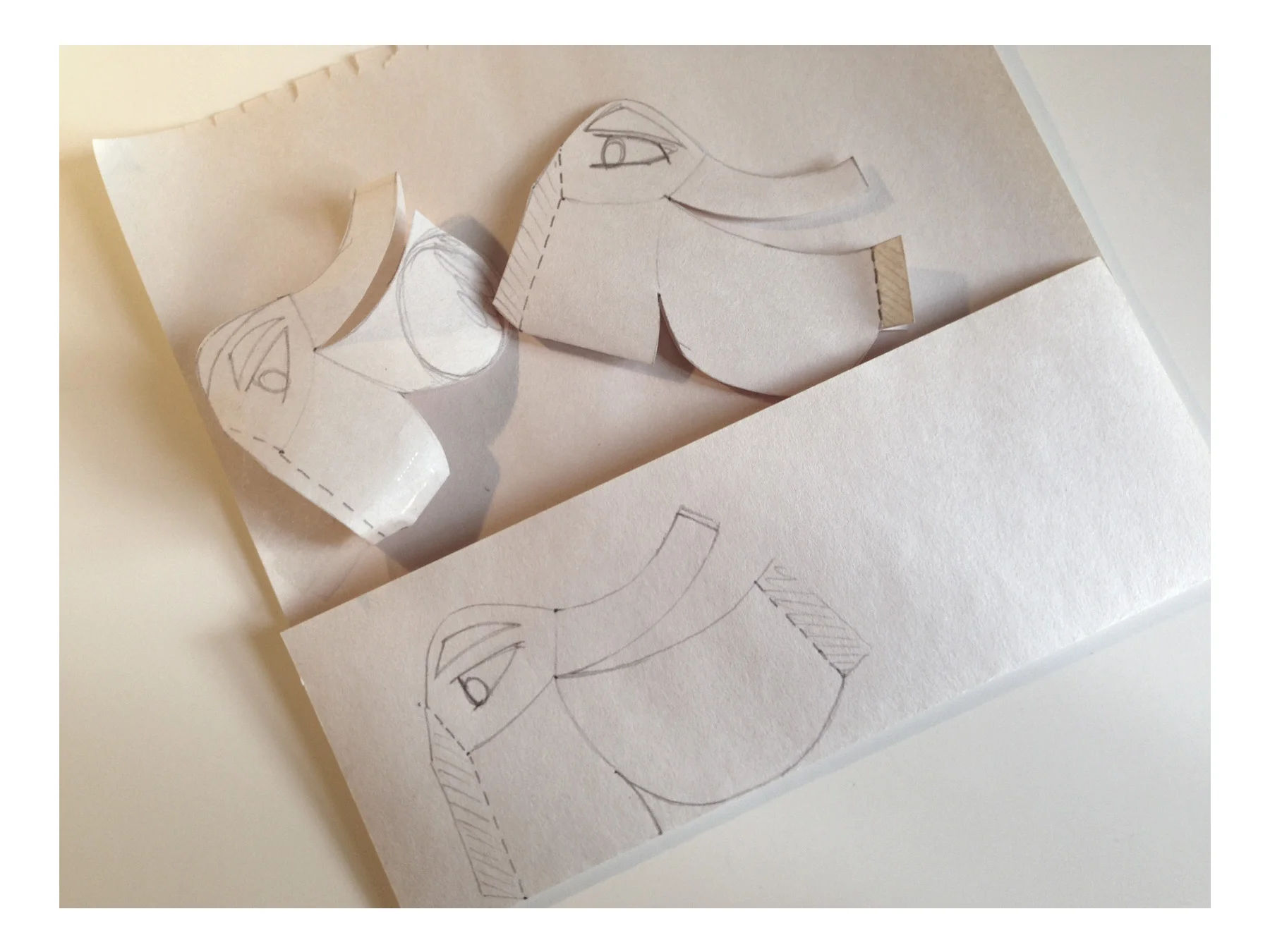
2D sketches are great for quickly understanding the scope of the project, but for me there is no substitution for 3D studies and models.  I used a pad of newsprint sheets to test some of my theories on forming just the right shapes.  When a stuffed animal is typically produced (in a large factory or otherwise), it is sewn from a set of templates, which are "road maps" for each piece.  For dimensional shapes, the assembly of each piece of the puzzle can get complicated fast.  Certainly time-consuming, this process gives new life to the old adage, "measure twice, cut once"!

02  HEAD  |  When illustrating Mo, I always draw his head first.  It made sense to sequence the assembly head-first, as well.  With the head completed, it allowed me to size the body proportionally and more importantly, it kept a set of watchful eyes on me over the weeks as I slowly completed the project...

Mo's snout began as a template (which accidentally met it's ill-fated end in a trashcan).  The main portion of the head resulted from a series of refined templates, until I found a corresponding fit for the snout that was "juuuuust right".  Remember that even though the head looks one way in 2D on paper, the final look stuffed with cotton fill is somewhat unpredictable.

The template was transferred to green felt, which I unearthed at the bottom of a fabric store remnant bin.  Not quite the subdued green in the print version, but it'll do : )

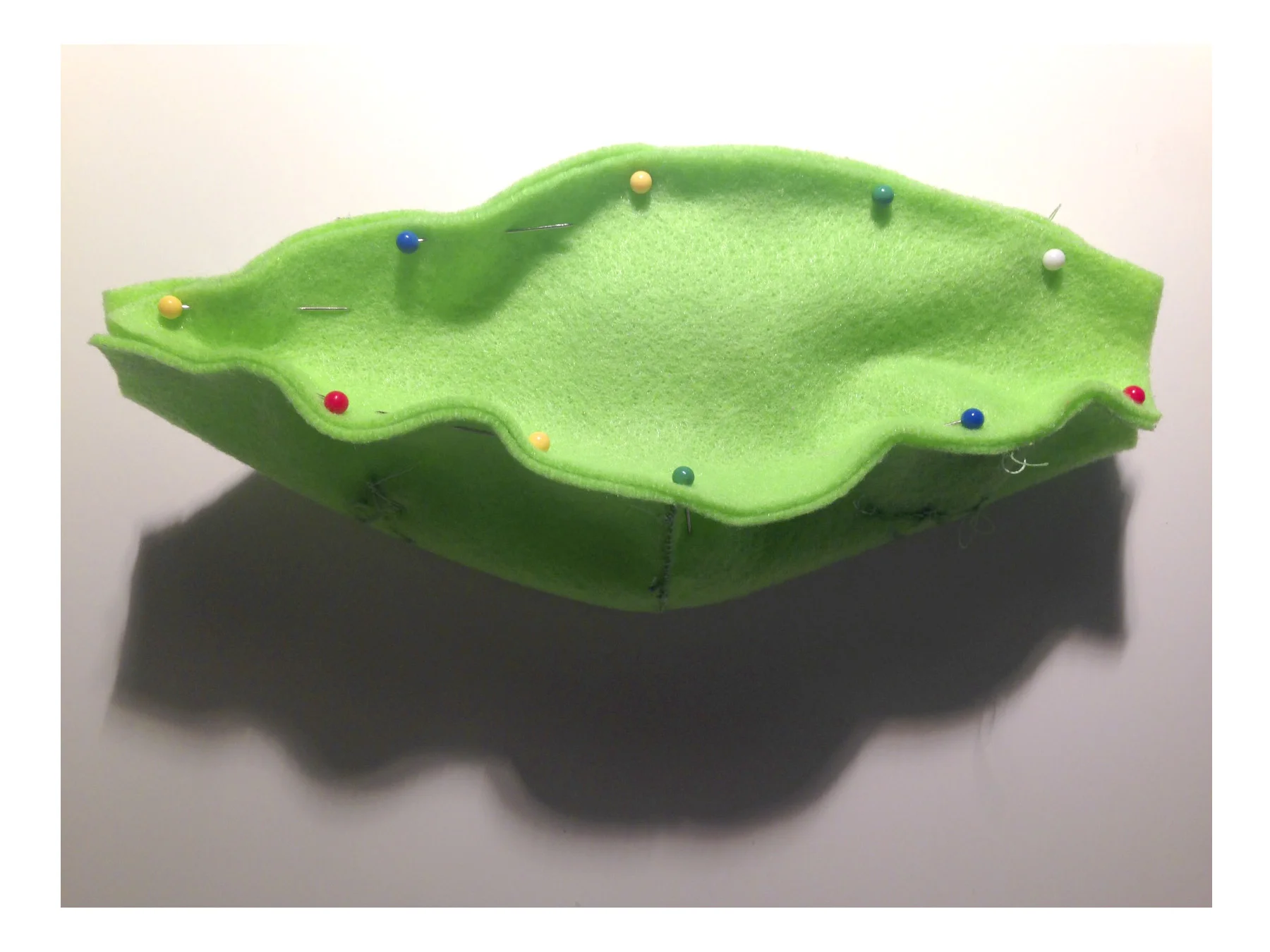
I use round-head pins to attach components temporarily.  Each piece is sewn from the inside, so that the messy thread knotting is not visible.  I use a stitching style that my grandmother taught me, but am by NO MEANS a sewing expert!  If Mo were turned inside-out, a complicated web of spaghetti would be revealed, and you would think that I did this wearing a blindfold.

Mo's eyes were embroidered on by adding layer upon layer of white, then black, thread, giving his dismembered face just the right amount of 'tude.

The head spikes were cut out of mint felt and sewn into the "skull cap".  Then, a newsprint jaw template was taped to the head as a "mock-up" of the eventual fabric piece.

I definitely poked my fair share of fingertips sewing the jaw, tongue and cheek patches to the head assembly.  At this stage, Mo could have diverged toward a career in the Puppet Theater, but I had other plans.

For major components like the head, body and tail, each assembly is sewn inside-out, and then flipped outward in one dramatic flourish!

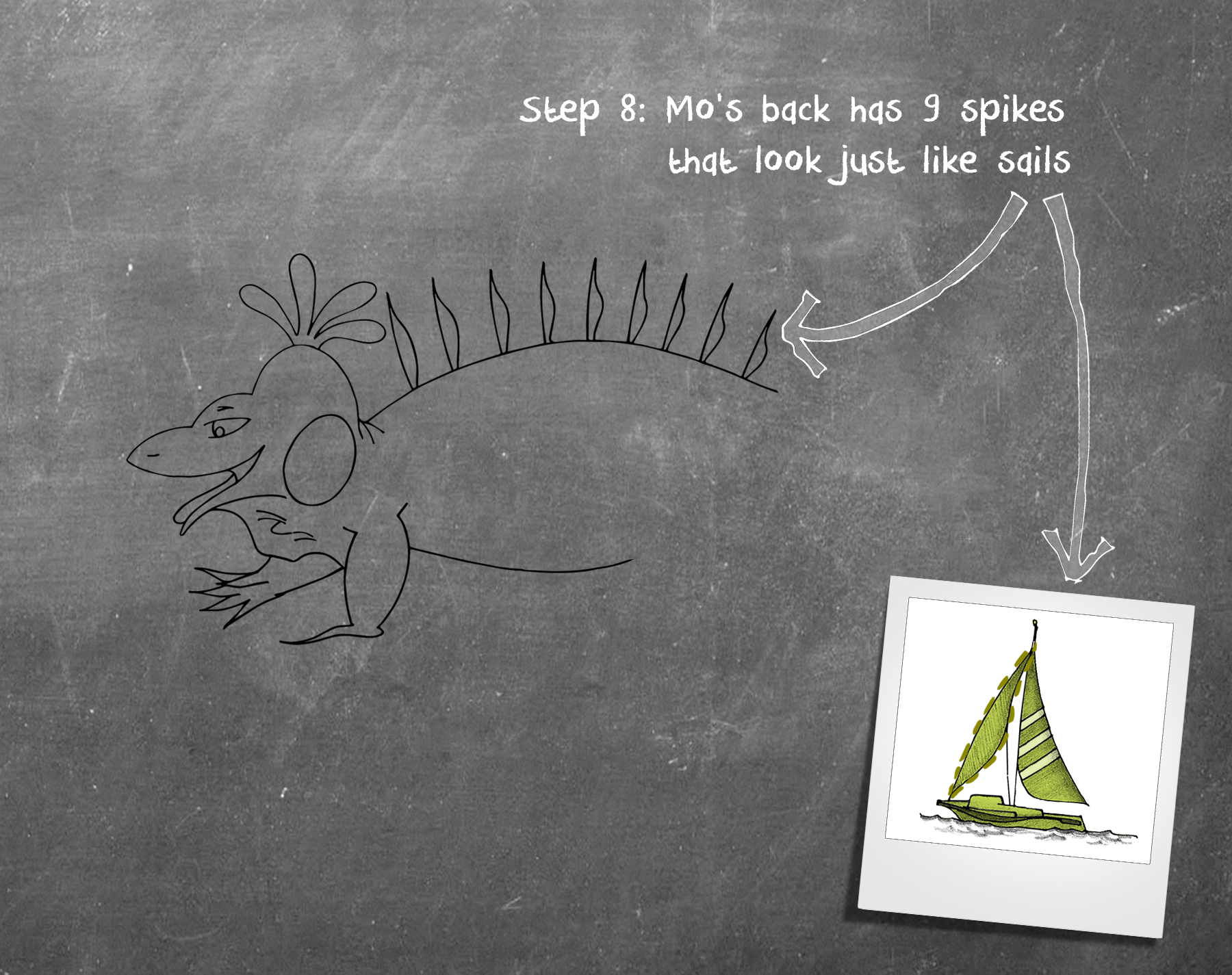
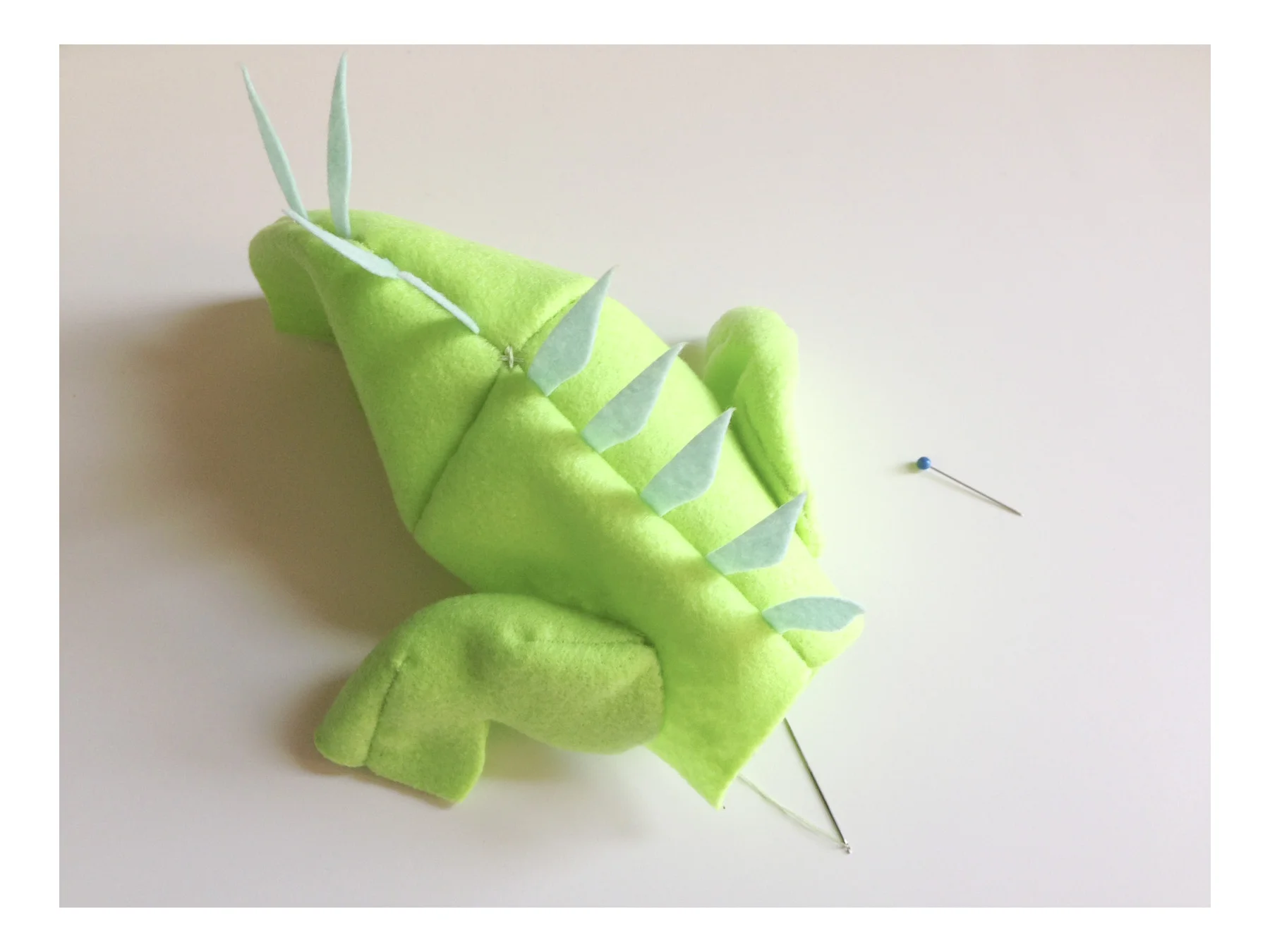
03  BODY  |  Individual back spikes (9 total) were cut out.  It was critical to find a fabric rigid enough to stand upright and maintain its shape.  The green felt is soft and cuddly, while the accent mint felt has a slightly rougher, paper quality to it.  I can't claim to be very educated in this realm, but I did luck out by finding the ideal felt for the job!

The football shape of the body is comprised of 5 patches, symmetrical about the spine.  I began by connecting the Right Front, Right Rear, Left Front and Left Rear patches.  Along Mo's spine, I inserted and secured each spike so that it could be flipped outward later.

04  LEGS  |  The legs are critical to the overall piece, because they help to physically balance the body as it sits on a table (or a shoulder!).  The rear legs required a dimensionality that implies movement/crawling, while the front legs could be sewn flat to the body.  At Mo's shoulder, the front legs are attached with a sturdy "X" that allows for a slight freedom of movement.  I referenced my illustrations of Mo to ensure a proportion that seemed true.

Once the legs were secured, I unfolded Mo's "skin" to prepare for the final piece of the body.

Flipped inside-out once again, I carefully tucked 9 spikes and 4 legs into the body pouch, and secured the flat belly piece with pins.  It reminded me of these:  80's Kid

Proper sequencing was a constant concern.  If I sewed too far on any piece, I wouldn't be able to pull the insides back out again.  Note: I learned this the hard way sewing the tail.

I left an opening at the "neck" to receive the head, and another at the rear to stuff with cotton fill.  A touch of detail was added with black thread stripes at the belly bulge.

05  FLUFF  |  Mo took shape after a good stuffing with cotton fluff! 

06  FEET  |  After filling the rear legs with fill (neither over nor under-stuffed), Mo's long feet were delicately sewn from the outside.

Something was still missing...

07  TAIL  |  Building the tail was innocent enough in the beginning.  As an architect, I get some level of comfort from straight lines and measurements.  I had a given circumference for the base of the tail (ahem...that gaping hole in Mo's rear end...), and a given overall length (basically, equal to the overall body+head length).  The template was simple:

Each trapezoidal black piece was measured directly from the green "pennant" base, and sewn into its corresponding slot along the tail.

Thinking that I was being super-clever, I left an opening at the tip of the tail to make it easier to flip the piece inside-out.  Unfortunately, the fabric was extremely thick at the black segments which were "doubled up", and the black tip just WOULD NOT pull through to the wider open end.  It was stuck, much like:  Oh, bother

It was at this point that I got really creative, scouring my home for long, skinny tools to dislodge the fabric which was now wedged deep inside the tail.  After exhausting my repertoire of cooking utensils, I eventually had success with a threaded needle taped to the end of a wooden skewer which I used to thread the tip through.  

Success!  With the tail fully extended, I stuffed it with loose fill and pinned it to the body.  This was by far the trickiest stitching of the piece, as I carefully threaded the perimeter of the cone to the opening of the body.  While complicated, it was also the LAST STEP, and thus reason to celebrate!!

Big Mo is now ready for his public debut!!


PART II : ILLUSTRATE

Let's walk through my illustration process using one of my favorite scenes of Mo on the mountain.  Before I had the story fully fleshed out in storyboard format, I had already toyed with this particular image.  Something seems so loveably goofy about an awkward, enormous iguana resting on a mountain range with his tongue out, and I imagined this scene to get a few laughs from kids!  

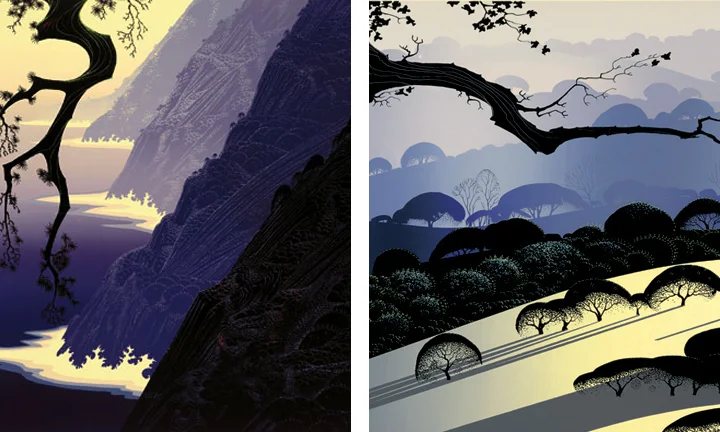
Back then, I had fallen into a temporary obsession with the serigraphs of Eyvind Earle, whose dreamy landscapes are composed of bold and often rigid blocks of color that emphasize the contrast between shadow and light.  My first attempt to compose this mountain scene was completed quickly and digitally from a sketch out of my sketchbook - you'll note that this was early on, and Mo's appearance had yet to be defined/refined:

Click the images above to explore Eyvind Earle's website, or visit http://www.graphicine.com/eyvind-earle/ 

I see this as the midpoint of the action of the story - the first moment of rest in which Mo has the chance to reflect on his G R O W I N G predicament (whether he chooses to do something about it or not . . .).  Because this is a moment of significance, I link Mo's body and posture on the mountain back to his posture on Page 1 of the story, when he is lying idly on his warming rock.  A little mimicry and foreshadowing go a long way . . .

Throughout the story, I utilize a mixture of atmospheric (aerial) perspective and linear perspective.  Think of linear perspective as the way in which all things appear to recede into space, like looking at a box that "angles" away into the distance.  By contrast, atmospheric perspective is a simpler way to convey a sense of distance and depth, because objects in the background are rendered with less detail and often a "haze" or lightness.  Imagine a child's puppet theater where there is a foreground (the stage border and curtains), a middle ground (the puppet), and a background (stereotypically, a painted scene of Venice or some similar, idyllic Italian town).  My drawn environments are for the most part rendered this way, with objects layering on each other.  

I chose this method because it is the most similar to the compositional tendencies of children.  I'm sure we all know a kid (maybe even YOU) who once drew a beach scene with a line of sand in the foreground, squiggly lines of waves in the middle ground, and setting sun on the background horizon.  It's a classic!

STEP ONE  |  To begin, I draw the 'middle ground' - Mo on the largest mountain.  I work on 9" x 12" sheets of Strathmore, so the entire image cannot be captured on just one sheet.

STEP TWO  |  Many graphic artists who work with hand drawings use a light box to hand trace over images.  My mother was a journalism teacher in her past life, and I remember playing with her classroom light box as a kid, back in the day when it took a minute for the fluorescent bulb to flicker to life.  These tools are more sleek now (click to see what I mean), but I still prefer to use my window on a sunny day!

STEP THREE  |  There is nothing to literally trace in this case, but I underlay the mid-ground image of Mo to roughly size and locate the mountains that will become the foreground.  Because these will be composed digitally, it doesn't matter how they are drawn on the page.  Notice that there is an overarching strategy for the texture of these mountains, of linear, sketchy lines.  Mo is gigantic by now, so his body should be crisply-textured, while the mountains (much smaller than him by comparison) can be "looser".  Compare this to the more detailed and realistic stone texture of the mountain in the earlier train scene, when Mo and the mountain are much closer in size.

STEP FOUR  |  Each drawing component is scanned into the computer at high resolution (300 dpi is recommended for any print material, especially if it is your first children's book!).

STEP FIVE  |  In my photo editing software (I use Adobe Photoshop), I carefully place Mo and the mountain on the 2-page spread, so that no critical information falls within the gutter (NOTE: the gutter is the centermost inch of width that is essentially lost forever once the book is folded and bound).  Likewise, I don't want to lose anything in the bleed zone, which is the border that ultimately gets cut off in the binding process.  As with building buildings, there is a margin for error in the binding process, so the bleed zone allows the machinery to be less precise than a rocket ship, yet still generally accurate.
STEP SIX  |  Remember how fun it was to kill 3 or 4 hours in a coloring book as a kid?  This step is nearly as fun as that, with a bit more emphasis placed on "staying in the lines'.

STEP SEVEN  |  Now the fun begins, as the random mountain peaks are copied from the original drawing paper and placed in their best location on the digital layout.  Remember about the gutter and bleed zones, which will not be visible in the final book!

STEP EIGHT  |  Just as the colors were layered with brown on the bottom and mint green on the top, the mountain scapes' colors are layered so that the lightest brown tones are on the 'bottom', and the darkest (and thus nearest) are on 'top'.  After that, "streaks" are added to imply dark, jagged shadows (shout out to Eyvind Earle!!).

STEP NINE  |  At this point in the story, Mo has grown incrementally (and exponentially) compared to his surroundings.  At this midpoint, I considered the sequence of his growth very carefully.  Resting on this mountain, Mo has grown larger than an entire forest, yet he is not yet large enough to swallow the Sahara Desert.  He is still a few pages shy of having a head at 30,000 ft elevation (high enough to swallow an airplane).  This may seem like analysis that is far too scientific for a picture book!  However, tracking Mo's growth was helpful to creating a logical flow from his journey's beginning to end.

To reinforce the enormity of his size, I decided to add ice caps to all of the mountains.  As a cold-blooded lizard, he likely won't be able to rest for too long up there.  

STEP TEN  |  Of course, no illustration would be complete without those little details that do NOT make the final cut - in this case, a blimp for scale!  This little dirigible remained in the illustration for several iterations until my reviewers were kind enough to tell me that "because it is funny" is NOT a good enough reason to stick an arbitrary blimp in the background.

And there you have it, folks!  

The final, cropped image - straight from my computer to your hardcover book!  Ok, maybe not straight there. . .

THE EXPERTS WEIGH IN!

Thank you to Mrs. White's fabulous FIRST GRADERS at Oak Creek Elementary School deep in the heart of Texas - budding artists, for sure!

COVER GIRL

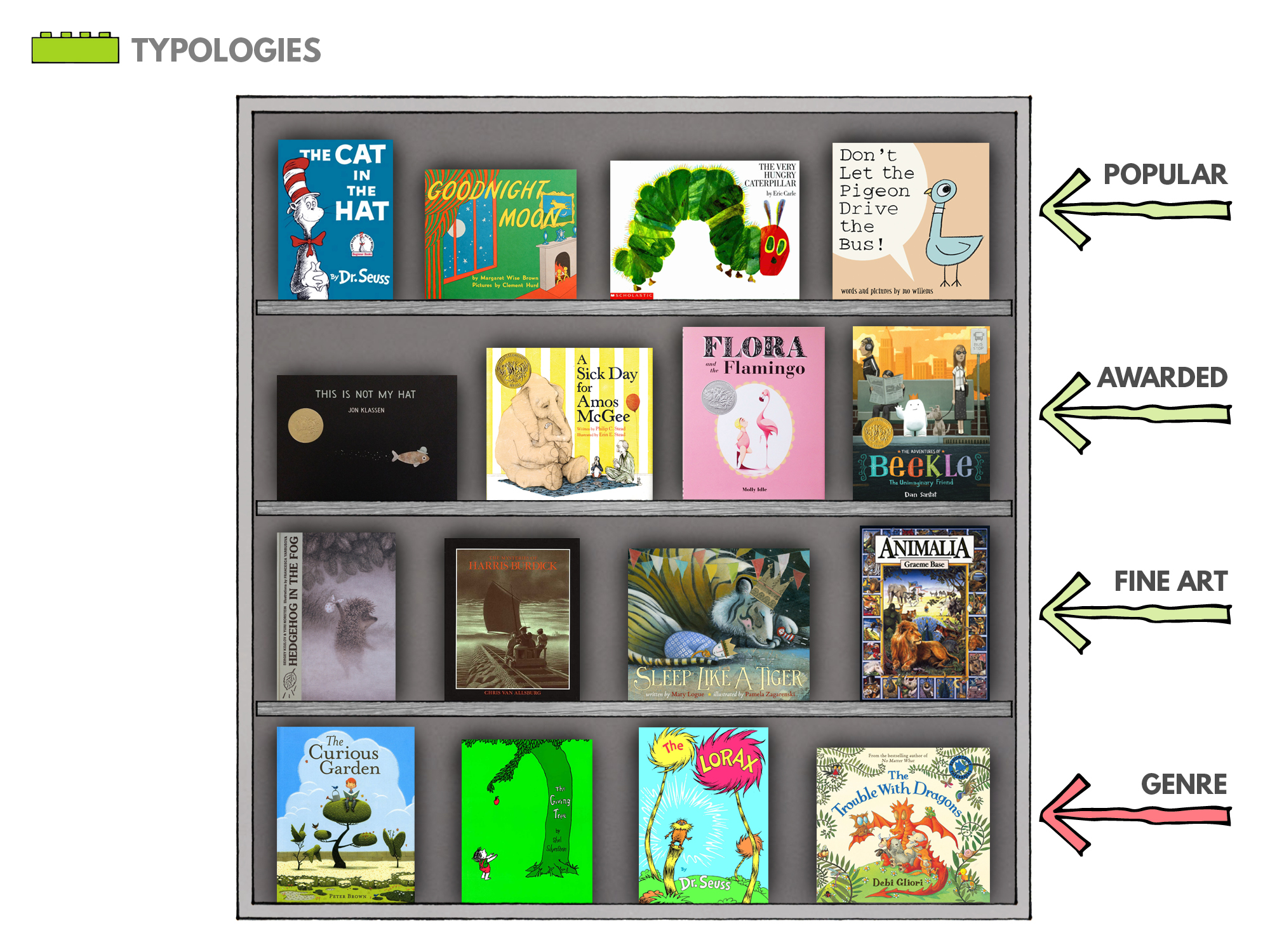
What makes for a successful cover?  

I have my guesses...

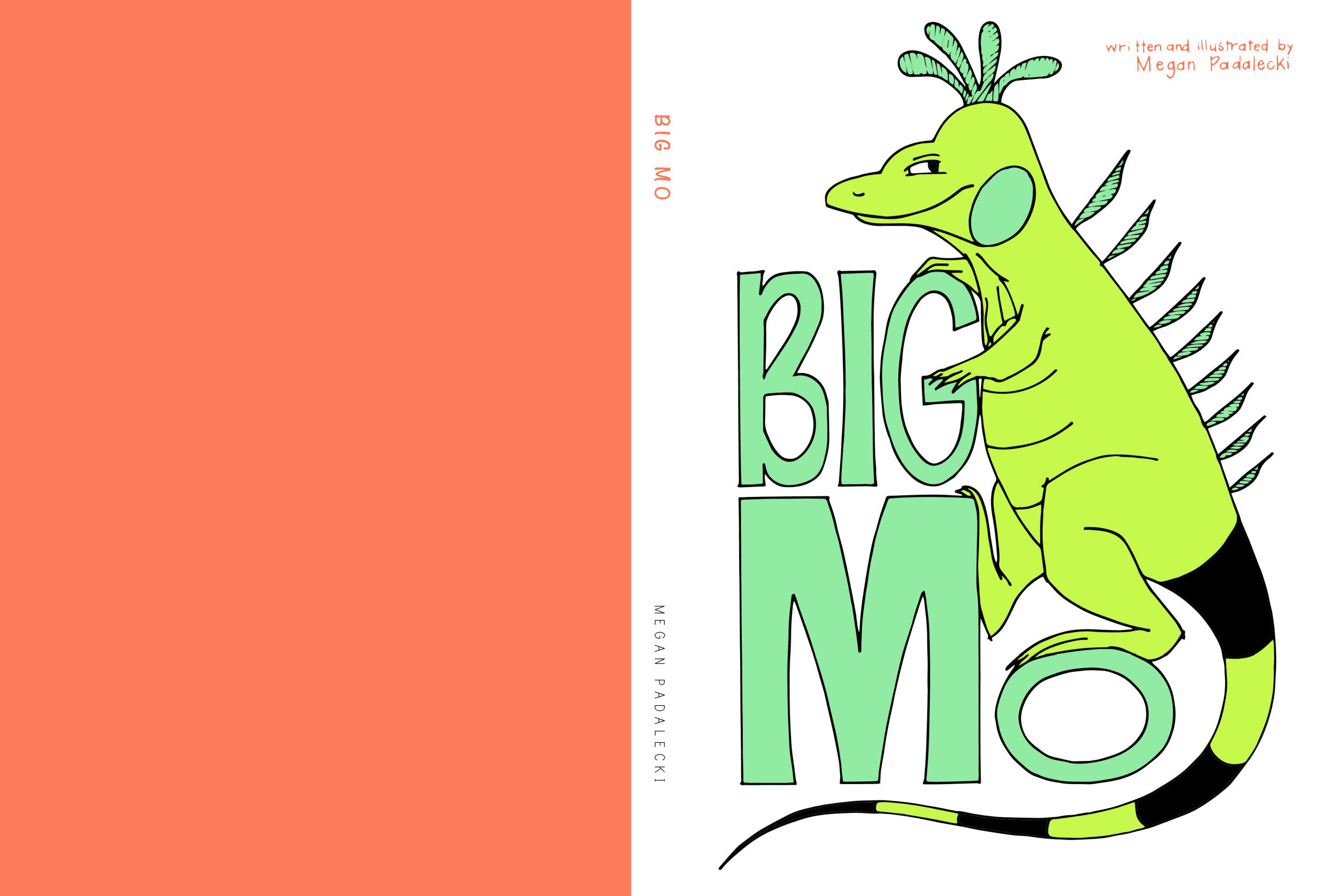
01  TITLE  |  The book should have a large, EASY-TO-READ title.  I sifted through hundreds of fonts to settle on 'League Spartan', and even altered the "G", which previously had a truncated arc.  Perfectionist, much??  Not only should the title be highly legible, it should also be crisp and balanced.  It should share the cover with the image, not overpower it.

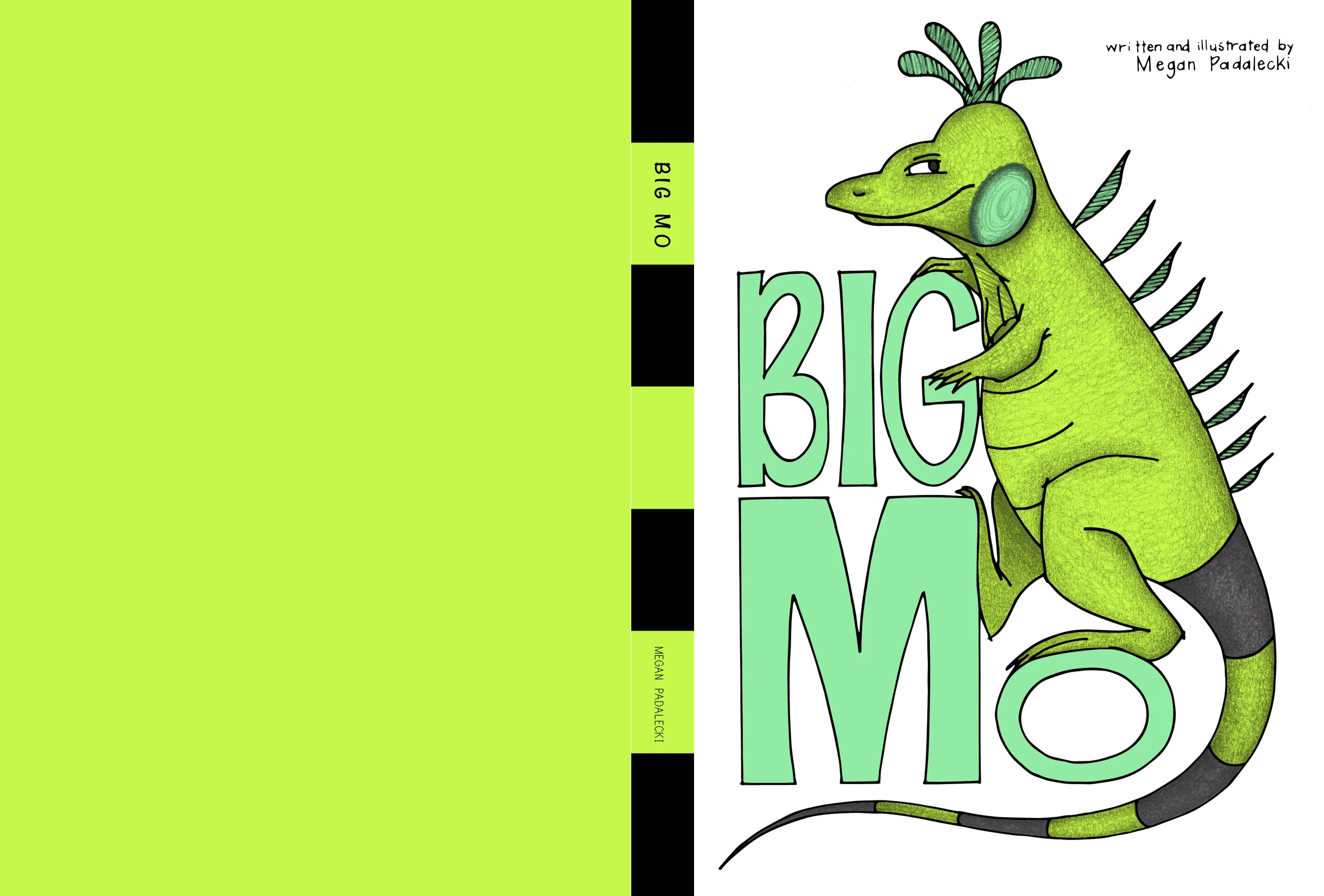
"BIG" is meticulously stacked above "MO", to imply a square of space in the top right corner of the front cover.  Close friends can vouch that I spent WAY too much time debating the addition of the thin, grey border and 'Mo' textures on the letters!  Ultimately, simplicity won out and the grey border creates a visual POP (which screams "illustration!!" and not "graphic design!!") when compared with the borderless option:

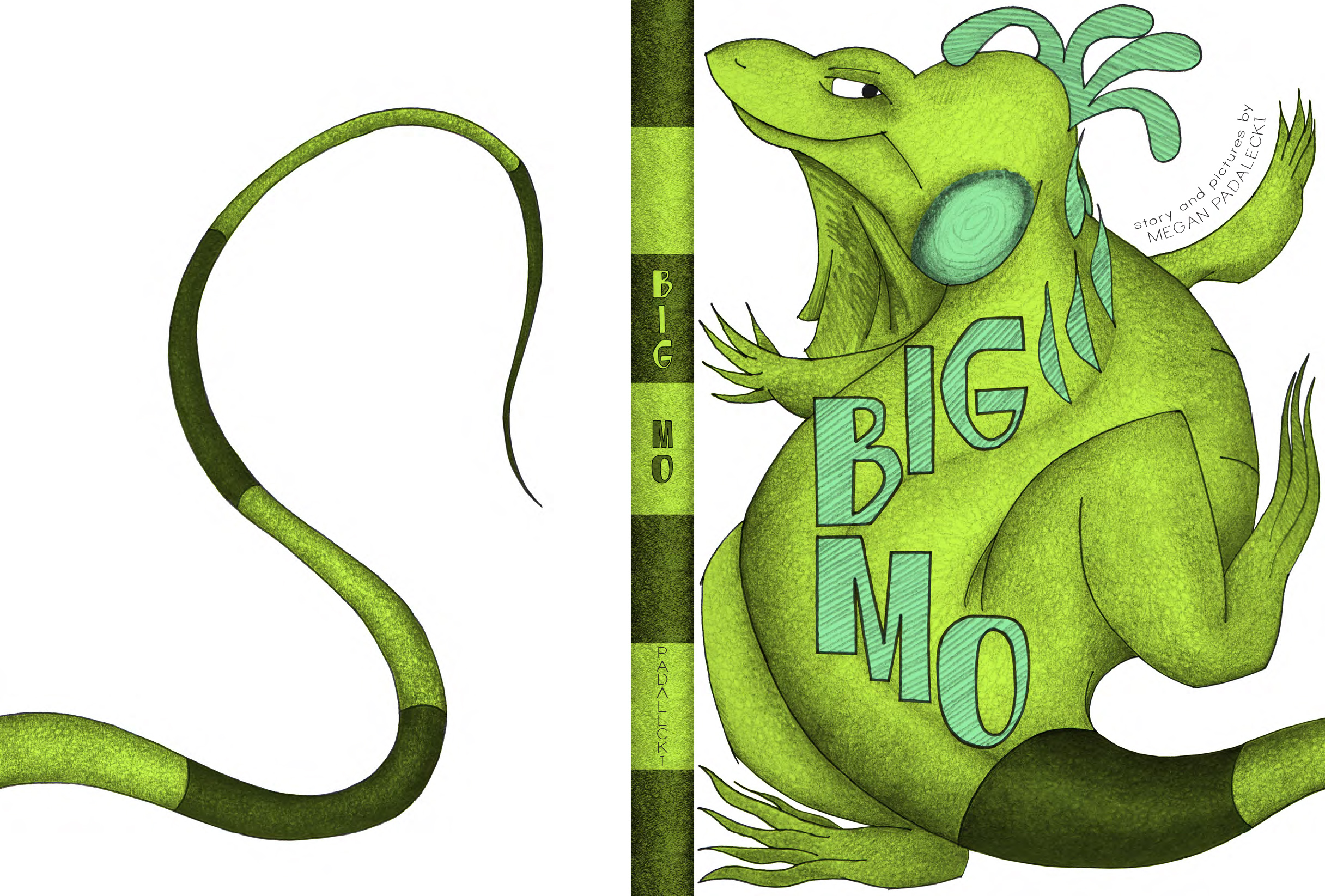
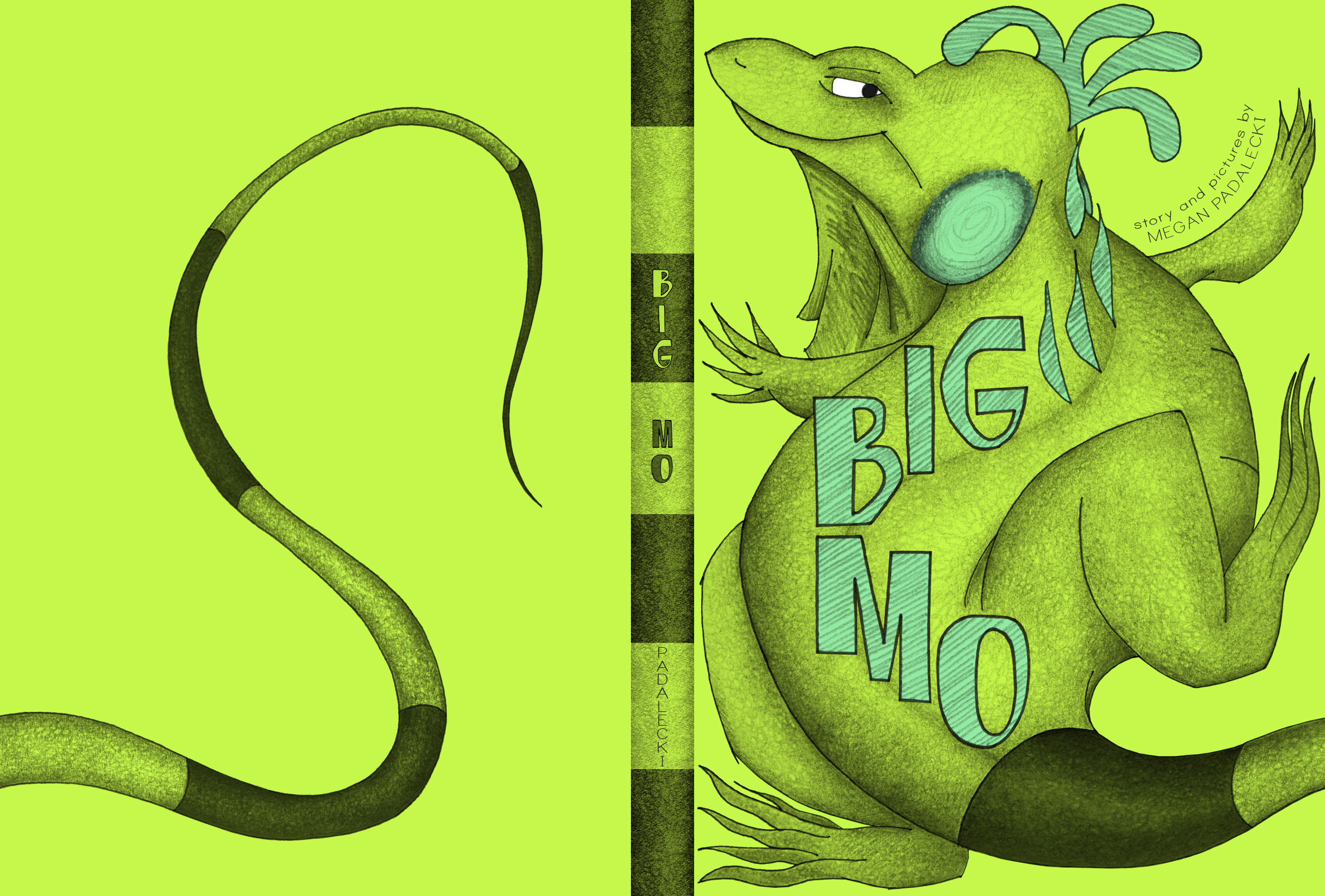
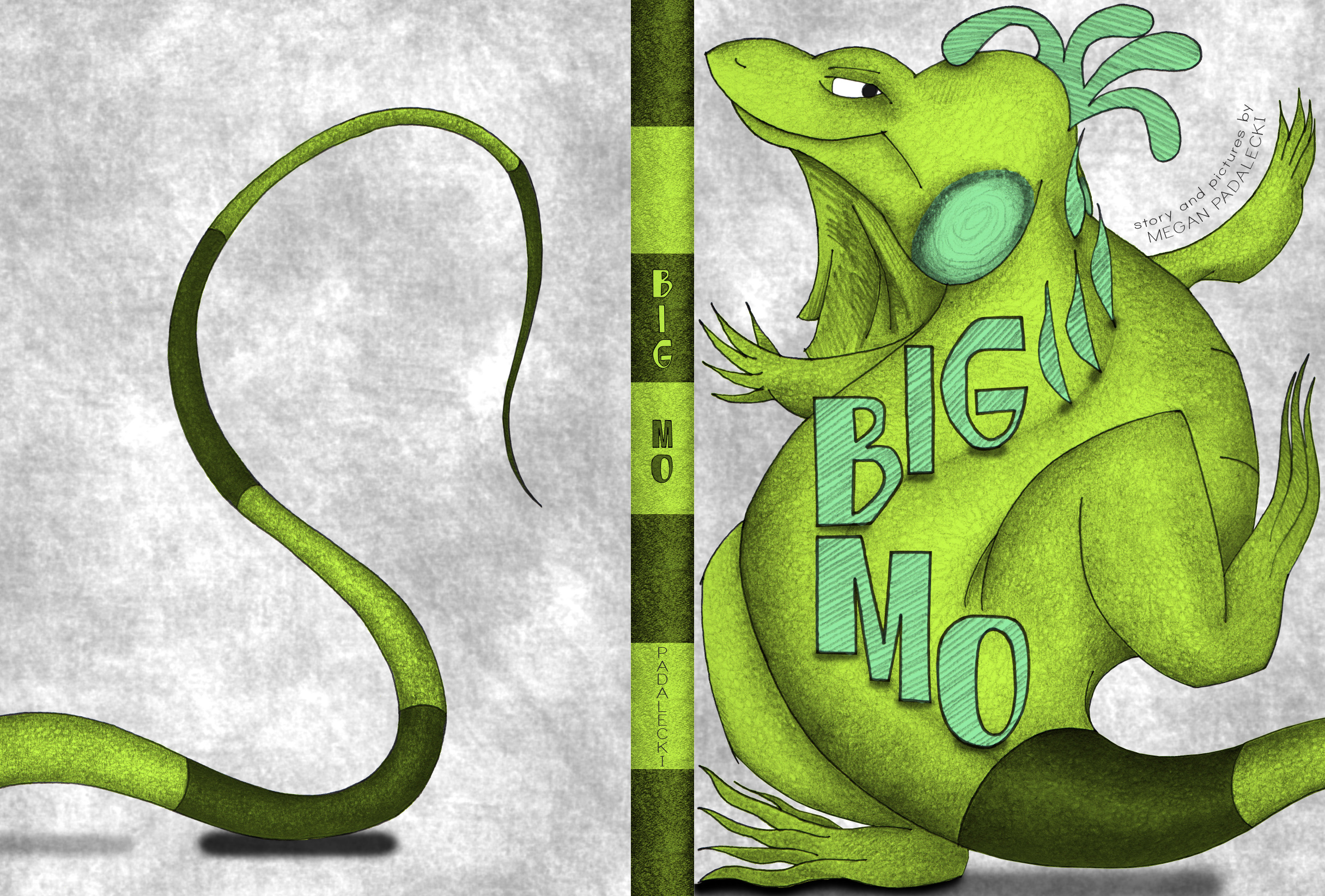
02  COMPOSITION  |  I am a sucker for The Rule of Thirds when it comes to composition.  Horizontal and vertical alignments are deliberate and when "unfolded", Big Mo's cover reads as a complete picture.  The cargo ship is even centered on the barcode boundary, proving that no degree of obsession goes overlooked by THIS lady!

The negative space between elements can be just as powerful as the elements themselves.  In the example, Are You My Mother?, the negative space is colored teal, whereas my white space is, well...white.  This void space helps to emphasize the focal points of the cover - Mo's contented face and the Title itself.

03  QUALITY  |  Maybe this goes without saying, but the cover image should represent the quality of the illustrations between the covers.  I had toyed with the idea of a vectorized cover image - that is, an image with sharper edges, that would have the feel of a digital sign or poster.  This would look more professional, I thought.  Yet this book is drawn by hand, and to imply otherwise on the cover did not seem true to the style.  The illustrations were created with pen and ink, so I chose to represent this on the cover as well.

04  EYE-CATCHING  |  I thought to myself while designing the cover, what book would I pick up off the shelf?  And I imagined "big" me (Megan) and "little" me (5-year-old Meggie) wading through a sea of books and choosing to find out more about the playful-seeming Big Mo.  Animals tend to catch my eye, and an adorable green lizard inexplicably floating in water is no exception!  As a designer, I am drawn to subjects that pop on a white background, and Mo is composed to imply a sense of movement from rear cover to front.  Picking up this book, one must wonder, "what's the deal with this iguana?".

Note, it is also important these days to create a cover that looks clear and great as a thumbnail-sized image, because many people first interact with a book on a computer screen.

05  INTRODUCE  |  The main character MUST be introduced on the cover.  He's the star of the show, after all.

06  PREVIEW  |  Just as the cover should be eye-catching, it should also entice the reader to open it.  The cover can act as a sort of "preview" of the story within.

This can be achieved with contradictions.  In the example, Mr. Tiger Goes Wild, we see a proper, well-dressed tiger in a top hat - yet he is standing in a dense jungle setting.  This implies some sort of dramatic shift that occurs in the tiger's character or location (and is also explained quite literally by the Title).  On the Big Mo cover, we see an iguana floating in water.  This seems innocuous enough, yet by flipping to the back cover, we see that his scale is immense compared to the cargo ship floating by.  Now we understand that this is a sea, and not a bathtub, and that this is truly a BIG Mo!  The contradiction of an ordinary iguana being as large as a sea tempts the reader to find out how this came to be.

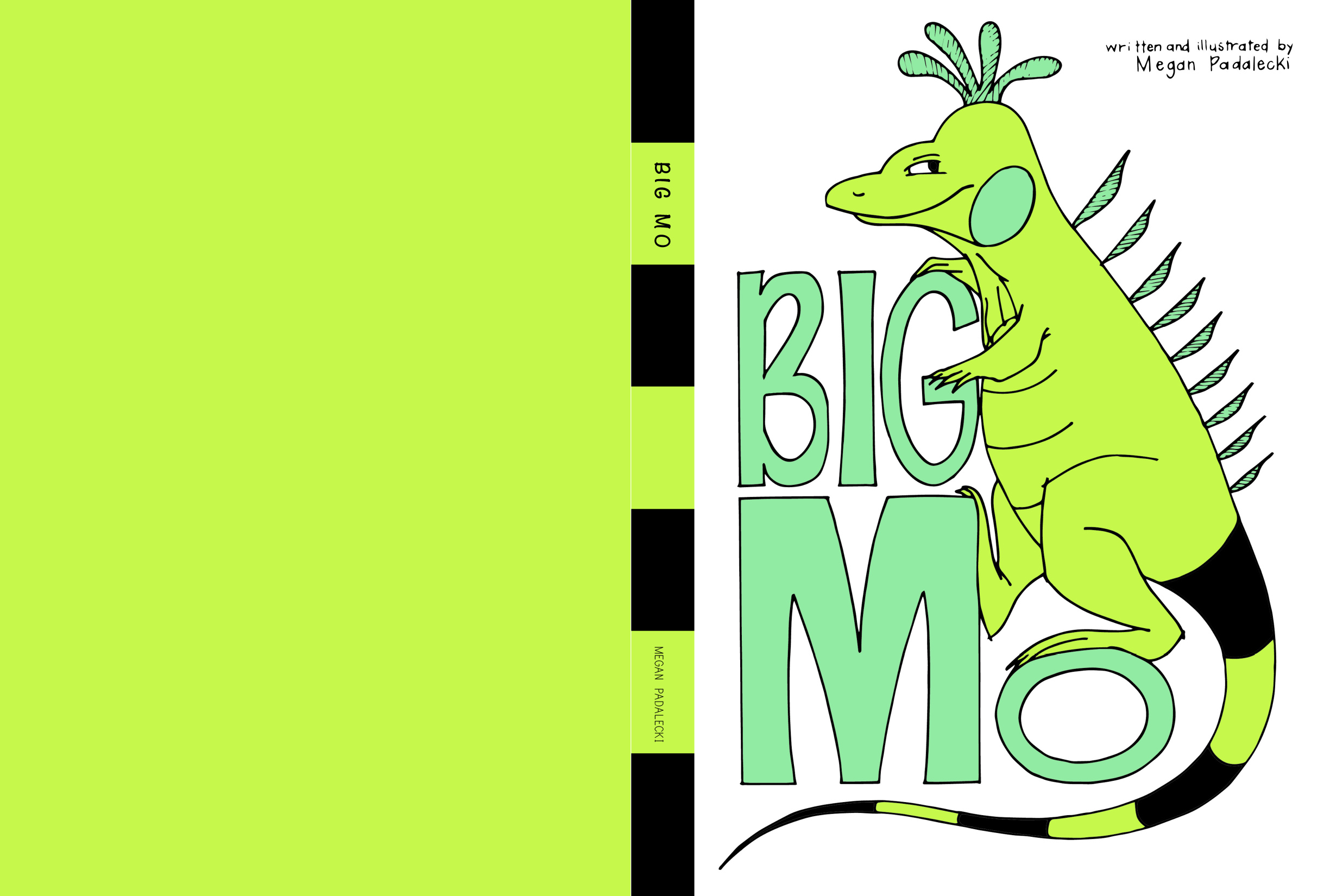
07  SPINE  |  The spine is a study in and of itself.  It can be argued that in most bookstores, a book's spine is the only visible representative for the entire book!  Within the 1/4" width of the spine, every bit counts.  Once again, I used compositional tricks and ample white space to stand out.  Mo's body is carefully positioned so that his spike falls perfectly within the spine.

In my earliest iterations, I was certain that the spine should be striped in green and black, like Mo's tail.  This would certainly be unique among other books on the shelf, right?  Though this is true to some extent, I was more satisfied with the feel of a cover image that "wraps" from front to rear.  Mo's tail makes an appearance on the rear cover, as a way to establish scale with the cargo ship.  In doing this, the enormity of Mo's size is revealed only once the reader flips the book over - making for a fun surprise!  To have broken this complete scene in half by striping the spine could have been a mistake.  Mo's tail instead patterns the book's end papers - a happy compromise : ) 

Naturally, I did not come to this cover immediately.  Instead, I kept the challenge of designing just the right cover forever on my mind, sketching thumbnails along the way from June until November.  Especially November, when my deadline loomed near...

I also created a few more 'polished' covers, which I pinned to my wall for review along the way.  These did not make the final cut, but I learned what worked and what didn't from each:

As with every aspect of this book, I had to take a chance and go with my gut.  I hope the final cover is one that makes its mark on the shelf!

THE RAREST ON EARTH

Mo has been called many things - "a menace", "a monster, "a threat" - but first and foremost, he is an IGUANA.

Specifically, Mo's character is modeled after a Common Iguana, or Green Iguana (zoological name: Iguana iguana).  These lizards are common as pets and are prevalent across Latin America and the Caribbean.  As a children's character, an iguana is exotic and colorful enough to engage interest, but still familiar (and fun to pronounce!).  Mo can transition from page to page, from scaly and frightening, to friendly and lovable!  Iguanas themselves are not particularly threatening by their nature (technically, they are herbivores), but they also carry an element of danger and unpredictability.  Mo and all reptiles are diverse and unique creatures!

I hope Big Mo speaks for environmental stewardship -
the notion that we share a collective ecological responsibility.

As it turns out...

While researching for Mo's future of storytelling, I happened upon a creature that just may be the perfect character to introduce in a Mo "series": the Blue Iguana!! (Cyclura lewisi)

These iguanas are known for their striking blue color, and are cherished as a symbol of national pride on their native island of Grand Cayman.  Unfortunately, they also hold the title of 'rarest iguana on Earth', and were only recently removed from the IUCN Red List's Critically Endangered designation (ie. just one step from Extinct).  They are now classified as Endangered, a sad status to share with other threatened species like the Bengal Tiger and Giant Panda.  Blue iguanas have lost their coastal habitat to human settlement, and are regularly killed by feral, non-native predators like dogs and cats, which these iguanas have not developed an evolutionary fear of.  Even Mo and other "invader" Green Iguanas compete with the Blues by devouring their natural environment (sound familiar?) and reproducing at a rapid pace.  Although Blue Igs are endemic to the Cayman Islands, the hordes of Green Iguanas have stronger "fight or flight" instincts against predators, gained from their collective memory as pets. 

There is a bright side, though!

Thanks to the efforts of the partners of the Blue Iguana Recovery Programme (BIRP), captive breeding and release of "head start" iguanas has brought the population of this stunning species up to nearly 750 individuals, and growing.  To find out more, click below: 

"When asked ... why I should concern myself so deeply with the conservation of animal life, I reply that I have been very lucky and that throughout my life the world has given me the most enormous pleasure.  But the world is as delicate and as complicated as a spider's web.  If you touch one thread you send shudders running through all the other threads.  We are not just touching the web, we are tearing great holes in it." - Gerald Durrell, Founder of the Durrell Wildlife Conservation Trust, a partner of BIRP

PART I : MY TOOLBOX

No creation is possible without the proper supplies, whether they are stored in a toolbelt, a zippered bag, or just a messy pile teetering on the edge of the desk.

While crafting the drawings for Big Mo, I used a variety of supplies - "tools" - which were within arm's reach throughout the process:

01  PICTURE BOOKS | As a first time illustrator, I kept a pile of example children's books for reference.  These precedents provided a broad swath of illustration styles and layout techniques.

02  IGUANA PHOTOS | I don't keep a pet iguana (...yet...), so photos provided a necessary reference for iguana body language, movement and behavior.  Like how they eat trains.

03  SKETCHBOOK | I take this thing everywhere, in case an idea sparks on the go!  For me, "thumbnail sketches" and storyboarding are the first steps for the composed drawings. 

04  DRAWING PAPER | Because the drawings are inked in pen and textured in pencil, I use an all-purpose, 70 lb. Strathmore drawing paper.

05  2B PENCIL | The Derwent 2B pencil is ideal for Mo, because it is hard enough for fine detail and soft enough for widened lines (eg. Mo's scales) and smearing (eg. background objects).

06  STRAIGHT EDGE | Throwback to my architectural training, but I prefer to use an Architect's scale for any lines that need to be straighter than my eyeballing can achieve.

07  BLACK PEN | I use the Pilot Precise V5 (rolling ball), which has a name fit for Air Force One! 

08  IMAGINATION | Let's face it - this one is pretty important...

09  SHARPENER | Even the lightest touch can flatten a 2B pencil, and because Mo's body is dense with texture, my pencils need frequent filing.  Lots of inch long stubs on my desk!

10  TRACE PAPER | Because the illustrations are composited digitally, I use trace paper to position some elements more precisely on the drawings.  Great for mistakes and revisions, too!

11  ERASER | I use Staedtler Mars Plastic for those times when I've been overzealous.  Be careful to let the ink dry before erasing, or prepare for a smeared disaster!!

12  WATER | Best to stay hydrated for those long drawing days when minutes turn to hours!

13  SCANNING BED | This is indispensable for me, as each of my drawings is hand-drawn and must be imported at a high resolution into the computer.

14  PHOTO EDITING SOFTWARE | I use the Adobe Suite out of habit, but there are tons of alternatives out there for image editing.

15  "SAVE AS" BUTTON | Because even when a drawing is "done", it is only the first in a series of many options!! 

IN THE BEGINNING

There seem to be three ways to conceive of a story:

( 1 ) the subconscious gradually reveals something coherent (a pot boils over) 

( 2 ) a sudden and alarming spark (the eureka! moment) 

( 3 ) attack by brute force (STICKS MAKE FIRE!)

In my case, the concept for Big Mo came from a gooey combination of all three!

I suppose I began with intent - to write a story for kids that promotes the health of our world - a story that matters.  This intent lived in my brain for a long while (Method 1), and I didn't poke at it.  I educated myself in global issues and let those simmer.  I took to heart a proverb that I happened upon, attributed to the Cree Indians:

|   When the last tree is cut down, the last fish eaten, the last stream poisoned - Only then will you realize you cannot eat money   |

The proverb is admittedly a bit intense for children (!!), but the crux of the proverb remained an inspiration for Mo's story of uncontrolled consumption.  This is represented best in the first draft to ever make it to my studio pin-up wall (see if you can spot the similarities to your copy of the final book!):

I can take no credit for Mo being an iguana.  He was just born that way when I woke up one morning and thought, "Oh, an iguana!" (Method 2).  We creative folks live for moments that just pop into existence without too much effort!

Beyond the great fortune of sudden discoveries, I was left with the task of forcing some sense into it all (Method 3):

If Mo is an iguana, where does he live and how did he get there?  Should he use dialogue to explain his thoughts?  Where will he end up?  Is my theme clear and relatable?  Does he have a motivation, or is he mindless?  Aaaah, he's too BIG for the page!    

Through months of research, storyboarding, review and revision, the story of Big Mo took shape.  The design process is iterative, growing richer as layers of meaning and complexity stack to the sky.  This first 16 spread draft was just the beginning in a long series of connections, complications, and concoctions!